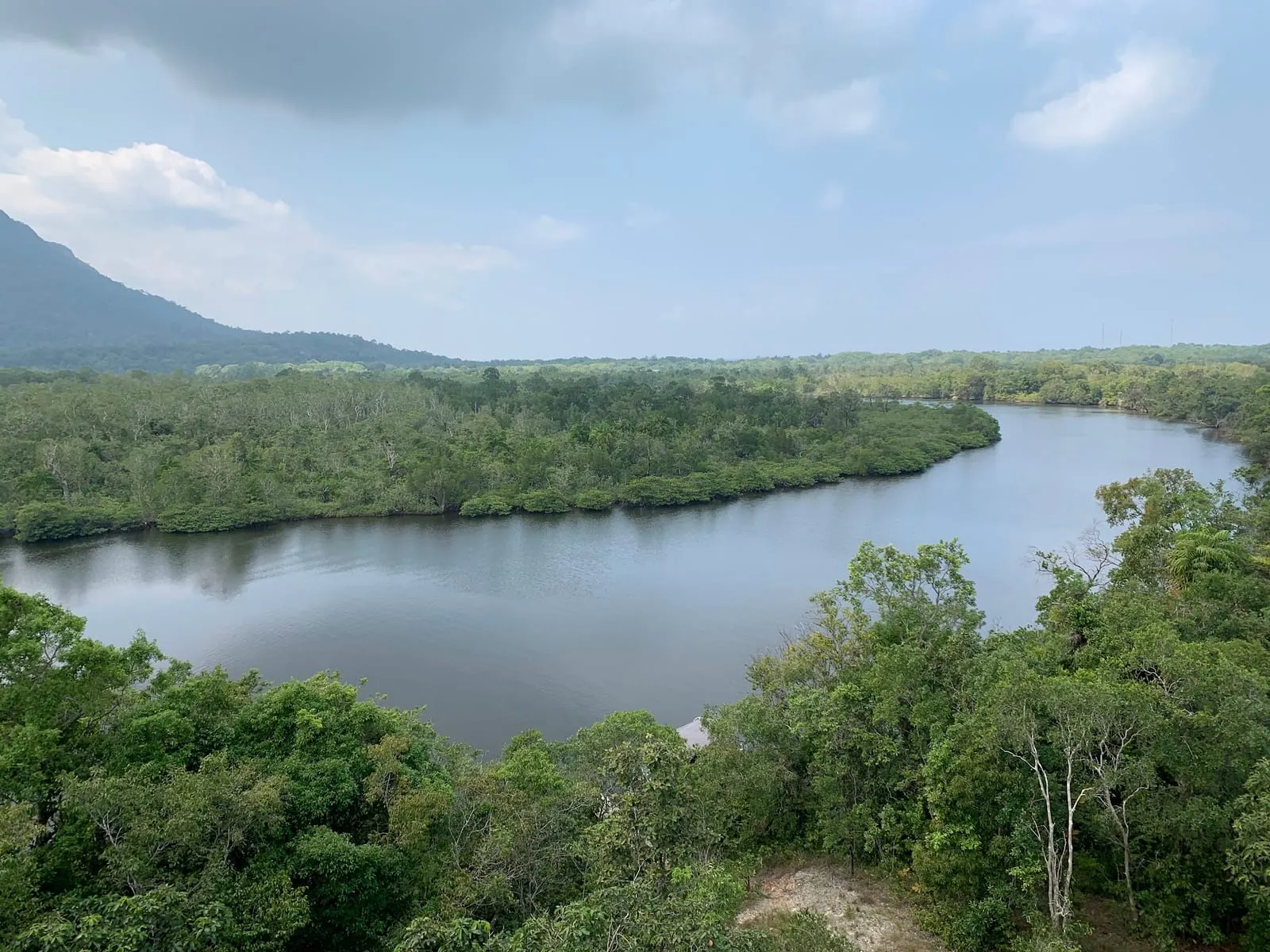
Phu Quoc is better known for beaches than birds, but more than half the island is forest, river and mangrove inside Phu Quoc National Park, and early in the morning the forest edge is full of birdsong. The park itself lists 132 bird species (its 2025 overview); Vietnam’s national biodiversity database gives a higher figure of about 200. There is no published bird survey of the island, and we know of no specialist birding guide on Phu Quoc, so treat any list — including ours below — as a starting point.
Searching for “On Bird Phu Quoc”? Onbird is a snorkelling and island-trip company, not a birding tour — see snorkeling.
Birds to look for
- Hornbills. The park lists the great hornbill and the oriental pied hornbill among its endangered animals (VietnamPlus, August 2026). The oriental pied hornbill, the smaller black-and-white species, is the one more often reported by visitors, flying over the forest canopy in pairs or small groups, early and late in the day.
- Bee-eaters hawking for insects from wires and dead branches along the forest edge.
- Herons and egrets in the river mouths, fish ponds and mangroves.
- Kingfishers along the rivers and canals.
- Birds of prey — sea eagles and kites — over the coast and the bays.
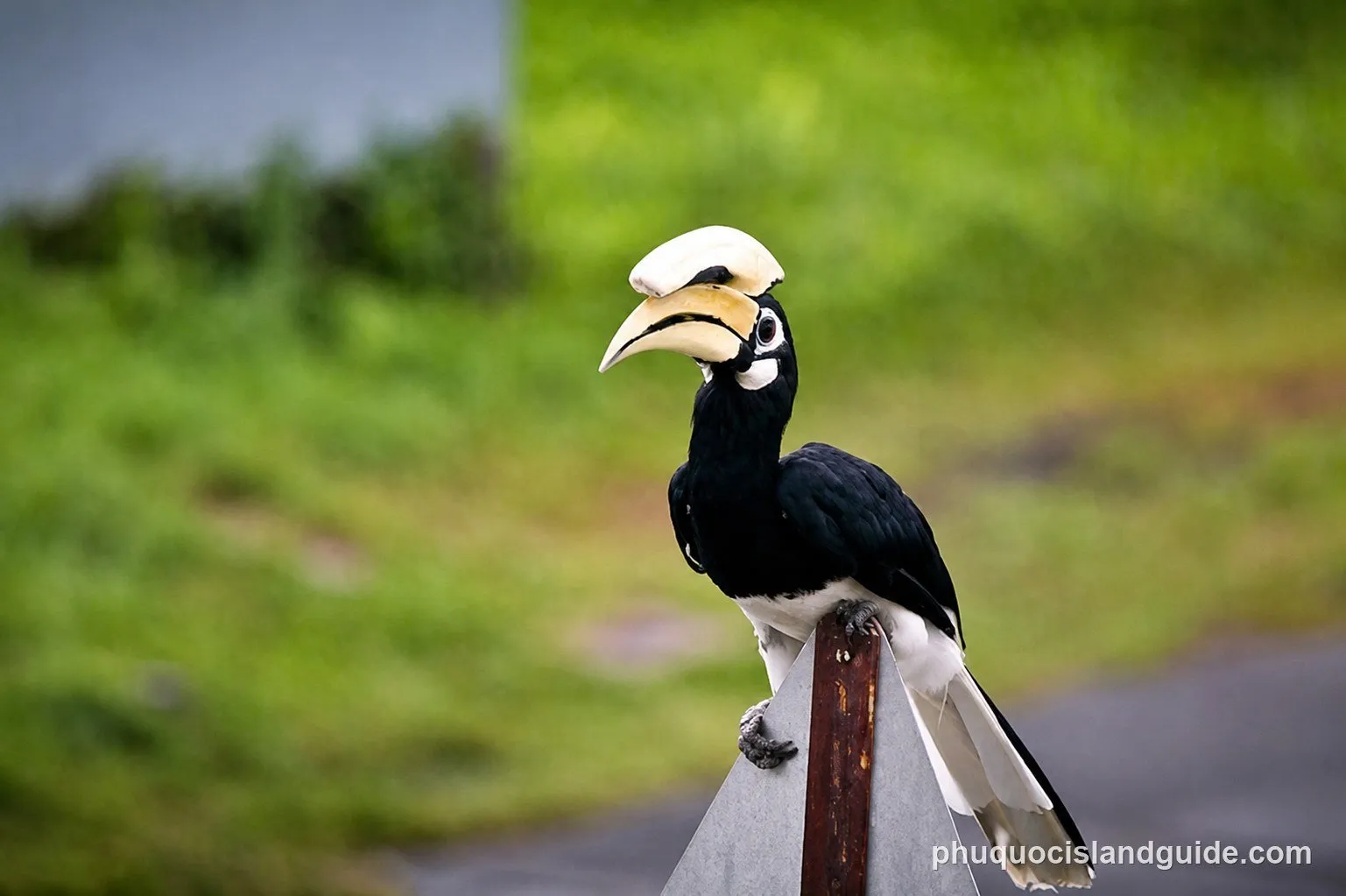 Oriental pied hornbill.
Where to go
Access to the forest interior is restricted, and you need a guide to go into the national park itself — see visiting the national park. The best birding is along its edges:
- The Ganh Dau trail — a dirt track through the forest of the far north, quiet at dawn.
- The roads to Bai Thom and Rach Vem, which run along the forest; stop where the canopy is open.
- The Rach Tram estuary and mangroves on the north coast, and the Cua Can river, for herons, egrets and kingfishers — a kayak is a quiet way to see them.
- Tien Son Dinh above Ham Ninh, for a view over the forest canopy.
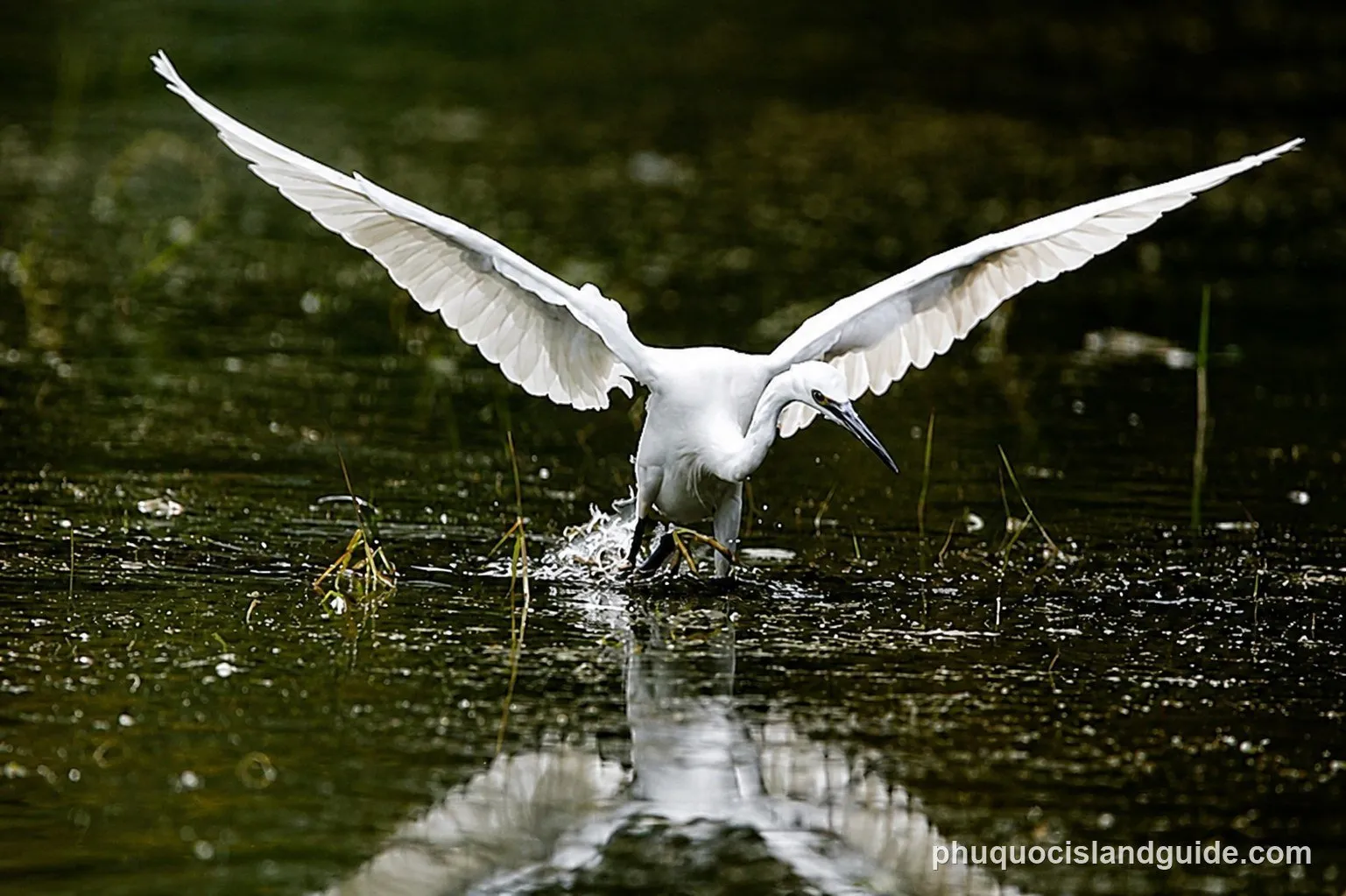 Little egret.
Tips
- Go at dawn. The first two hours after sunrise are by far the best; by late morning the forest is hot and quiet.
- The dry season, November to April, is the most comfortable time, and the north-east trails are passable.
- Bring your own binoculars and insect repellent.
- Keep to tracks and roads, respect the park’s rules and military checkpoints, and never buy wild birds or animals offered for sale.
Species counts: Phu Quoc National Park and the national Biodiversity Conservation Agency (see sources).