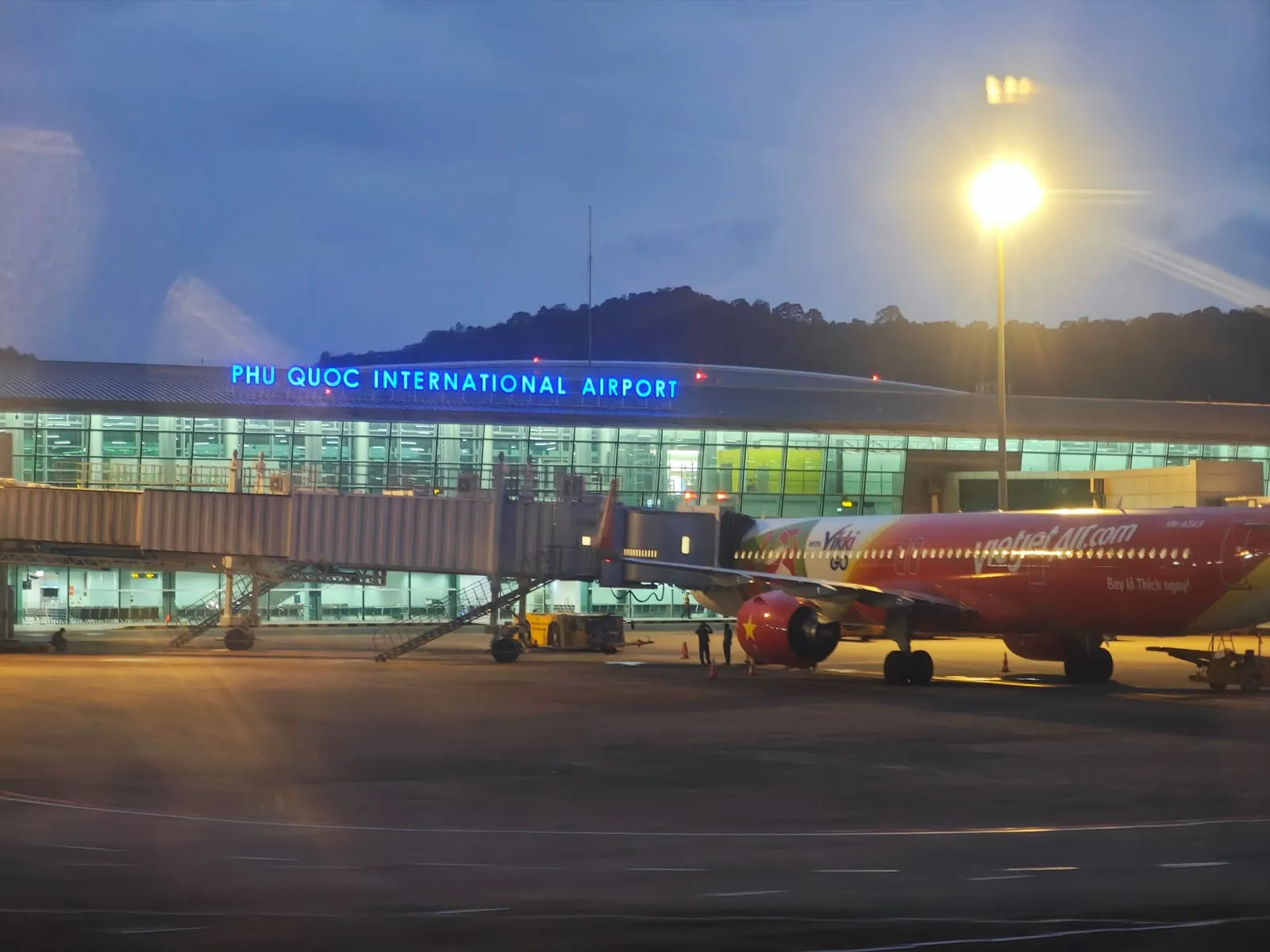
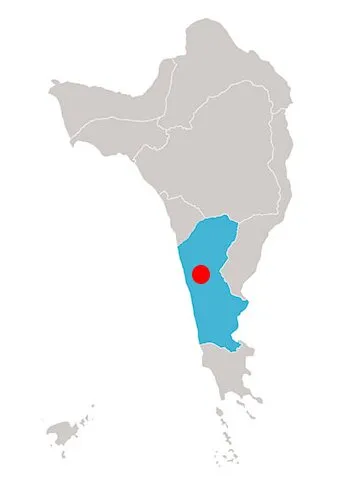
Phu Quoc International Airport (IATA PQC, ICAO VVPQ) sits in Duong To (Dương Tơ), the commune immediately south of Duong Dong (Dương Đông) town. Vietnam Airlines puts it about 10km from Duong Dong with a minimum drive of 15 minutes; other sources stretch the distance to 14.5km, which is a polite way of saying twenty minutes and the odd delay behind a cement truck. Long Beach (Bãi Trường) begins close enough that you can watch aircraft on final approach from the sand, but it runs a long way north, so a hotel at the far end is a genuinely different journey from one at the near end. Work out which end you booked before you agree to anything with a driver.
At a glance
- Name: Phu Quoc International Airport (Cảng hàng không quốc tế Phú Quốc). Codes: IATA PQC, ICAO VVPQ.
- Where: in Duong To, just inland from Long Beach and south of Duong Dong town.
- To your hotel: by taxi, Grab or Xanh SM. There is no fixed fare table — see getting from the airport to your hotel below. For fares, buses and drive times across the island, see getting around Phu Quoc.
| From the airport to | Drive time |
|---|---|
| Long Beach (middle) | About 12 minutes |
| Ham Ninh and the east coast | About 19 minutes |
| Duong Dong town | About 20 minutes |
| Bai Khem, Sunset Town and An Thoi | About 24 minutes |
| Ong Lang | About 25 minutes |
| Bai Dai, VinWonders and Grand World | About 40 minutes |
Drive times are on clear roads (OpenStreetMap routing); allow longer in the evening rush around Duong Dong. Not sure where to stay? See where to stay on Phu Quoc.
Two things here have moved enough to make older airport guides worthless. The number of Vietnamese airlines serving the island has nearly doubled since 2017, and one of them did not exist in 2024 and now uses Phu Quoc as its home base. The airport is also a building site: a second runway and a new T2 terminal are under construction for 2027, which you will notice on the approach road long before you notice it in the terminal.
Press play and watch the jungle airport on Phu Quoc Island
Who flies to Phu Quoc in 2026
Aggregated schedule data for August 2026 shows 24 airlines serving Phu Quoc from 25 airports across 11 countries. That figure comes from a flight-data platform rather than from the airport, so treat it as a shape rather than a count — but the shape is right, and it is nothing like the four domestic carriers and a handful of European charters this page described when it was last written.
Domestic airlines
Vietnamese airlines flying to Phu Quoc include Vietnam Airlines, Vietjet Air, Pacific Airlines, Vietravel Airlines and Sun PhuQuoc Airways. Four things are worth knowing before you book.
- Jetstar Pacific no longer exists under that name. It became Pacific Airlines in June 2020, with Vietnam Airlines holding the overwhelming majority of the shares. Same airline, different name on the booking confirmation. If a guide still lists Jetstar Pacific, it has not been touched in six years.
- Pacific Airlines is the one to watch on reliability. It handed back its entire leased fleet in March 2024 and had no aircraft of its own for a period before returning to service. It flies Phu Quoc again, from Ho Chi Minh City only, so book the route because the schedule works, not because the brand feels familiar. Bamboo Airways cut its network back sharply in 2026; check that it still sells your Phu Quoc route before you plan around it.
- VASCO flies to Con Dao, not from Phu Quoc. VASCO, the Vietnam Airlines turboprop subsidiary, flies the ATR-72 to Con Dao (Côn Đảo) from Ho Chi Minh City. There is no direct flight between Phu Quoc and Con Dao, so you connect in Ho Chi Minh City (see getting to Con Dao). We could not confirm whether VASCO still flies Phu Quoc to Saigon or Hanoi direct, so do not assume it does.
- Air Mekong is gone. That one this page had right, and it has been right for over a decade.
Sun PhuQuoc Airways is the significant new name. It is a Sun Group carrier built as a leisure airline with Phu Quoc as its hub, and it flew its first commercial services on November 1, 2025 — Hanoi to Phu Quoc, Saigon to Phu Quoc, and Hanoi to Saigon. By July 2026 it was flying eleven domestic routes to seven destinations, adding Da Nang, Nha Trang and Hai Phong. Its flights carry the 9G code, which is worth recognising because it will not be in older comparison tools.
Vietnam Airlines and Vietjet still run the most flights, with multiple departures a day from both Saigon and Hanoi. We are not printing daily frequencies: the airline’s own pages and the aggregators disagree with each other by a factor of two, and a number you cannot defend is worse than no number. Open the airline’s booking engine for your date and you will have the real answer in thirty seconds.
International routes, and the season they run in
Route maps for this airport change with the season and with the fortunes of individual charter operators. Everything below is the picture as of August 2026, and the seasonal routes are marked as such.
South Korea is now the strongest international market by a wide margin. Eastar Jet, Jeju Air, Jin Air, Korean Air, T’way Air and Vietjet all fly Phu Quoc to Seoul Incheon, at roughly 28 flights a week as of June 2026. Eastar Jet and Vietjet also serve Busan. If you are connecting from anywhere in East Asia, Seoul is the deepest set of options you have.
Taiwan, Hong Kong and Singapore carry the rest of the regional traffic. Sun PhuQuoc Airways opened its first international route, Phu Quoc to Taipei Taoyuan, on March 29, 2026 at five flights a week, and added a daily Singapore service from July 25, 2026 — the first full-service carrier on that route. Vietjet flies Taipei and Hong Kong year-round.
From the EU and the UK there is exactly one non-stop option, and it is not the one this page used to list. The old text promised thirty direct charters a month from the United Kingdom, Sweden and Norway via TUI, plus Russian charters. We could not confirm any current direct service from the UK, Sweden or Norway — if you are flying from any of them, plan on connecting. What TUI does fly is Prague to Phu Quoc, seasonally from October to April: one weekly 787-8 from October 25, 2026 for the 2026–27 winter, with Bratislava added from December 16, 2026. Everything else from Europe needs at least one change, and in practice that almost always means Saigon.
Russia now has a scheduled flight. Aeroflot starts flying Moscow Sheremetyevo to Phu Quoc on October 15, 2026, with an Airbus A330: flight SU282 leaves Moscow on Thursdays and Sundays and lands on Phu Quoc the next morning, and SU283 flies back on Mondays and Fridays. From Central Asia, Aero Nomad turns its Bishkek charter into a regular service from October 31, 2026, three times a week with an A320 and a technical stop in Kolkata.
The other Russian and CIS flights are winter charters, and their status is genuinely unclear. Charter flights operated from Irkutsk and Krasnoyarsk in the 2025–26 winter season, and a seasonal Tashkent route ran from September to March. We could not verify which of these are confirmed for the coming winter, because the charter operator concerned has had licensing problems during 2026 and no source we found settles the question. If your trip depends on one of these flights, book through the tour operator selling it and get the flight status in writing.
Arriving at Phu Quoc International Airport
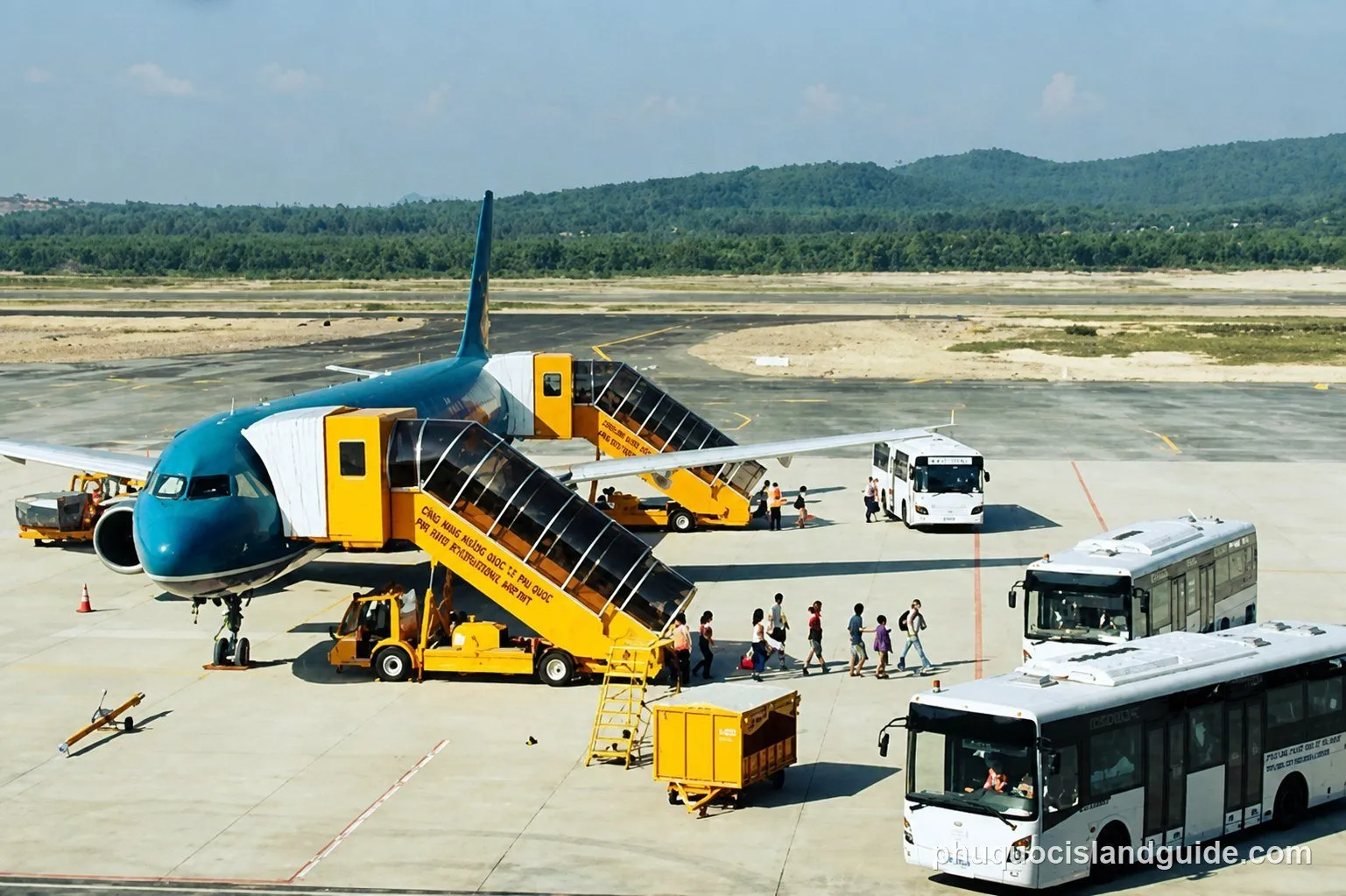
Arrivals here is a small, single-level affair, and the whole process from wheels-down to standing outside with your bag takes about half an hour on a normal day. When the plane stops you will usually exit onto the tarmac from the front or rear door and board a bus to the terminal — this airport still uses remote stands for most flights, so pack an umbrella in the wet season.
Immigration
Every nationality gets 30 days visa-free on Phu Quoc, and there is no form to fill in — the officer stamps your passport at the gate. The rules that matter are about where that stamp is valid and what happens if you leave the island, and they are the whole subject of our Phu Quoc visa page. Read it before you book a connecting flight to Saigon, because that is where people come unstuck.
Bags, and the tag check at the exit
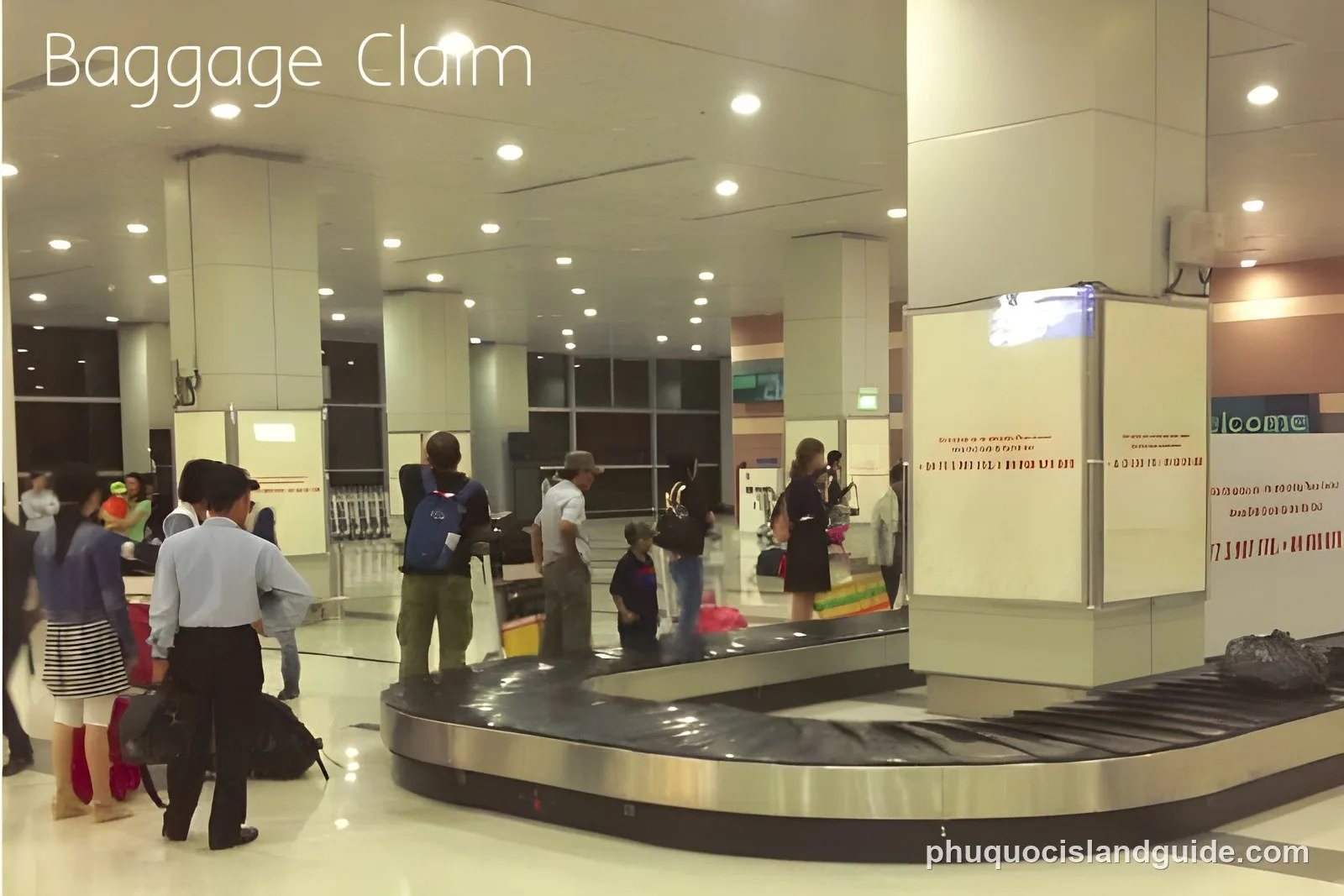
If you are carrying everything on, you can walk straight out. Otherwise expect roughly ten minutes at the belt while the aircraft is unloaded.
Keep your baggage tags in your hand, not in your pocket. There is a staff member at the exit doors who checks the tag on your bag against the stub on your boarding pass, and they do actually check. Digging through a daypack for a crumpled sticker while a queue builds behind you is the single most avoidable delay in this building.
Getting a SIM card
There are prepaid SIM counters in the arrivals hall past the baggage belt, and they open early and close late. Which of the Vietnamese networks is actually staffed on the day you land is anyone’s guess — the lists you will find online contradict each other and none of them comes from the airport.
Two things hold true regardless of which counter is open. You need your passport to register a Vietnamese SIM — that is a legal requirement, not a shop policy, so keep the passport out before you pack it away (prices and packages: SIM cards and mobile data). And the airport counters do not sell or activate eSIMs. If you want an eSIM, buy and install it while you still have wifi at home; sorting one out on arrival with no data connection is a bad place to start a holiday.
Cash and changing money
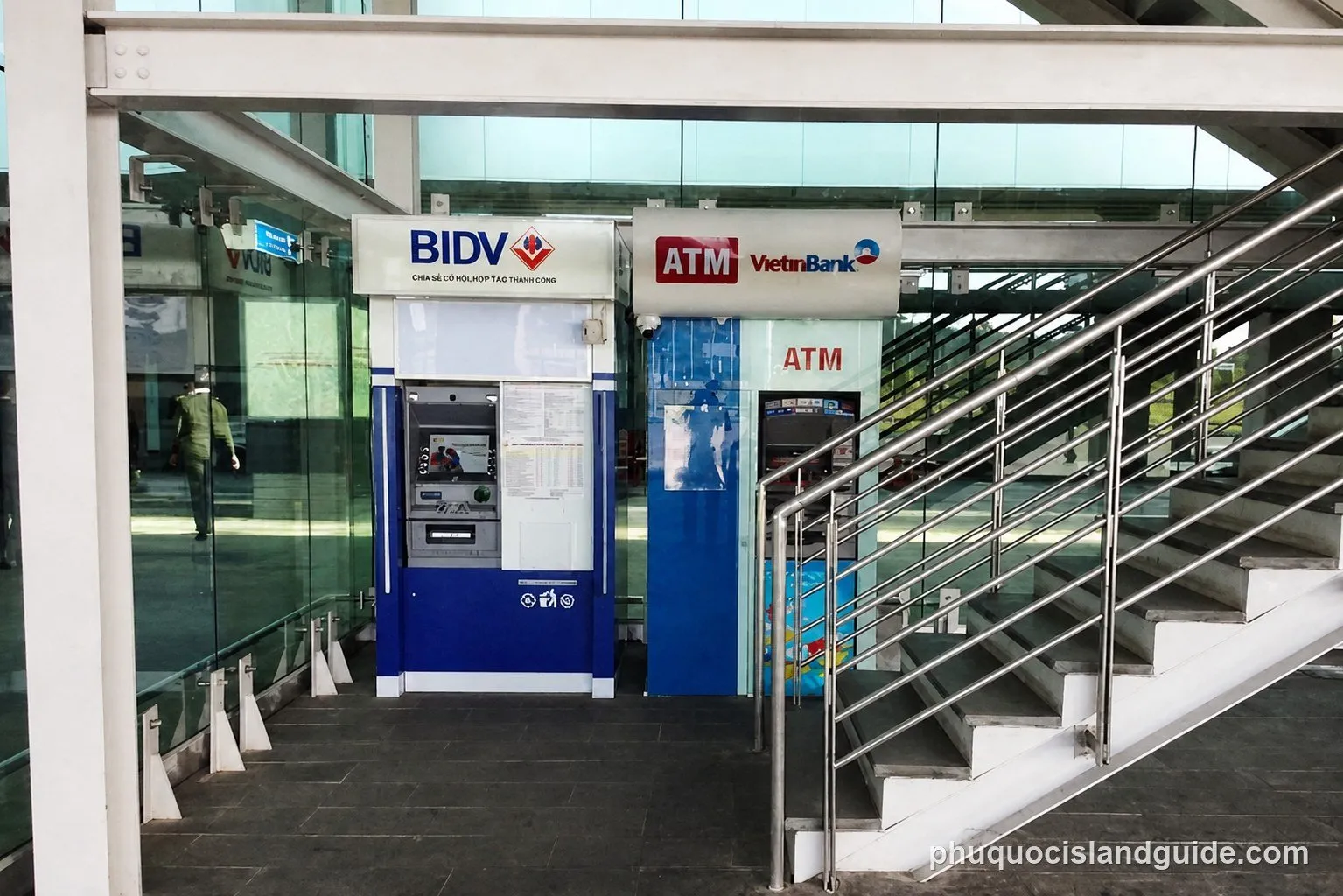
There are ATMs in the arrivals area and they take international cards. Expect a local machine fee on top of whatever your own bank charges, and the machine will show it before you confirm. We are deliberately not printing a list of which banks have machines there: the earlier version of this page listed three banks in the text and a different set in a photo caption, which is a good sign that nobody had checked either.
There is also a currency exchange counter in arrivals. The rate is worse than in town, which is normal for airports everywhere. Change enough for the ride to your hotel and a bottle of water, then change the rest in Duong Dong. More on ATM fees and exchange: money and ATMs.
Getting from the airport to your hotel
Nobody publishes a fare table for this. Not the airport, not the taxi companies, not the province. Every price you will find online, including the prices this page used to print, traces back to somebody’s blog post — so instead of numbers that cannot be defended, here is how the options compare with each other and how to find the real price in the two minutes before you get in.
If you booked a resort with an airport transfer, someone will be standing in arrivals with your name on a sign. That is the least stressful option and it is often included in the room rate at the larger resorts without being advertised — check your booking confirmation before you pay for anything else.
Checked August 11, 2026. Airport transfer prices are not published by anyone official and vary by driver, vehicle and season — treat any figure you read anywhere as a starting point, and agree the fare before you get in.
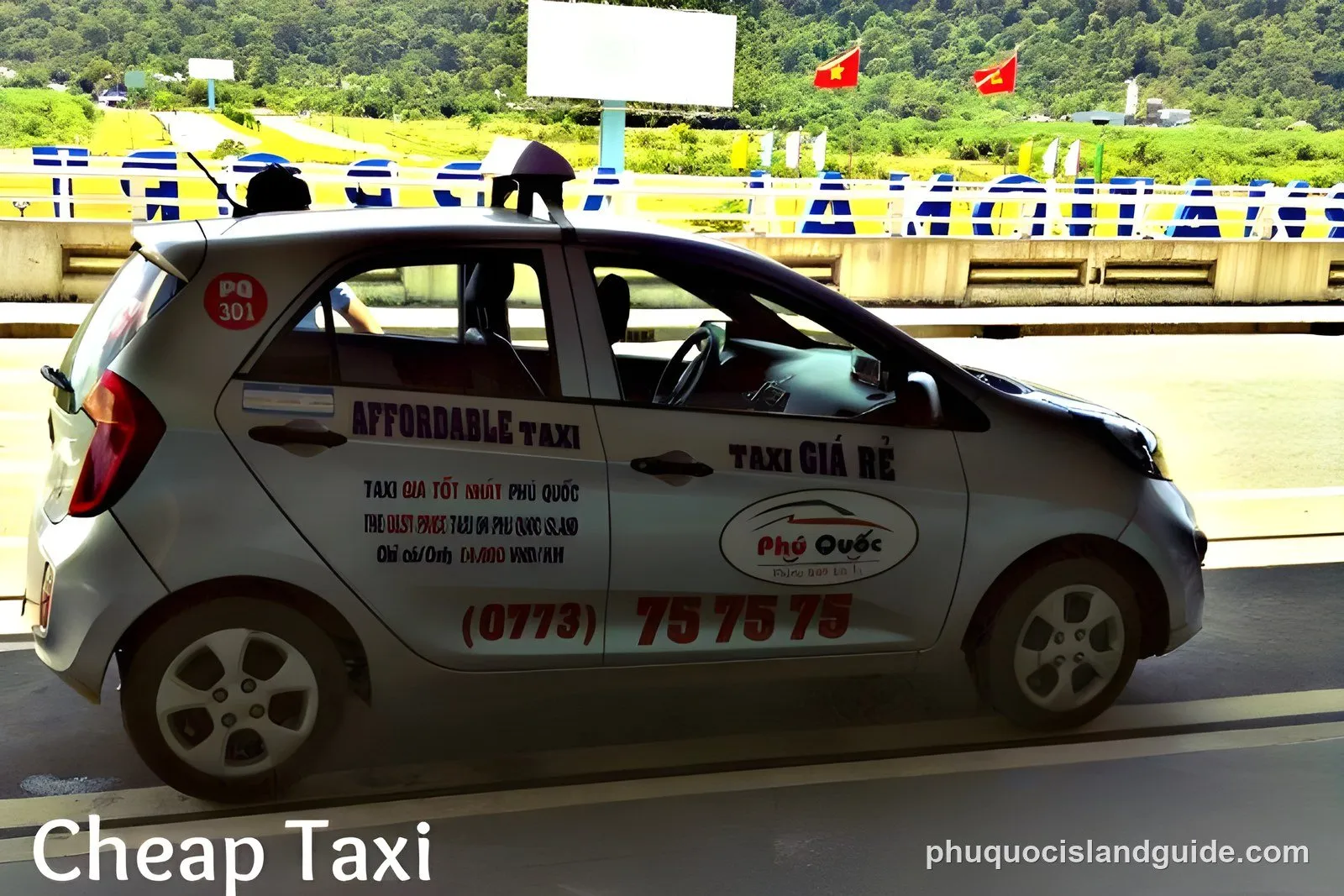
Taxis at the door
Several taxi companies queue outside arrivals and there are always cars waiting. Insist on the meter, or agree a flat fare before you set off — both are normal here, but a driver who will do neither is telling you something.
Ask whether the airport road toll is included. Drivers may add it on top of the meter, and some collect it as you get in rather than at the end. This page used to quote an amount for it, but no current source confirms or denies that figure, so it may have been folded into fares or dropped altogether. Ask before you set off and you will know in one sentence.
One trick worth using: taxis that have just dropped passengers at the departures level upstairs are looking for a return fare and will often quote below the cars queuing at arrivals. Walk up to the second floor and you are negotiating from a different position.
Grab and Xanh SM
Grab works on Phu Quoc, and the app price generally comes in under the meter. The catch is where you meet the car: airport pickups by ride-hailing drivers are restricted, so you will be walking out beyond the terminal frontage to find your driver rather than being collected at the door like a taxi. With a big suitcase in August heat, that walk is part of the price.
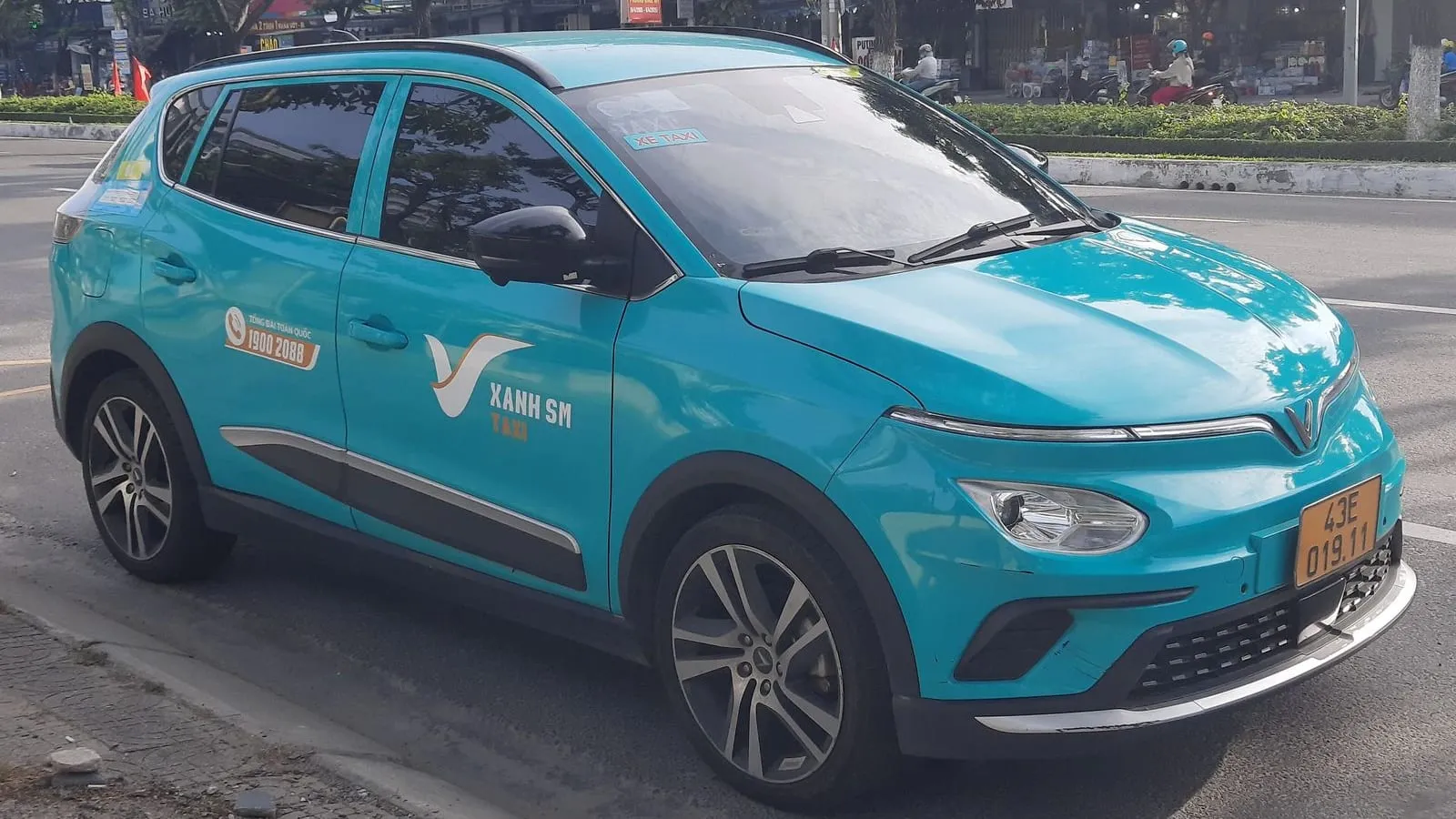
Xanh SM, the VinFast electric taxi operation, has been on the island since July 2023 and now sells an airport package in its own app. It is the most predictable option on the rank because you see the price before you accept it, and the cars are new. Either app gives you a real number for your exact hotel in less time than it takes to argue about one, which is the actual reason to open it.
Xe om, the motorbike taxi
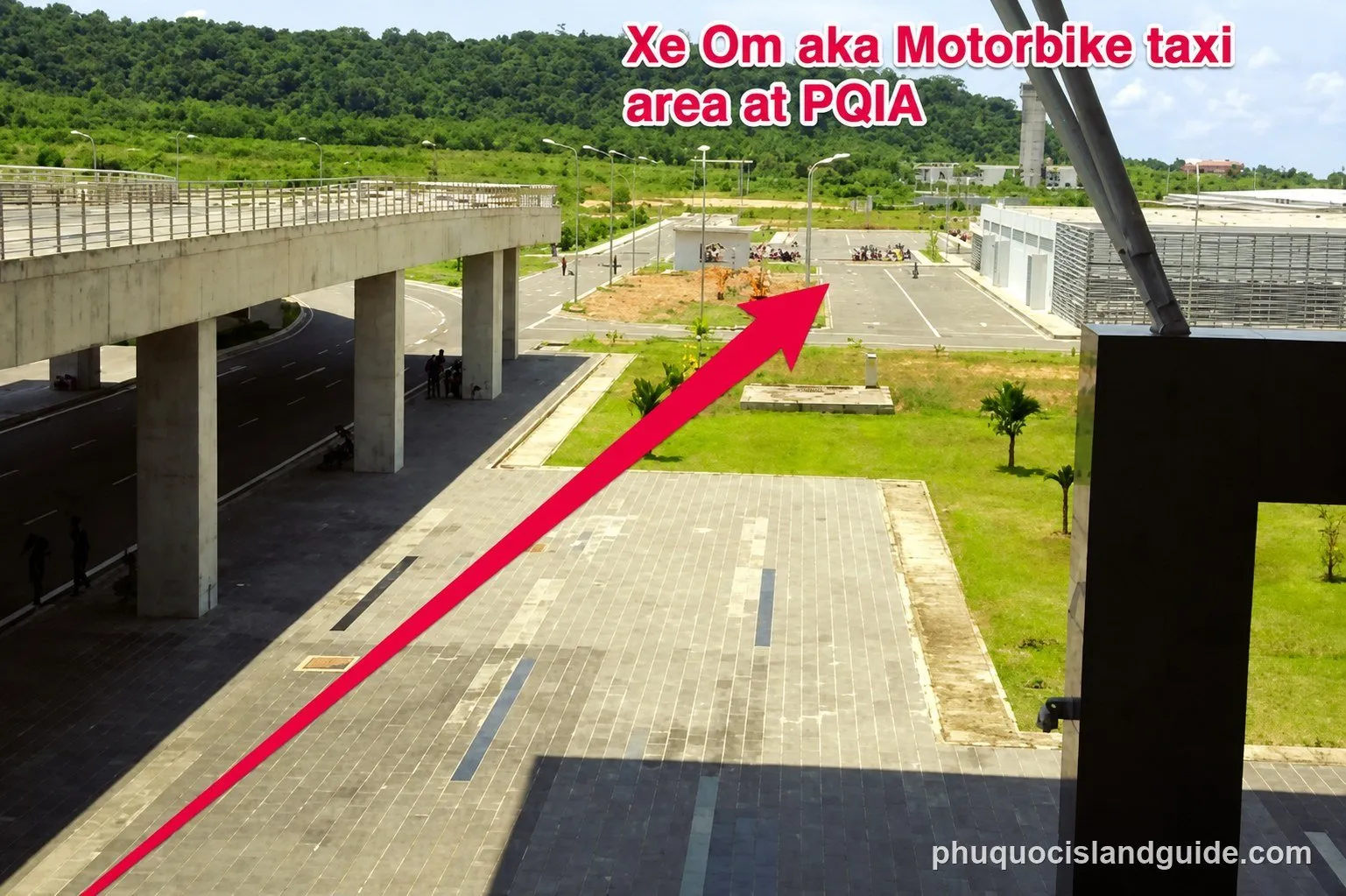
Cheapest by a wide margin — comfortably less than half a taxi — and only sensible if you have hand luggage and no suitcase. The xe om (xe ôm) riders wait in the passenger drop-off parking lot rather than at the arrivals door: exit the terminal, turn right, and head for the large paved lot.
Agree the price before you sit down, and expect the rider to be pricing by distance rather than from any list. If you are heading to Ong Lang or somewhere else up the west coast with a bag, take a car.
Buses
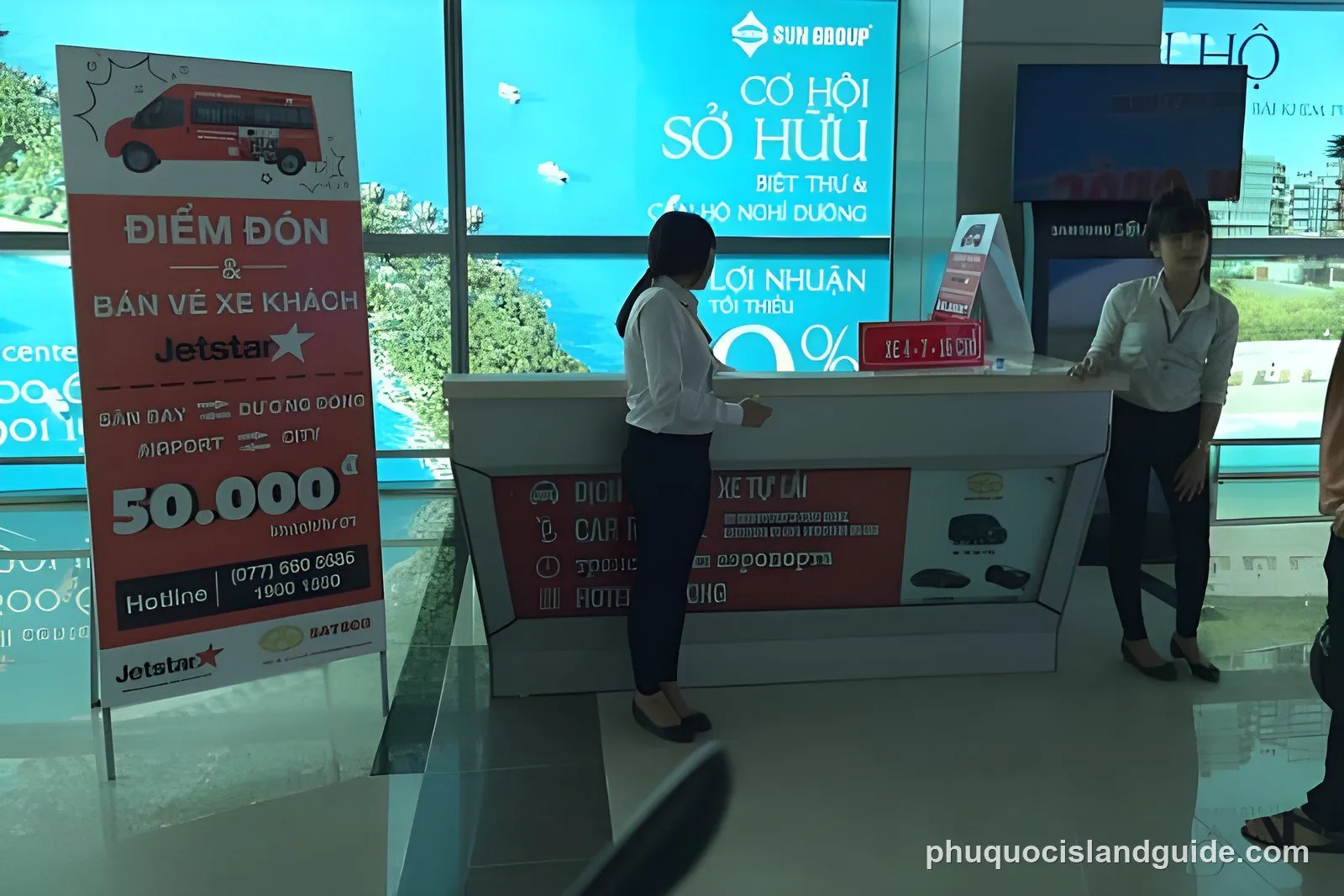
A public bus route passes the airport, and the VinBus electric service links the airport with Duong Dong, Ong Lang and Grand World. VinBus ran free of charge for years and began charging fares during 2026, with no published tariff we could find for the new arrangement; three separate sources quote three different fares for the ordinary public bus, which tells you how much any of them is worth.
Buses are the cheapest way into town by a long way and the slowest by an equally long way. If you are arriving late, do not build your evening around one.
Renting a motorbike from the airport
This page used to say flatly that you cannot rent a motorbike at the airport. That is now only half true. We still could not confirm any official rental counter inside the terminal, alongside the SIM and ATM desks — but several rental operations advertise pickup at or immediately outside the airport gate, and delivery of a bike to the airport, your hotel or your homestay is now completely standard.
The practical answer is to arrange delivery before you fly, to your hotel rather than to arrivals. Riding an unfamiliar scooter out of an airport on the same afternoon you landed, with a suitcase between your knees, is how holidays go wrong. Our motorbike guide covers the licence you need in 2026, which changed on January 1, 2025 and is stricter than most rental shops will tell you.
Flying out
Departures is on the second floor, up from the arrivals hall you walked out of. It is one small floor handling both domestic and international flights, which means the security queue at a busy hour is the whole story of your morning.
How early to turn up
Work backwards from when the counter closes, not from when the aircraft leaves. Vietjet, which publishes its rules clearly, opens check-in two hours before a domestic departure and three hours before an international one, and closes the counter 40 minutes before domestic and 50 minutes before international. Other airlines set their own cut-offs, so check yours — but the shape is the same everywhere, and the closing time is the one that strands people.
In practice that means arriving around two hours before a domestic flight and closer to three before an international one, plus a margin in peak season when a Korean widebody and two Saigon shuttles can hit the same queue. If you are claiming a VAT refund, add more — see below.
Claiming the VAT refund
Phu Quoc has been on Vietnam’s list of VAT refund exit points since around 2015, so if you read anywhere that the government “plans to” add it, including in the previous version of this page, that has been out of date for a decade.
The current rules sit in Decree 181/2025/ND-CP, in force from 1 July 2025. You need an invoice of at least 2,000,000 VND from a registered participating retailer, issued within 60 days of your departure, and you must have the goods with you. The refund paid out is 85% of the VAT on the invoice — the remaining 15% is the service fee. Since 1 July 2026 the claim runs through an electronic system linking customs and e-invoices (Circular 84/2026). We could not confirm that a refund counter is operating at Phu Quoc in 2026, so ask customs at the airport before you rely on it — more in our shopping and duty-free guide.
The sequencing is the part that catches people. Customs has to see the goods before you check the bag they are going in, so the inspection and stamp happen in the public area before you join the check-in queue, and the money is paid after you clear security. Do it in the other order and you have a stamped invoice and a suitcase already on a belt.
What is actually in departures
Pearl jewellery and liquor dominate the shops, before and after security, with souvenir stalls, a couple of coffee places and a fast-food counter filling the rest. It is a small floor and the tenants turn over, so treat any list — this one included — as a snapshot rather than a directory.
Do not save a duty-free shopping run for this airport. The selection is thin next to Saigon or Hanoi, and if there is something specific you want, buy it before you fly out of your connecting hub. In 2026 Vietnam Duty Free (VDF) runs the shops in international departures and arrivals; allowances and rules are in our shopping and duty-free guide.

Facilities, and the building site
Today the airport is a single terminal handling both domestic and international traffic, with the arrivals hall on the ground floor and departures above it. There is wifi, there are ATMs and SIM counters in arrivals, and there are toilets and coffee in both halves. That is genuinely the extent of it, and for a flight to Saigon it is enough.
That is changing on a large scale. A second runway and a new T2 terminal are under construction, with the project aiming to lift the airport to 20 million passengers a year and to ICAO code 4E, meaning it will handle widebodies like the 787 and A350 rather than mostly A320-family jets. According to the Civil Aviation Authority of Vietnam, the T2 roof went on during 2026 with the exterior due at the end of July 2026, the whole project scheduled for completion on 30 March 2027, and commercial operation planned for the first quarter of 2027 — timed for Vietnam’s APEC year.
What that means for you if you are flying in during 2026: construction traffic on the airport road, one small terminal doing all the work in the meantime, and a real chance that the building you departed from on your last trip is not the one you will use on your next. Check which terminal your airline is using from 2027 onward rather than assuming, and if you are landing on a tight connection to a ferry, give yourself more slack than the timetable suggests.
Coming from abroad or overland? See how to get to Phu Quoc for every route to the island.