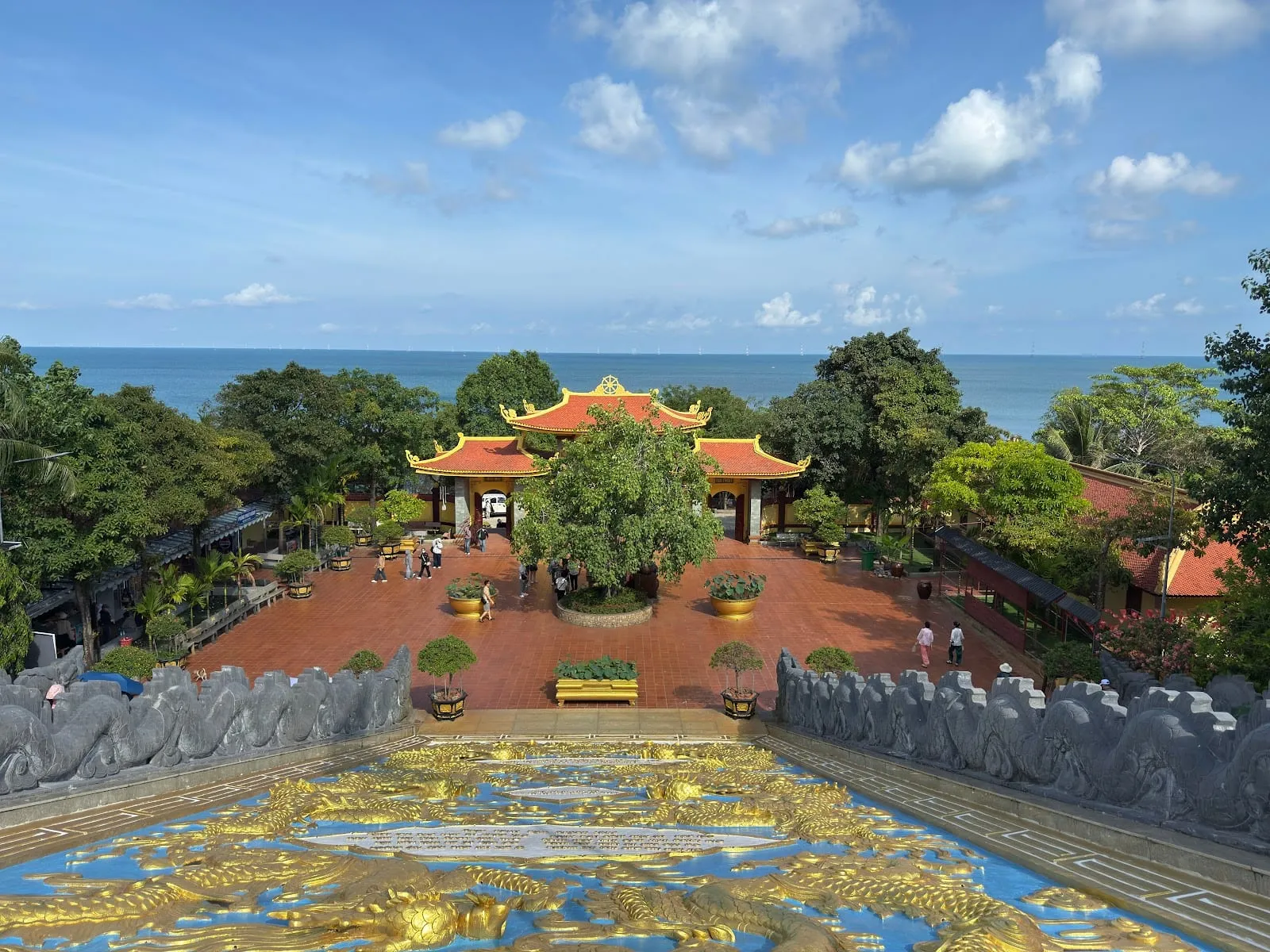
Phu Quoc’s places of worship reflect the people who settled the island: Vietnamese Buddhists, fishermen who pray to the gods of the sea, Chinese families who brought their own temples, Catholics, and followers of Cao Dai, a Vietnamese religion with a special link to the island. None of them charges for entry. Ratings below are from Google Maps, October 2026; drive times from Duong Dong are OSRM estimates.
Ho Quoc Pagoda — the largest
Thiền viện Trúc Lâm Hộ Quốc, on a hillside on the east coast facing the sea, is the island’s biggest temple and its most visited (4.7 from 1,447 reviews). It belongs to the Truc Lam Zen school and was inaugurated at the end of 2012, built in the style of the Ly and Tran dynasties, with a long stairway up to the main hall and a white statue of the bodhisattva Quan Am more than 30 m tall. Come early, before the tour coaches. About 35 minutes from Duong Dong. Full guide.
Su Muon Pagoda — the hillside pagoda
Chùa Sư Muôn (also called Hùng Long Tự), on a forested hillside a short drive south-east of Duong Dong (about 7 minutes), began in the 1930s as a small wooden hut, was destroyed in the war in 1945 and was rebuilt from 1955. Today it climbs the slope in a series of terraces, with steep steps, colourful statues, a large white reclining Buddha and an enormous old kơ nia tree. It is quiet, with few tourists (4.4 from 611).
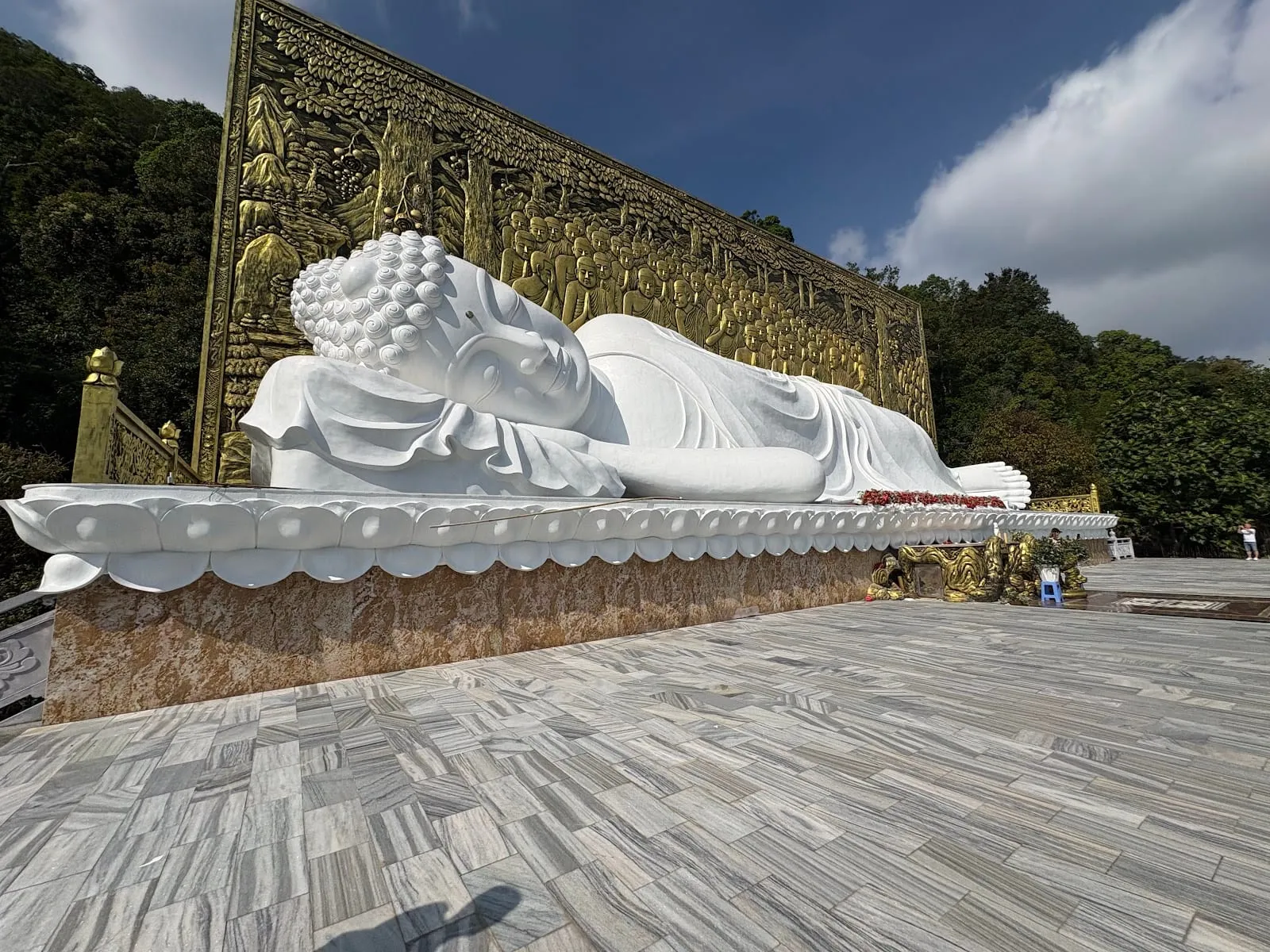 Su Muon Pagoda. Photo: Marie HM, via Google Maps
Sung Hung Pagoda — the oldest
Sùng Hưng Cổ Tự, at 7 Tran Hung Dao in the centre of Duong Dong, is usually described as the oldest pagoda on the island, formed by merging two earlier pagodas. Nobody is sure when it was founded; it was restored in 1924 and 1960 (VietNamNet). It is small and easy to combine with the night market (4.4 from 121). Nearby, Hung Quoc Tu, a Pure Land pagoda on Nguyen Trung Truc street, is another neighbourhood temple worth a look.
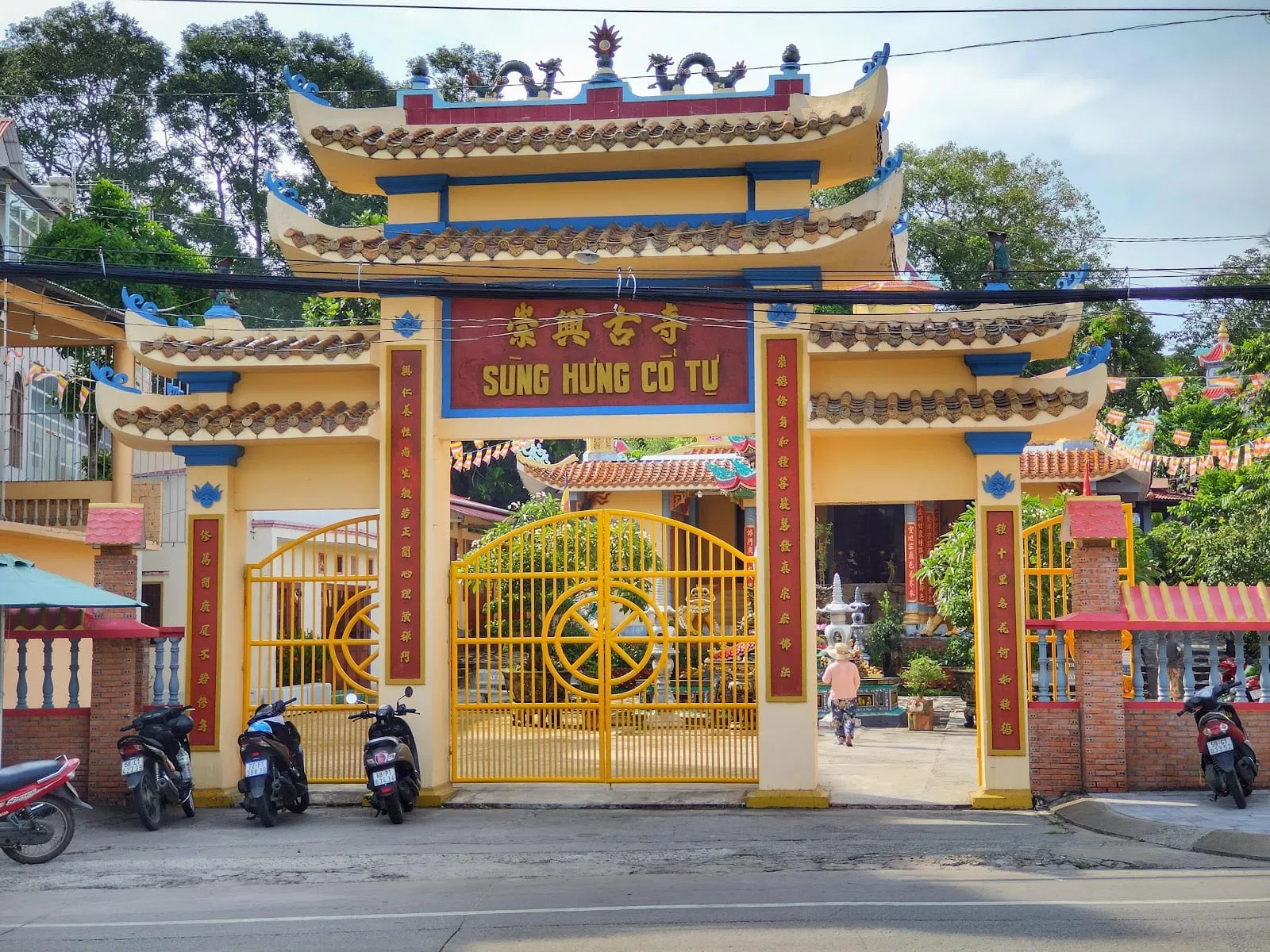 Sung Hung Pagoda. Photo: Minh Hùng Nguyễn, via Google Maps
Sea shrines
- Dinh Cau — the rock shrine and lighthouse at the mouth of the Duong Dong river, dedicated to the Lady of the Island and her two sons, protectors of fishermen; the island’s favourite sunset spot (4.5 from 3,761).
- Dinh Bà Thủy Long Thánh Mẫu, at 44 Vo Thi Sau, near Dinh Cau — a temple to the sea goddess, still busy with local worshippers (4.5 from 299). Its main festival is on the 15th day of the first lunar month.
Temples to Nguyen Trung Truc and his wife
- The Nguyen Trung Truc temple in the north-west honours the 19th-century leader of the resistance against the French, who made his last stand on Phu Quoc in 1868.
- Dinh Bà Ông Lang, in Cua Duong, honours his wife, Lê Kim Định; thousands attended its festival on the 18th–19th of the first lunar month in 2025 (Tuổi Trẻ).
The Cao Dai temple
Cao Dai is a Vietnamese religion founded in 1926 that combines Buddhism, Taoism, Confucianism and Christianity — and its first disciple, Ngô Văn Chiêu, received his calling on Phu Quoc in the early 1920s. The colourful Cao Dai temple in Duong Dong is a short walk from the night market. Full guide.
Chinese temples
Duong Dong’s Chinese community has its own temples to Quan Công (Guan Yu), the general revered as a symbol of loyalty and courage: the Guan Di temple off Tran Hung Dao (4.4 from 60) and the smaller Hainan Guan Di temple in the old town.
Churches
Phu Quoc belongs to the Catholic Diocese of Long Xuyen, and there are churches in the main towns: Duong Dong Church (4.7 from 450), a large church north of the town centre that reviewers say opened in 2019, and An Thoi Church (4.6 from 378) in the south. Mass is usually early in the morning and late in the afternoon; check locally. The island’s Catholic history goes back a long way: the French bishop Pigneau de Behaine sheltered here with the future emperor Gia Long in 1782–1783.
Visiting etiquette
- Dress modestly: cover shoulders and knees; take off your shoes where others do.
- Be quiet where people are praying, and ask before photographing monks, nuns or worshippers.
- Donations are welcome but never required.
- The big days — Lunar New Year (Tết), the Buddha’s birthday and the full moons — are busy, colourful and a good time to see the temples in use.
Ratings and review counts: Google Maps, October 2026. History: Vietnamese press (see sources) and temple histories.