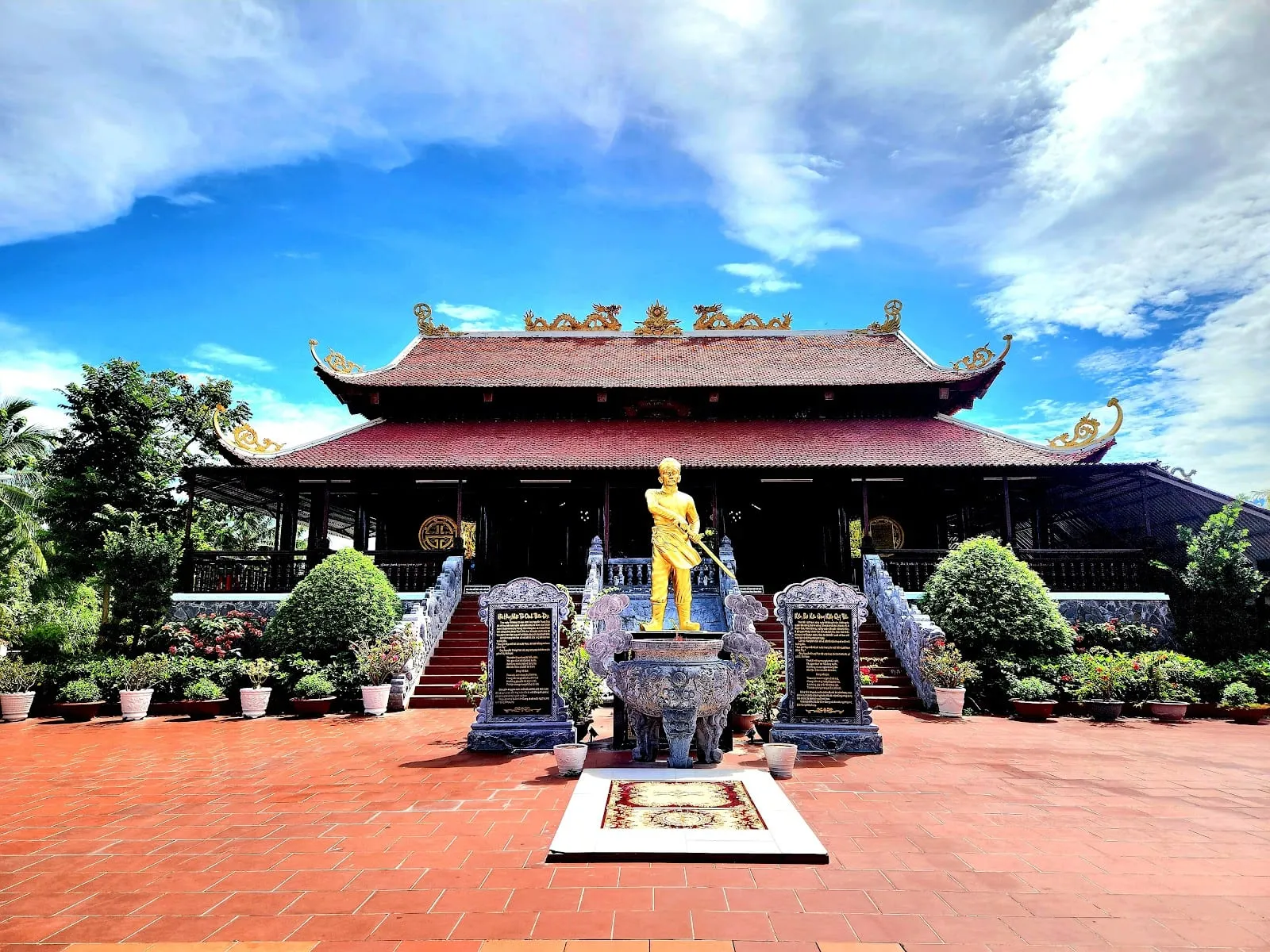
Nguyễn Trung Trực is one of the great heroes of southern Vietnam, a leader of the resistance against the French conquest in the 1860s, and Phu Quoc is where his story ended. There are several temples to him on the island; the two worth visiting are the main temple at Ganh Dau, in the far north-west, and the shrine at Cua Can, on the site of his last base.
Who was Nguyen Trung Truc?
- 1861: on 10 December he led the attack that burned the French warship L’Espérance at Nhat Tao, on the Vam Co river — the exploit that made him famous.
- 1868: in June he captured the French fort at Rach Gia on the Mekong Delta coast. When the French retook it, he withdrew with his fighters to Phu Quoc and set up a base at Cua Can.
- September 1868: surrounded on the island, he gave himself up to spare his men and the islanders.
- 27 October 1868: he was executed in Rach Gia.
He is remembered for the words attributed to him before his death, that the Vietnamese would stop fighting the French only when the French had pulled up every blade of grass in the country. His wife, Lê Kim Định, is honoured at Dinh Ba Ong Lang in Cua Duong; see temples and pagodas.
The temple at Ganh Dau
Đình thần Nguyễn Trung Trực, at Ganh Dau in the far north-west, is the island’s main temple to him (4.6 on Google Maps from 616 reviews, October 2026). It stands in a large courtyard with a statue of the hero, a main hall with his altar, and the older temple beside the new one; reviewers note that it faces the sea towards Cambodia. It was listed as a provincial heritage site in 2011 (Báo Pháp Luật). The stone steles telling his story are in Vietnamese only, so it helps to know the story before you go.
Its main festival is held each year in the eighth lunar month, with rituals and offerings; the exact dates vary by source, so ask locally. It is separate from the much larger national festival at his temple in Rach Gia, recognised as national intangible heritage in 2023, which in 2026 was held on 6–8 October.
The shrine at Cua Can
Đền thờ Nguyễn Trung Trực in the countryside of Cua Can (4.6 from 103) stands on the site of his last base on the island. It is quiet and rarely visited. In the grounds is an old wooden boat on display, which visitors are told is connected with his crossing to the island, and a stele with his history; the gate carries couplets about his two great victories. It is about a kilometre from the Phu Quoc Bee Farm, so the two combine easily.
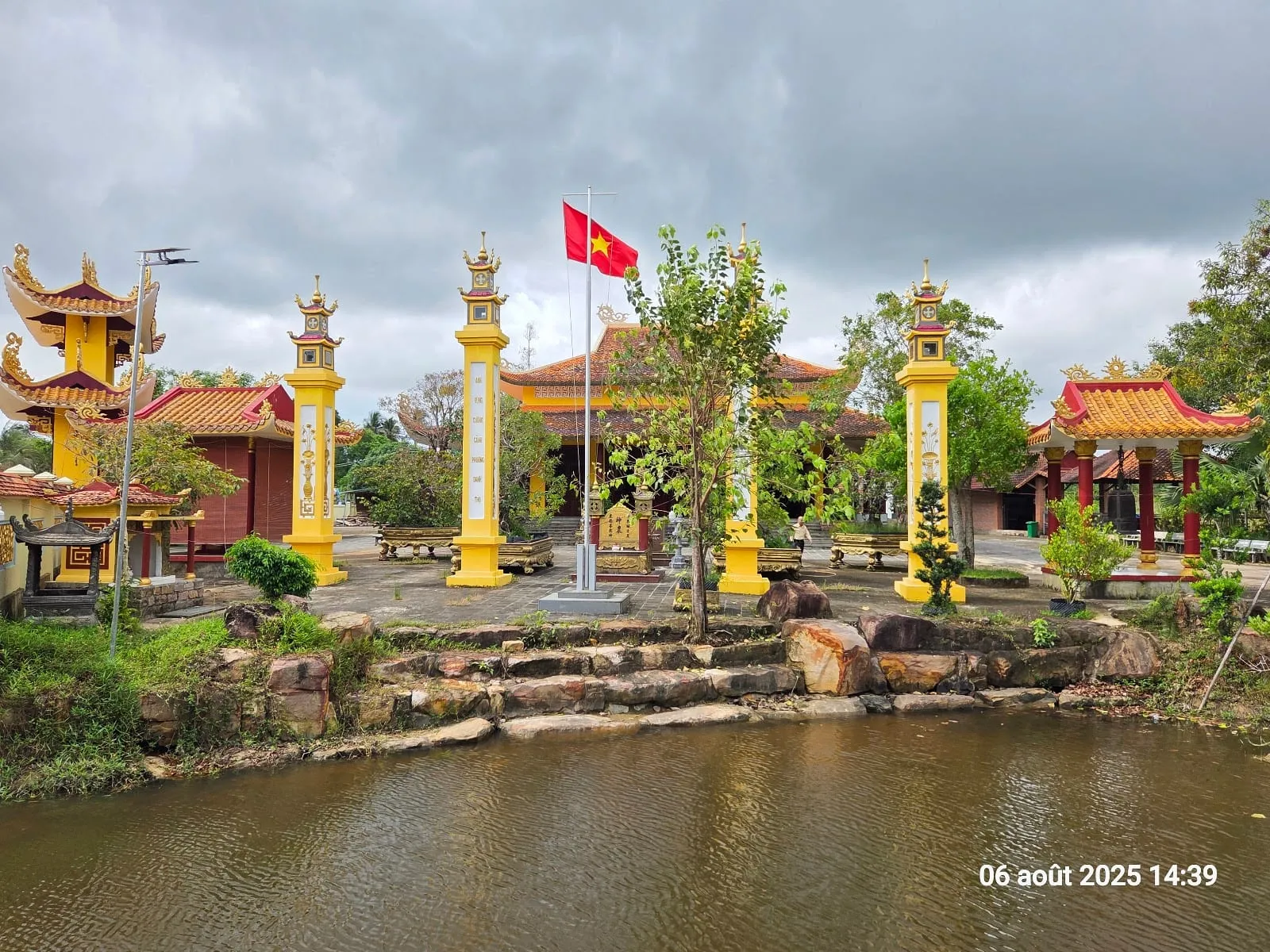 The shrine at Cua Can. Photo: Cyril Houart, via Google Maps
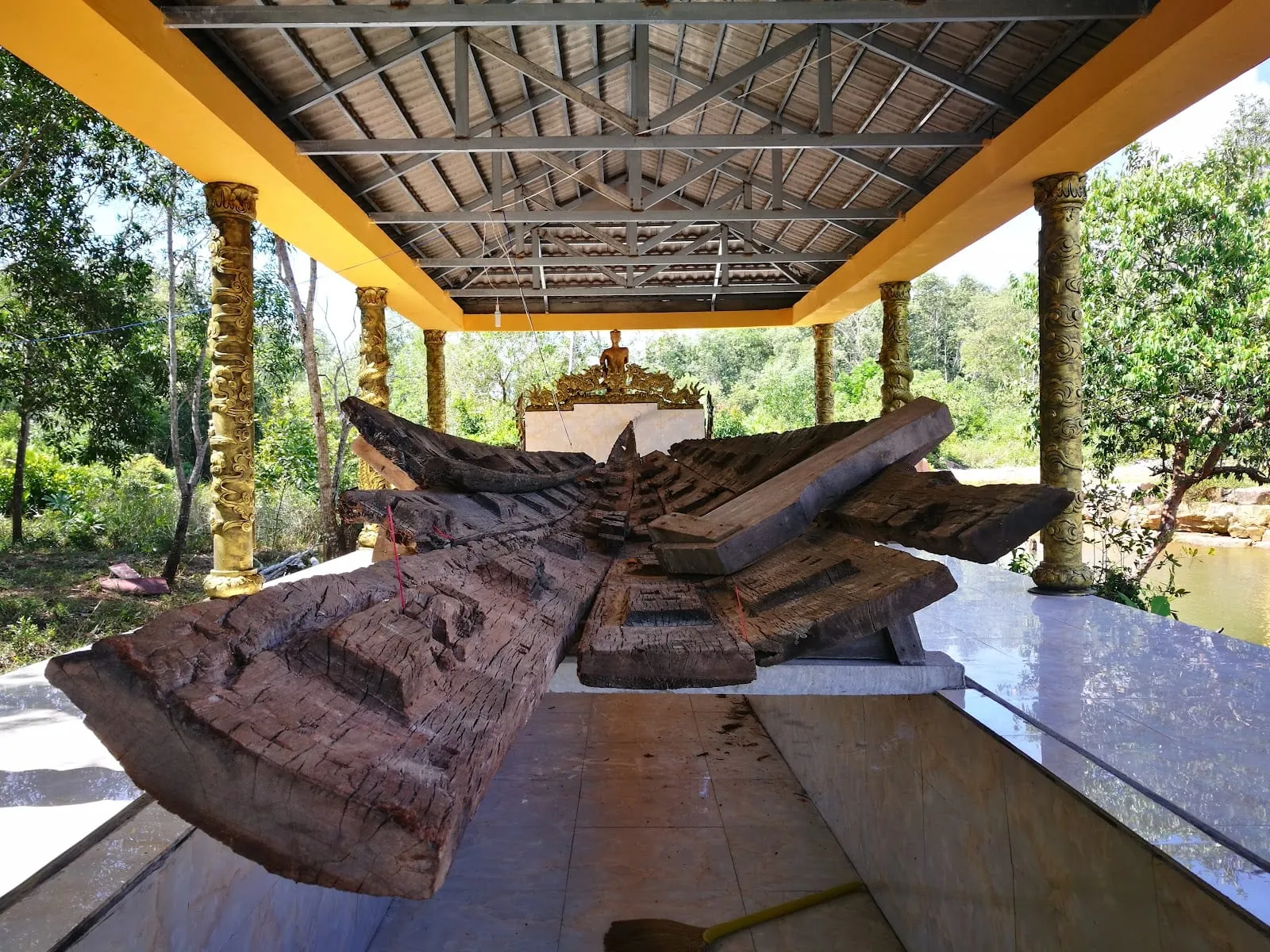 The boat at the Cua Can shrine. Photo: Khoa Do, via Google Maps
Visiting
- Entry is free at both. Dress modestly and be quiet in the halls.
- Getting there: Ganh Dau is about 27 km (30 minutes) by road from Duong Dong, and the Cua Can shrine about 16 km (20 minutes) (OSRM estimates). Both are easy to reach by scooter or Grab; combine Ganh Dau with the fishing village and the Ganh Dau trail — see Ganh Dau.
- In Rach Gia: if you take the ferry from Rach Gia, his largest temple and the centre of his festival is in the city, a short distance from the port; see ferries.
Ratings and visitor comments: Google Maps, October 2026. History: see sources.
Map
Loads Google Maps when you tap. Or open in Google Maps.