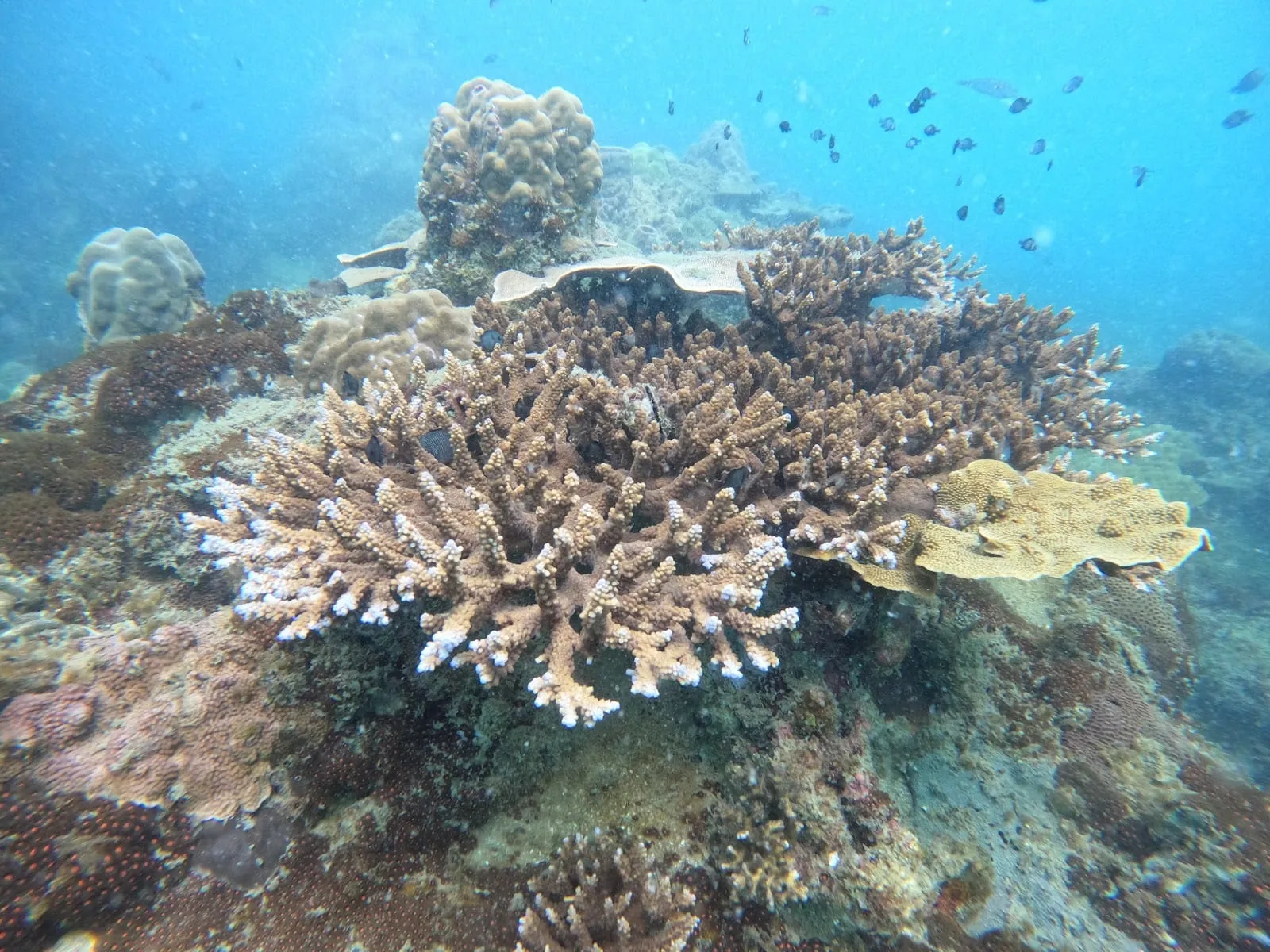
Let’s be straight about it: scuba diving on Phu Quoc is not world class. Visibility is usually somewhere between 2 and 8 metres, there are no big fish, and most dives stay shallow. What the island does well is learning. The water is warm, the sites are sheltered and there is very little current, so it is a cheap, relaxed place to try diving for the first time or get your Open Water certificate. Go in expecting coral, nudibranchs and small reef fish, not sharks and turtles, and you will enjoy it.
If you only want to see the reefs, snorkelling is cheaper and often just as rewarding here, and the shallow reefs suit freediving too.
What a dive day looks like
Almost every dive centre on the island runs the same kind of day:
- Hotel pick-up between 7:30 and 8:30, then a drive to the harbour in the south. Depending on where you stay, that takes from 30 minutes to well over an hour; one diver staying in the north reported 90 minutes.
- The boat leaves around 9:00 and takes about 45 minutes to reach the first site in the An Thoi islands.
- Two dives, with lunch on the boat in between.
- Back at the harbour between 14:00 and 15:00, then the drive back to your hotel.
Many boats also carry snorkellers and non-diving friends, so the deck can be busy. If that matters to you, ask how many people will be on board.
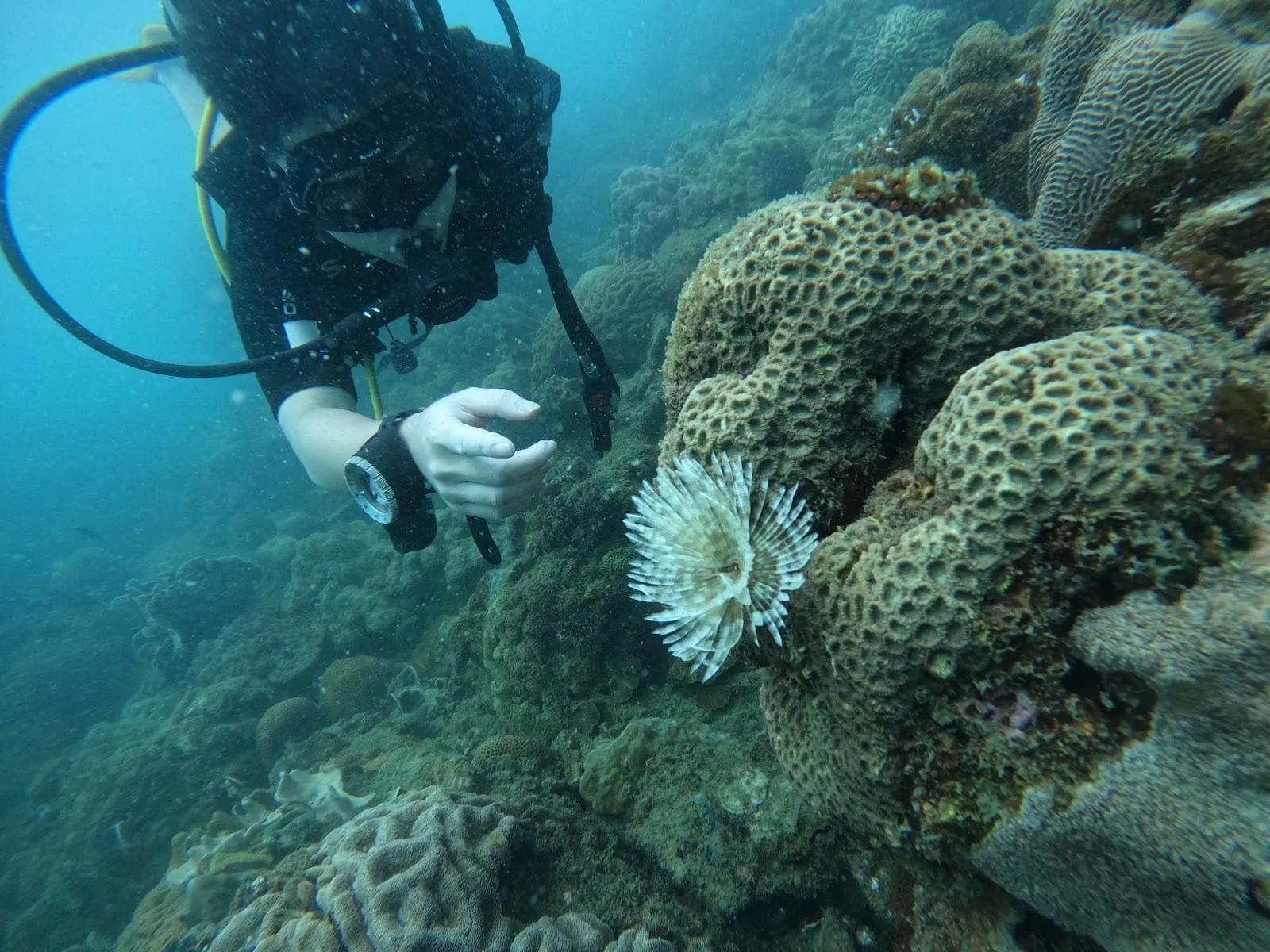 Photo: Yang Eric, via Google Maps
What you will see
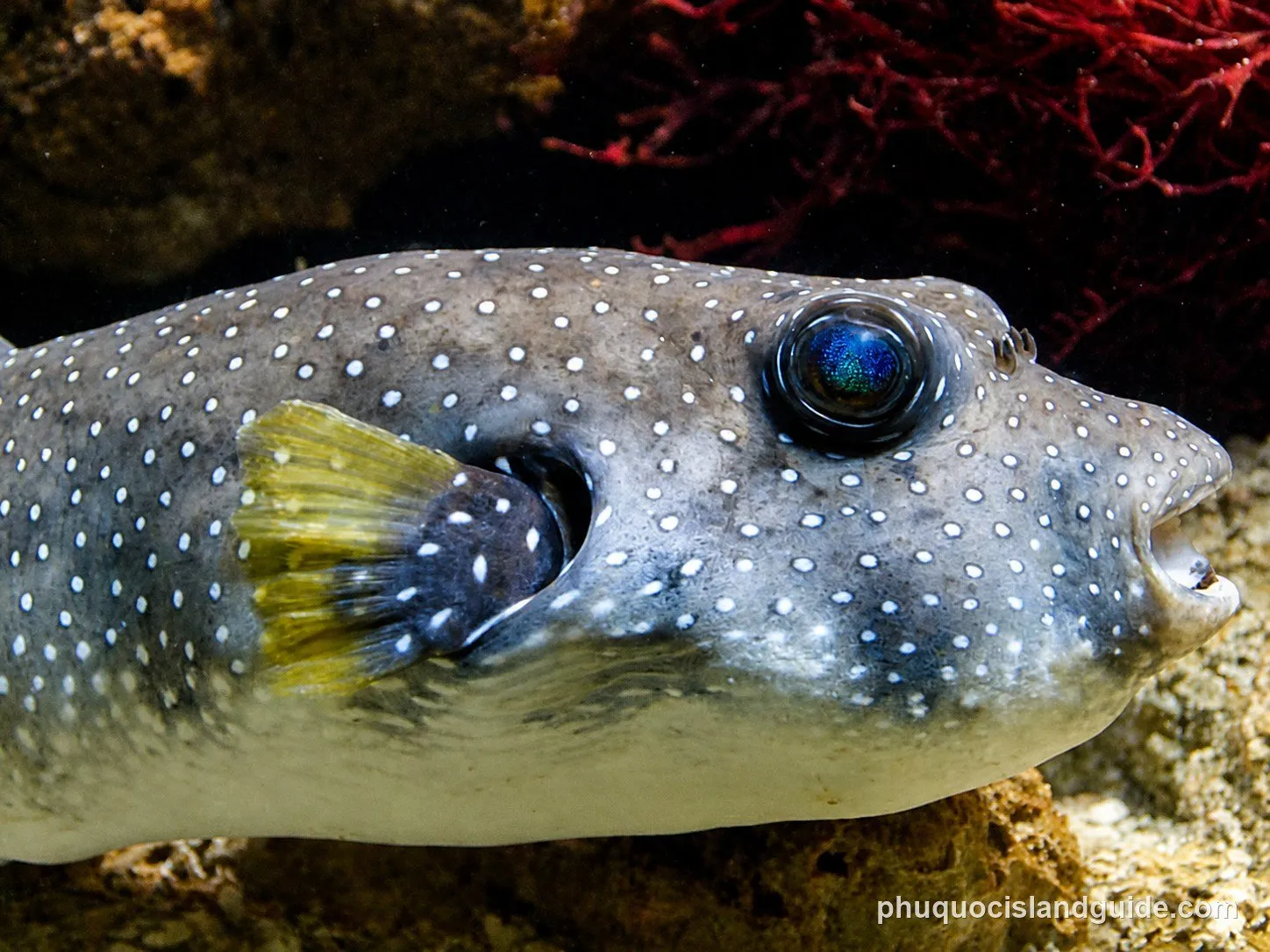
Phu Quoc is a macro destination: the interest is in small things, up close. On a typical dive you can expect hard corals, sea fans and whip corals, anemones with their anemonefish, nudibranchs, cuttlefish, octopus, moray eels, pufferfish, toadfish, mantis shrimp and schools of fusiliers and damselfish. Barrel sponges are common. Banded sea snakes turn up around Hon May Rut.
What you will almost certainly not see are large animals. The surrounding sea has been heavily fished for a long time, and anyone who dives here regularly, as we have, will tell you there are no “big fish”. Recent reviews of the dive centres say the same — “don’t expect to see large fish” — while also noting that the corals are healthy.
Visibility is the main frustration. Run-off from the Mekong Delta and a lot of suspended sediment keep the water around the An Thoi islands cloudy; one diver in May 2026 reported 4–5 metres, which is a fairly ordinary day. A few clear days in the dry season are as good as it gets.
When to dive
| Months | Conditions |
|---|---|
| November to April | The dry season and the main dive season: calm seas, the best visibility, reliable boat trips. |
| May to October | The rainy season. Trips still run, but wind and waves cancel some days and visibility drops. Dive centres often confirm sites only a few days ahead. |
| Late November to mid-December | Jellyfish season, peaking in early December. A long-sleeved rash guard or thin wetsuit is a good idea. |
The water is warm all year, around 28–31 °C, so a shorty is enough. See our weather guide for rain and sea conditions month by month.
Where to dive
The south: the An Thoi islands
Almost every dive trip goes to the An Thoi archipelago off the southern tip of the island, part of the Phu Quoc Marine Protected Area. Vietnam Active counts 12 islands and 17 dive sites there; the crew picks two each morning depending on the wind and the visibility. The best-known sites include:
- Hon Kim Quy (Turtle Island, south) — sloping reefs to 18–20 metres with angelfish, butterflyfish and plenty of reef fish. Not to be confused with the northern Turtle Island below.
- Hon May Rut — May Rut Trong is a shallow pinnacle to 10 metres that suits divers and snorkellers alike; May Rut West goes to 25 metres among big rocks, with sea snakes.
- Hon Dam Ngoai — nudibranchs and macro life at 12–18 metres, and a sheltered option in bad weather.
- Hon Roi — calm water near a pearl farm at about 10 metres, with cuttlefish and glass shrimp.
- Pineapple Point (Hon Thom) — the north side has heavy coral growth to 18 metres. The south side goes to 35 metres with strong currents, and is for experienced divers with an Advanced certificate.
Most dives are at 6–12 metres. See our An Thoi archipelago guide for the islands themselves.
The north: Turtle Island and Fingernail Island
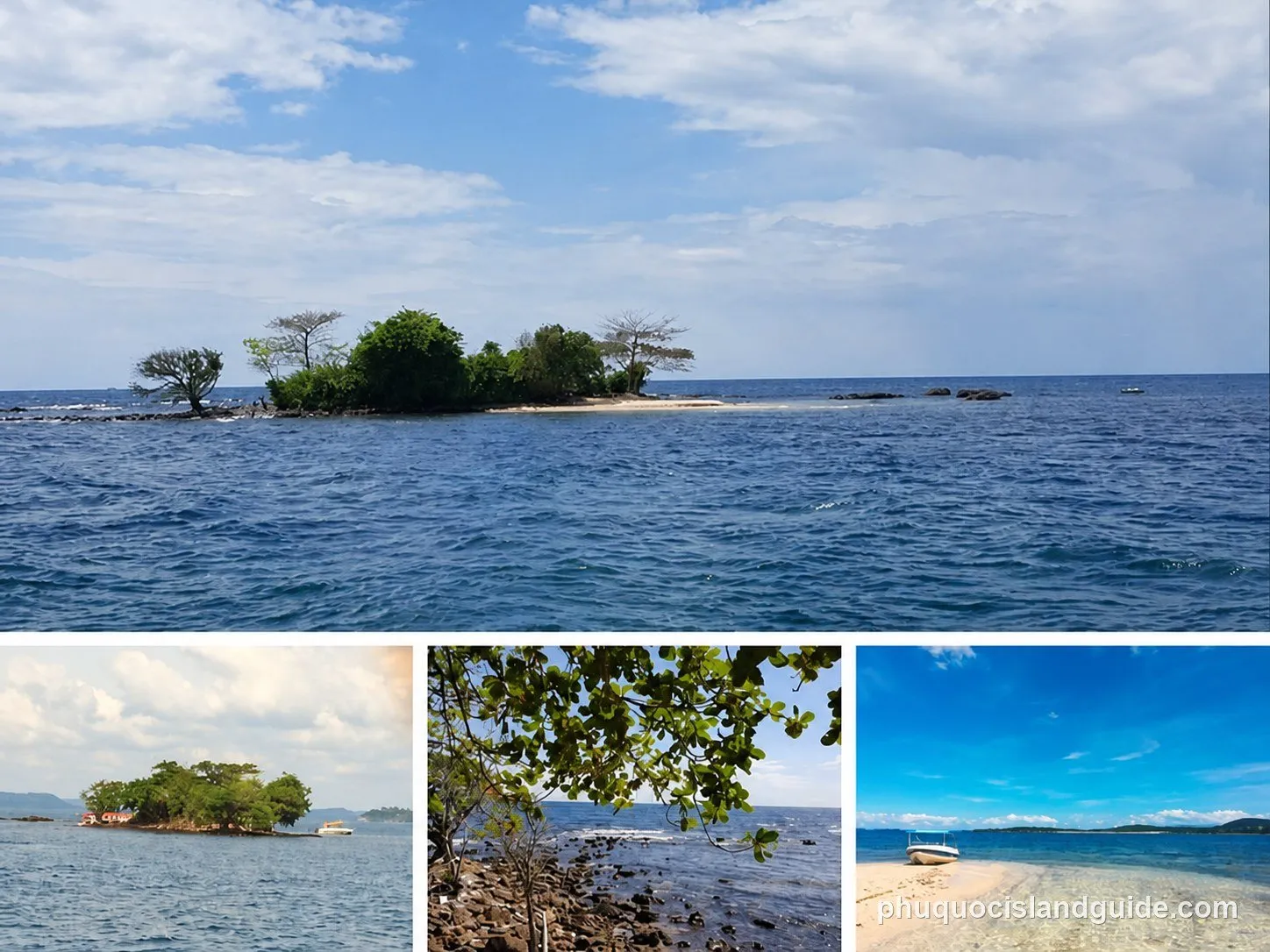
The north-west coast has two small, shallow dive sites, closer to the resorts of Bai Dai and Ganh Dau. They are mainly used for training and try dives, and only in the dry season, when the west coast is calm.
Turtle Island (Hon Doi Moi) is a small island, about 50 metres long, off Ganh Dau and Vung Bau. Coral starts at half a metre and most of the reef is 3–8 metres deep. Our favourite spot is on the south-eastern side, a channel we call “Trystan’s Trench”, full of anemones and anemonefish. North of the island the bottom is more interesting, with barrel sponges covered in sea worms and plenty of nudibranchs.
Fingernail Island (Hon Mong Tay) — there are two islands of this name; this one is just off the north-west coast, not the one in the An Thoi archipelago — has a shallow reef from 1 to 10 metres. Part of it was damaged when a resort pier was built, so it is now best for a fun dive or a first dive.
Prices in 2026
Prices from Vietnam Active, one of the two most-reviewed dive centres on the island, as listed on its website in October 2026. Each includes equipment with a dive computer, a guide or instructor, food on the boat and hotel transfers:
| Trip or course | Price |
|---|---|
| Fun dive, 2 dives (certified divers) | US$100 |
| Discover Scuba Diving, 2 dives (no experience needed) | US$110 |
| PADI Open Water course, 3 days, eLearning included | US$450 |
| Snorkelling on the dive boat | US$45 |
Vietnam Explorer published lower prices in November 2024: US$90 for two dives for certified divers, US$100 for beginners and US$35 for snorkellers. You can pay in dollars or dong at both. The minimum age for the Open Water course is 10; under-15s get a Junior certificate limited to 12 metres.
The best-reviewed dive centres
Ratings and number of reviews on Google Maps, October 2026:
- Vietnam Active — PADI 5 Star centre on Tran Hung Dao Street, 5.0 from 1,301 reviews. Reviewers single out the patient instructors and the organisation; a few found the boat crowded on busy days.
- Vietnam Explorer — PADI centre in Duong To, 4.9 from 1,027. Instructors in several languages, freshly cooked lunches with vegetarian options, and underwater photos from the guides.
- Flipper Diving Club — Bung Goi, 4.9 from 413.
- Phu Quoc Diving Club — SSI centre, 5.0 from 265.
- Delight Diving — Duong Dong, 5.0 from 176.
Some snorkelling operators, such as Kimie’s Tours, also run dive trips and courses — see our snorkelling guide.
How to choose a dive centre
- Ask where you will dive. For certified divers, the southern sites are deeper and more varied; the northern sites are mainly for training.
- Ask about group size, both underwater (Vietnam Active keeps try dives to two divers per guide) and on the boat.
- Ask how long the transfer is from your hotel. If you are staying far from the south, getting yourself to the harbour by Grab can save time.
- Bring your own mask if you have one that fits, and your own computer if you dive often. All the centres above include rental gear.
- Look at real underwater photos. Pictures of whale sharks, turtles or manta rays are not what a normal day looks like here. Recent divers’ photos on Google Maps, and the videos on this page, are a better guide.
- Do not fly within 12–18 hours of your last dive.
We found no decompression chamber on Phu Quoc itself; the nearest confirmed treatment is in Ho Chi Minh City. Check that your insurance covers diving and evacuation — see hospitals and medical care.
Marine life notes
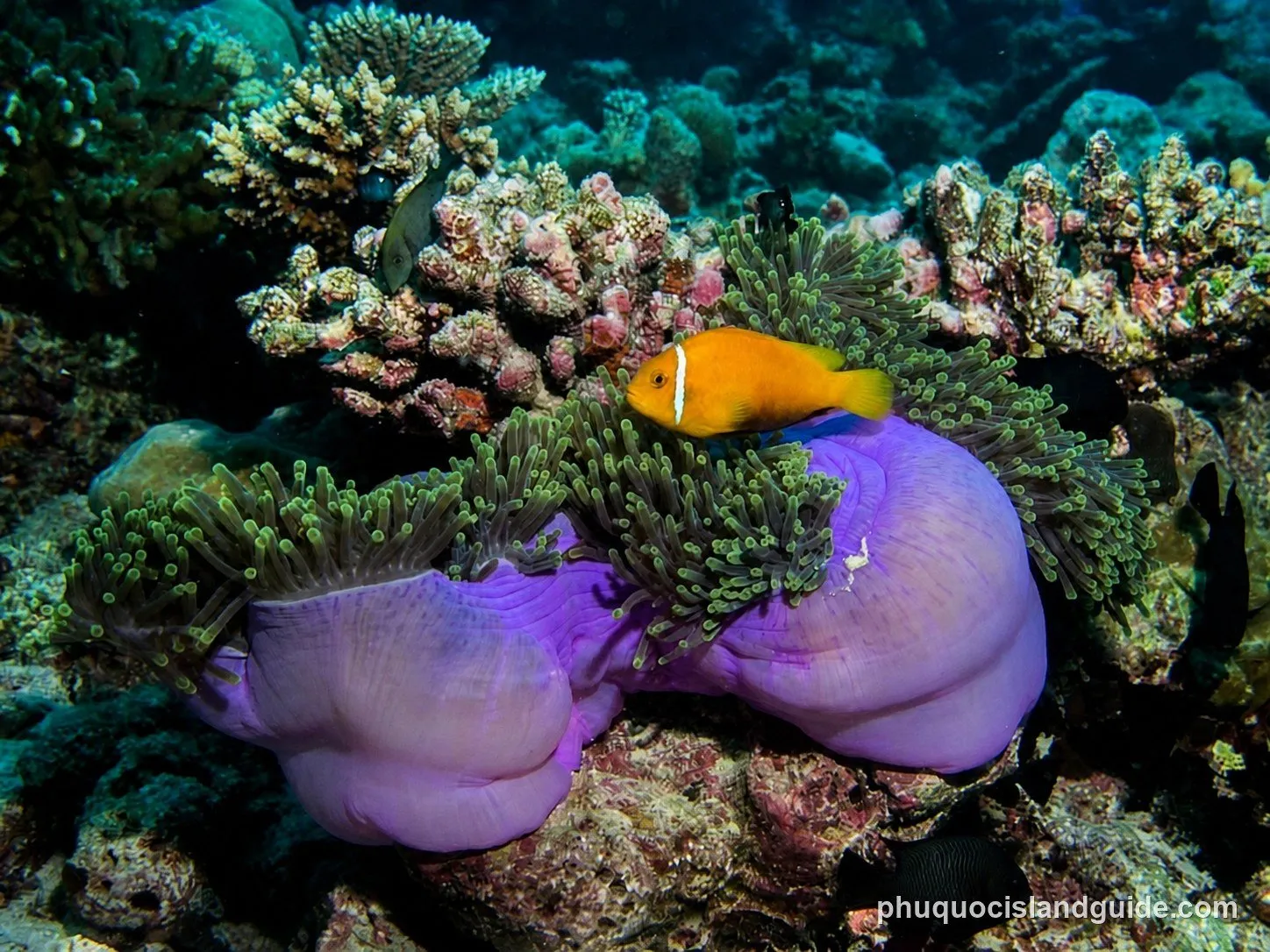
Anemones at Trystan’s Trench, Turtle Island
Nudibranchs
Nudibranchs (Order Nudibranchia), or sea slugs, are found all around Phu Quoc and the other islands in the Gulf of Thailand, at all depths and on all kinds of surfaces. The two most common here are the polka dot nudibranch (Jorunna funebris) and Phyllidia varicosa. Blue dragon nudibranchs (Pteraeolidia ianthina) and pimpled phyllidiella (Phyllidiella pustulosa) have also been spotted.
Seahorses
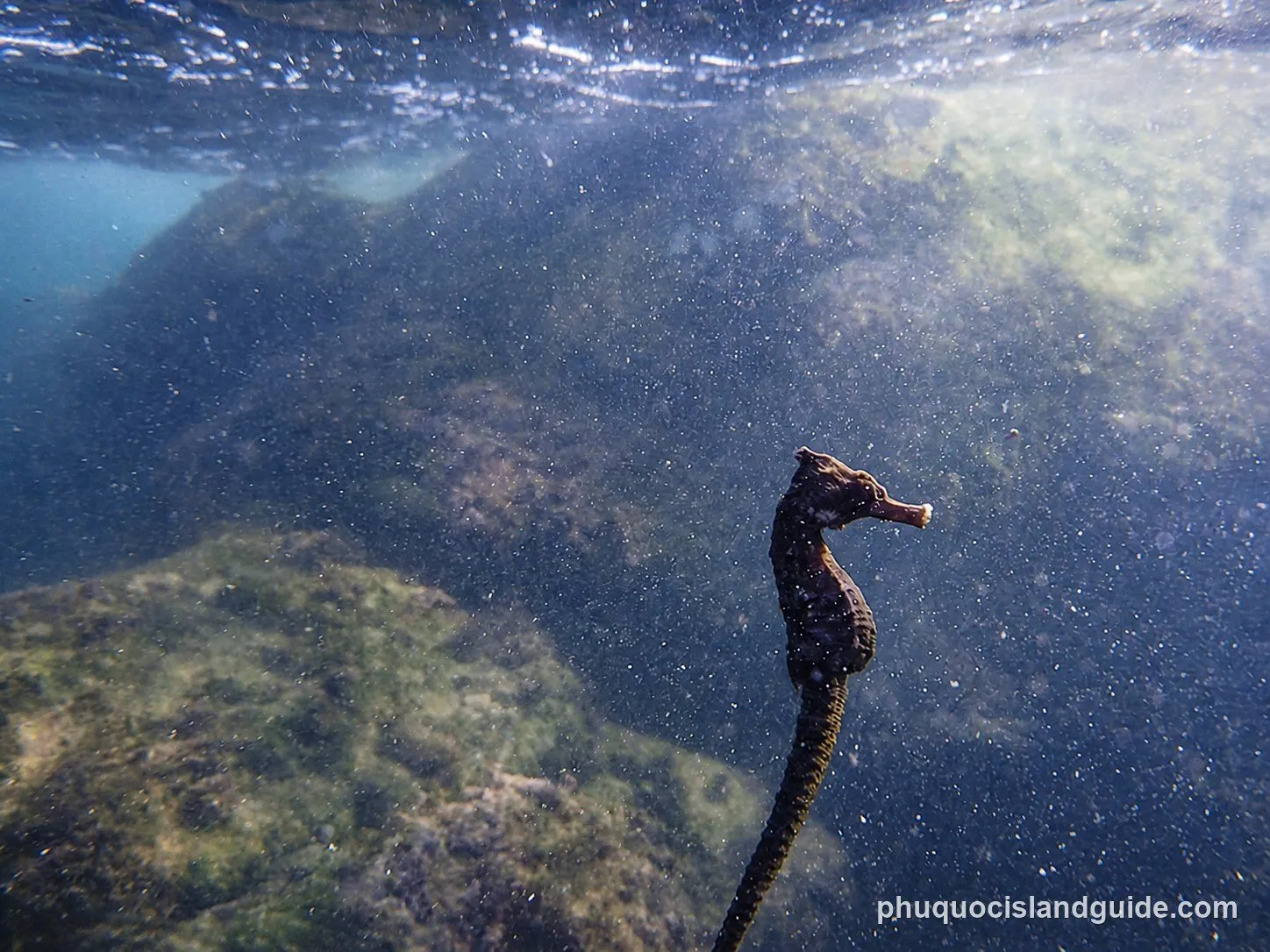
Seahorses are rare on dives here. Dive centres report the occasional one in the An Thoi islands, on the reef they call 2 Coconut Reef.
Pipefish and banded sea snakes
You can see pipefish and banded sea snakes in and around Hon May Rut, best in the morning.
Cuttlefish
Cuttlefish are one of the commoner sightings, for example around Hon Roi.
Clownfish
Anemonefish live in the anemones at Turtle Island in the north and on several of the An Thoi reefs.
Bamboo sharks
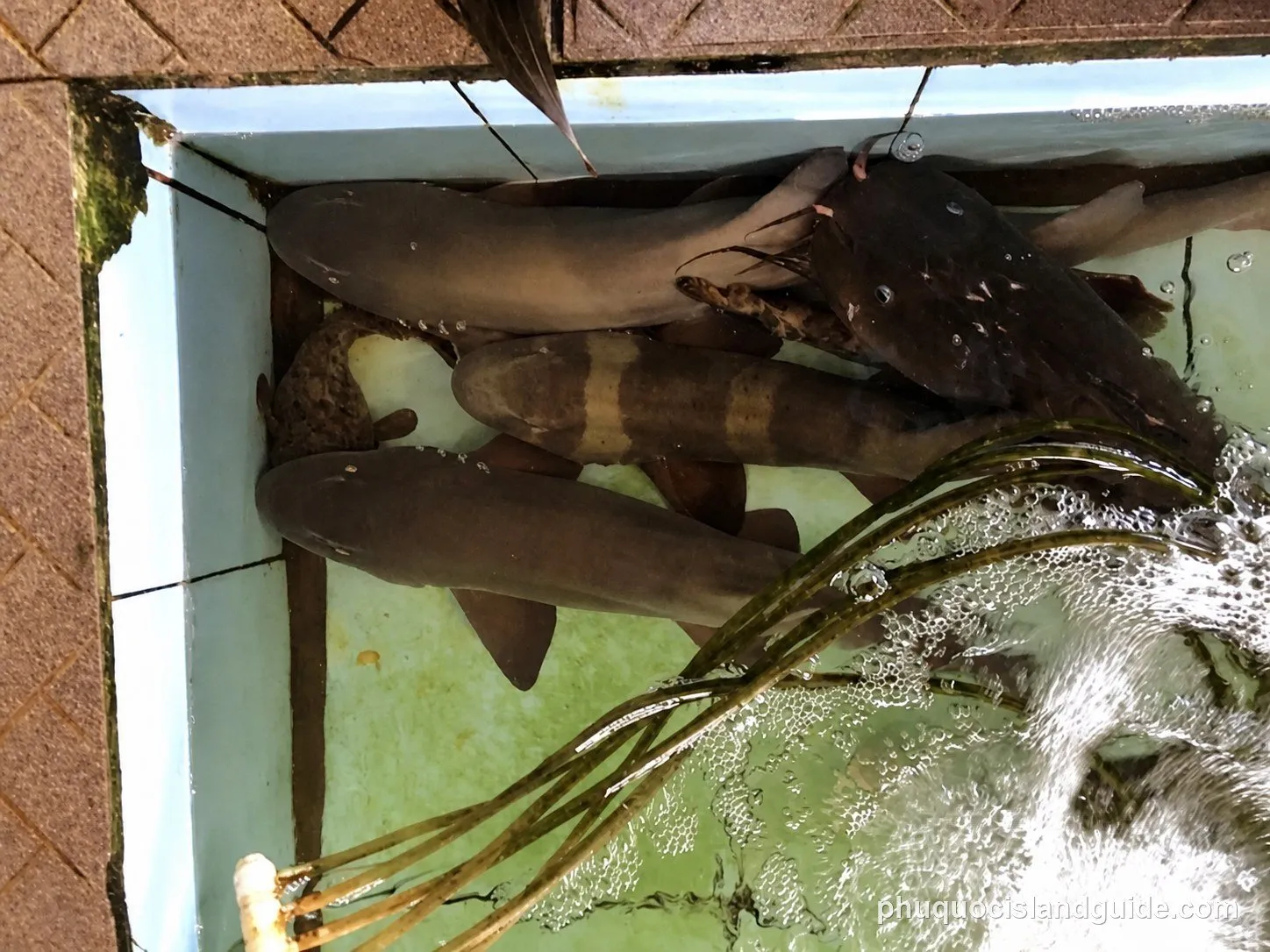
The only bamboo shark we have seen on Phu Quoc was in a seafood restaurant tank in Ham Ninh fishing village. Dive centres report them occasionally, hiding under rocks on the shallow northern reefs.
Prices: dive centre websites, October 2026 (Vietnam Explorer: November 2024). Ratings and reviews: Google Maps, October 2026. Dive sites and depths: Vietnam Explorer’s dive site map.
Map
Loads Google Maps when you tap. Or open in Google Maps.