Phu Quoc is far better equipped than it was a few years ago. Since October 2025 the island has had its own 115 ambulance service, and since April 2026 a second private hospital, in the south at An Thoi, alongside Vinmec in the north and the public medical centre in Duong Dong. For anything routine — a fever, a cut, an ear infection after diving — there are clinics and pharmacies in every resort area. For specialist care, patients are still flown to Ho Chi Minh City, about an hour away. This page lists where to go and what to know; it is not medical advice.
In an emergency
| Number | Service |
|---|---|
| 115 | Ambulance and medical emergency |
| 113 | Police |
| 114 | Fire and rescue |
| 112 | Search and rescue, including at sea |
Calls to these numbers are free. The 115 service on Phu Quoc started on 10 October 2025, with eight ambulances and stations in Duong Dong, An Thoi and Ganh Dau; its target is to reach a patient within eight minutes (SGGP, October 2025). The dispatchers may not speak English, so if you can, ask your hotel reception or a local to call for you and give the address.
The two private hospitals below run 24-hour emergency departments.
Hospitals
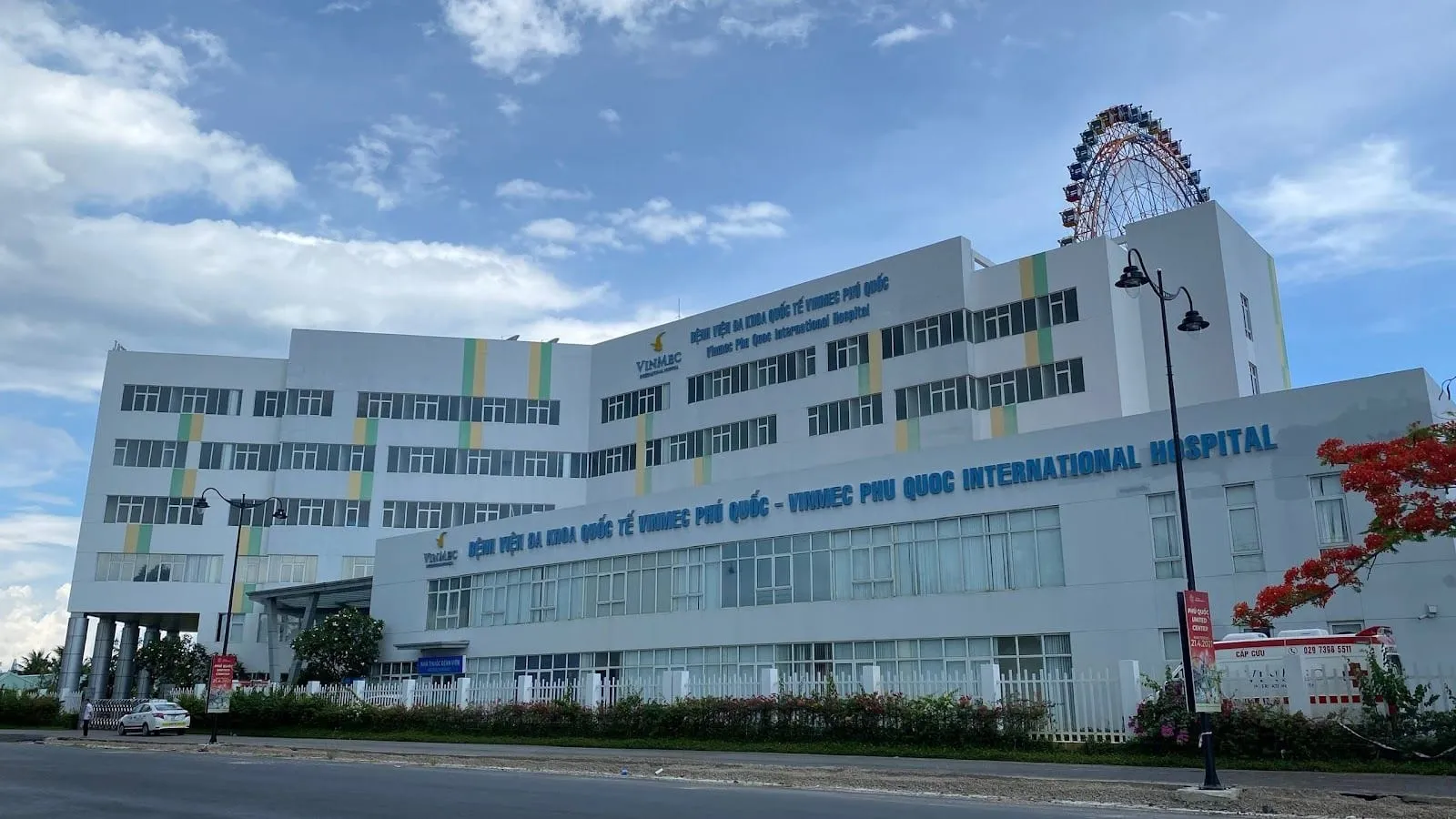
Vinmec Phu Quoc International Hospital (Bệnh viện Đa khoa Quốc tế Vinmec Phú Quốc) — Bai Dai, in the north-west, next to Grand World.
- Private, run by Vingroup; open since 2015, with nearly 150 beds.
- 24-hour emergency department: 02973 98 55 11; general line 0297 3985 588 (Vinmec).
- Internal medicine, paediatrics, surgery, obstetrics, imaging (CT, MRI) and vaccinations; Vinmec says it offers direct billing with insurers — check with yours before you are admitted.
- Vinmec also runs a clinic in Duong Dong, at 114 Nguyen Trung Truc Street, for general consultations, children, minor injuries and tests.
Sun Phu Quoc International Hospital (Bệnh viện Quốc tế Mặt Trời Phú Quốc) — An Thoi urban area, in the south near Sunset Town.
- Private, run by Sun Group; opened on 23 April 2026, with nearly 100 beds and a 24-hour emergency department.
- Internal medicine, surgery, paediatrics, intensive care, imaging and a strong focus on stroke and heart emergencies; it has partnership agreements with Cho Ray Hospital and Military Hospital 175 in Ho Chi Minh City (Diễn đàn Doanh nghiệp, April 2026; CafeF, August 2026).
- The closest hospital for visitors staying in An Thoi, Sunset Town, Bai Khem or Sao Beach.
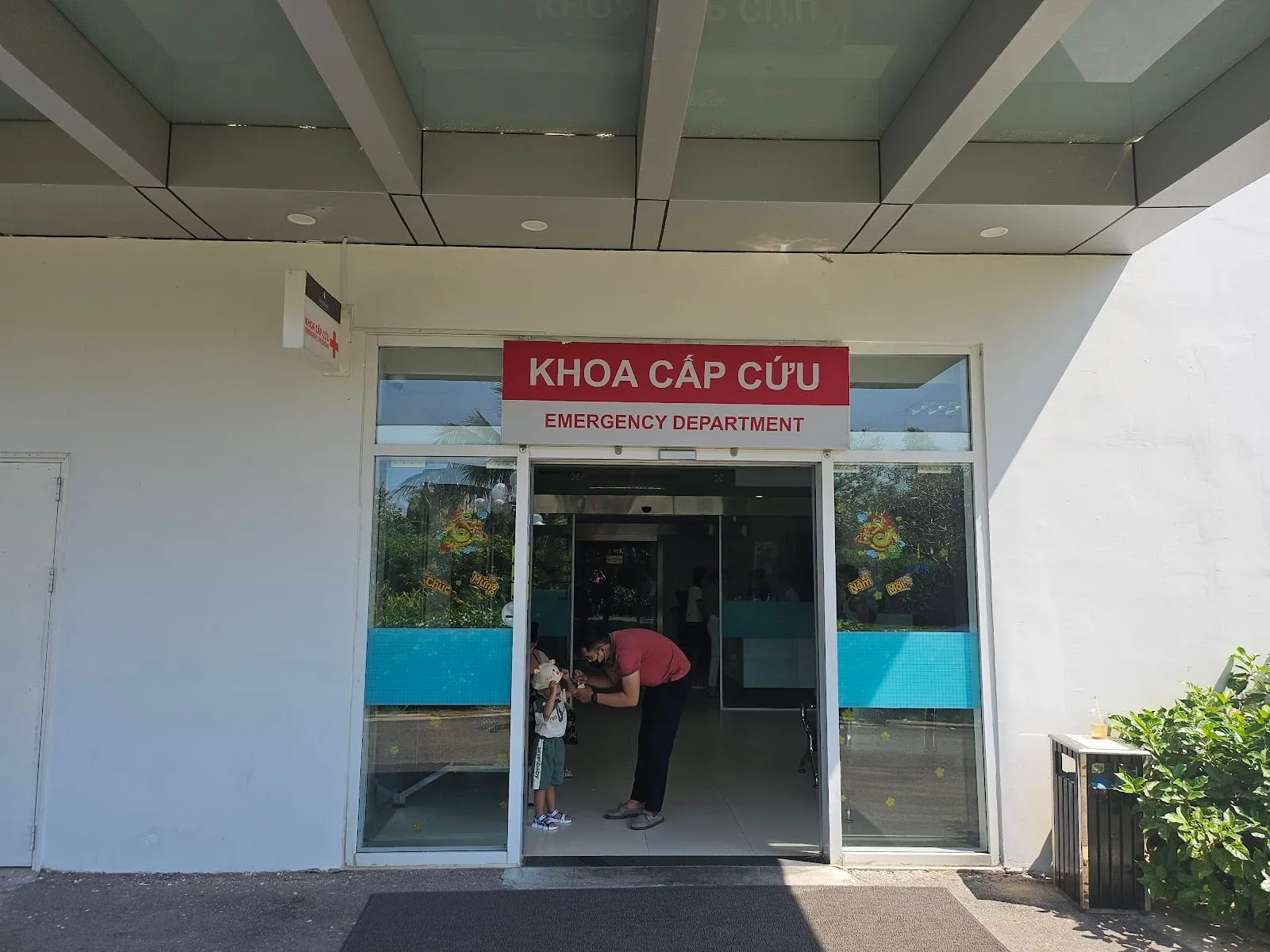 The emergency entrance at Vinmec Phu Quoc. Photo: World Travelist, via Google Maps
Phu Quoc Medical Centre (Trung tâm Y tế Phú Quốc) — 128 30/4 Street, Duong Dong.
- The island’s public hospital, with about 400 beds and an emergency department (Tuổi Trẻ, August 2026).
- A new 500-bed public general hospital is planned at Cua Can, with work due to start at the end of 2026.
Clinics and pharmacies
- Private clinics in Duong Dong and An Thoi handle consultations, minor injuries and tests, and there are home-visit services that send a doctor or nurse to your hotel. Most clinics keep daytime and early-evening hours; your hotel can recommend one.
- Pharmacies (nhà thuốc) are everywhere in Duong Dong, Long Beach and An Thoi, including national chains such as Long Châu. We did not find a pharmacy on the island that advertises 24-hour opening.
- Prescription medicines: under Vietnamese law, prescription-only medicines, including antibiotics, should not be sold without a prescription. If you need something regularly, bring enough for the trip.
- Bringing your own medicine: the UK Foreign Office advises carrying it in its original packaging with a copy of the prescription and a doctor’s letter, and warns that Vietnam restricts some medicines, including strong painkillers and psychiatric drugs. Check before you travel.
Divers: decompression illness
We found no hyperbaric (decompression) chamber on Phu Quoc. The nearest confirmed treatment for decompression sickness is in Ho Chi Minh City, at Military Hospital 175, which has treated divers with hyperbaric oxygen. If you dive, make sure your insurance covers diving and evacuation, ask your dive centre about its emergency plan, and keep to the usual no-fly interval after your last dive. See scuba diving and freediving.
Evacuation and insurance
Serious cases are transferred to the big hospitals of Ho Chi Minh City. Flights take about an hour; after the boat accident of July 2026, a critically ill patient was flown to Cho Ray Hospital on a scheduled Vietnam Airlines flight with a medical team on board, in about 1 hour 25 minutes gate to gate (Tiền Phong, July 2026). Vinmec also lists air transfer services.
Travel insurance. We found no insurance requirement for visa-free entry to Phu Quoc, but go with it anyway: the UK Foreign Office advises cover for medical treatment and evacuation by air ambulance.
Health risks to know about
- Dengue fever. Spread by mosquitoes that bite mainly during the day (WHO). An Giang province recorded 1,679 cases in the first quarter of 2026, nearly four times as many as a year earlier — so it is a dry-season risk too. Use repellent, and see a doctor if you get a high fever with headache and body aches; do not take ibuprofen or aspirin until dengue has been ruled out.
- Rabies. Avoid stroking dogs and cats, including friendly-looking ones at restaurants and on beaches. After a bite or scratch, wash the wound with soap and running water for at least 15 minutes and get medical care the same day; you may need a course of vaccine (VnExpress, July 2026). The Long Châu vaccination centre at 327 Nguyen Trung Truc, Duong Dong, lists rabies vaccine, and Vinmec offers vaccinations; we could not confirm that rabies immunoglobulin is stocked on the island.
- Jellyfish. The marine protected area names April to August as jellyfish season, with more around Ganh Dau, Cua Can, Bai Thom, Ham Ninh and An Thoi. If stung: do not rub, rinse with vinegar, scrape off any tentacles, and get help at once for breathing difficulty, dizziness or severe pain (Tuổi Trẻ, May 2025).
- The sea. Rough water in the rainy season is the biggest danger on the west coast: a tourist drowned off Duong Dong in May 2026 after swimming in rough seas. Do not swim when the waves are up, and wear a life jacket on every boat. See island-hopping tours.
- Roads. Wear a helmet on a scooter, and check whether your insurance covers riding one — see the motorbike guide.
- Sun, heat and food. Drink plenty of water, use sunscreen, and eat seafood that is cooked fresh in front of you — see seafood.
For visitors in trouble
Since February 2026, Phu Quoc has had a tourism rapid response team, working around the clock on complaints about prices and services, security, lost property and first aid (Tuổi Trẻ News, February 2026). Your hotel can put you in touch. For scams and general safety, see scams and safety.
Facilities and numbers: hospitals’ own information and the press, checked 14 October 2026. Health advice: Vietnamese health authorities and the UK Foreign Office; ask a doctor for advice about your own health.