Phu Quoc eats from the sea. Its own dishes are built around the fish, crab, squid and urchins its boats bring in every morning, seasoned with the two things the island is famous for across Vietnam: fish sauce and pepper. This is a list of what to try that you will not find in the same form elsewhere, and where to try it. For restaurants by area see where to eat, and for cheap local breakfasts, the street food guide.
Herring salad (gỏi cá trích)
The island’s signature dish. Fresh herring is filleted, “cooked” in lime juice and mixed with shredded coconut, onion, chilli and herbs. You make your own rolls at the table: lay rice paper flat, add lettuce, herbs and a few strips of herring, roll it up and dip it in a thick sauce of fish sauce and crushed peanuts. The fish is raw, so it is best at a busy place where it is made fresh.
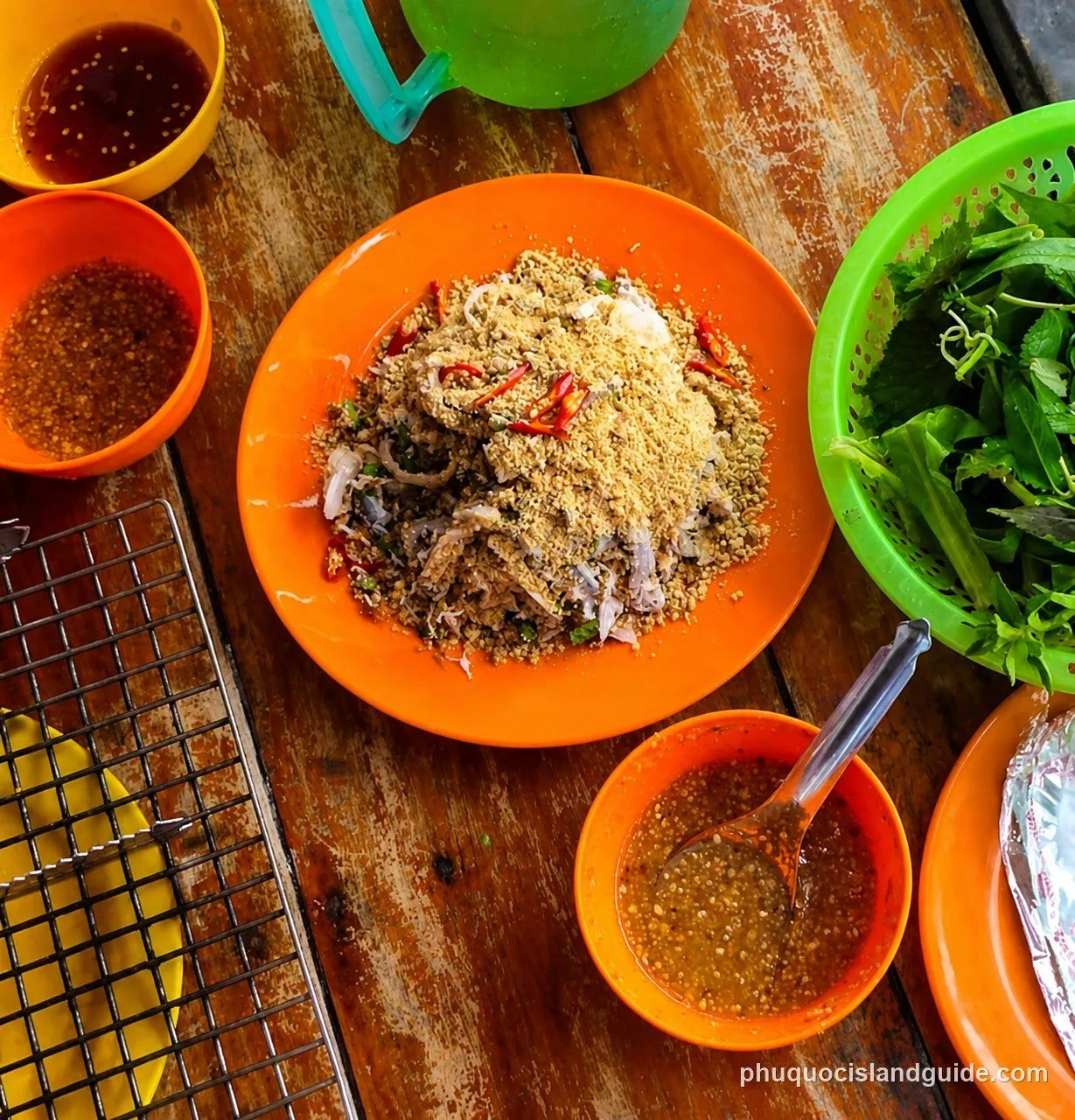
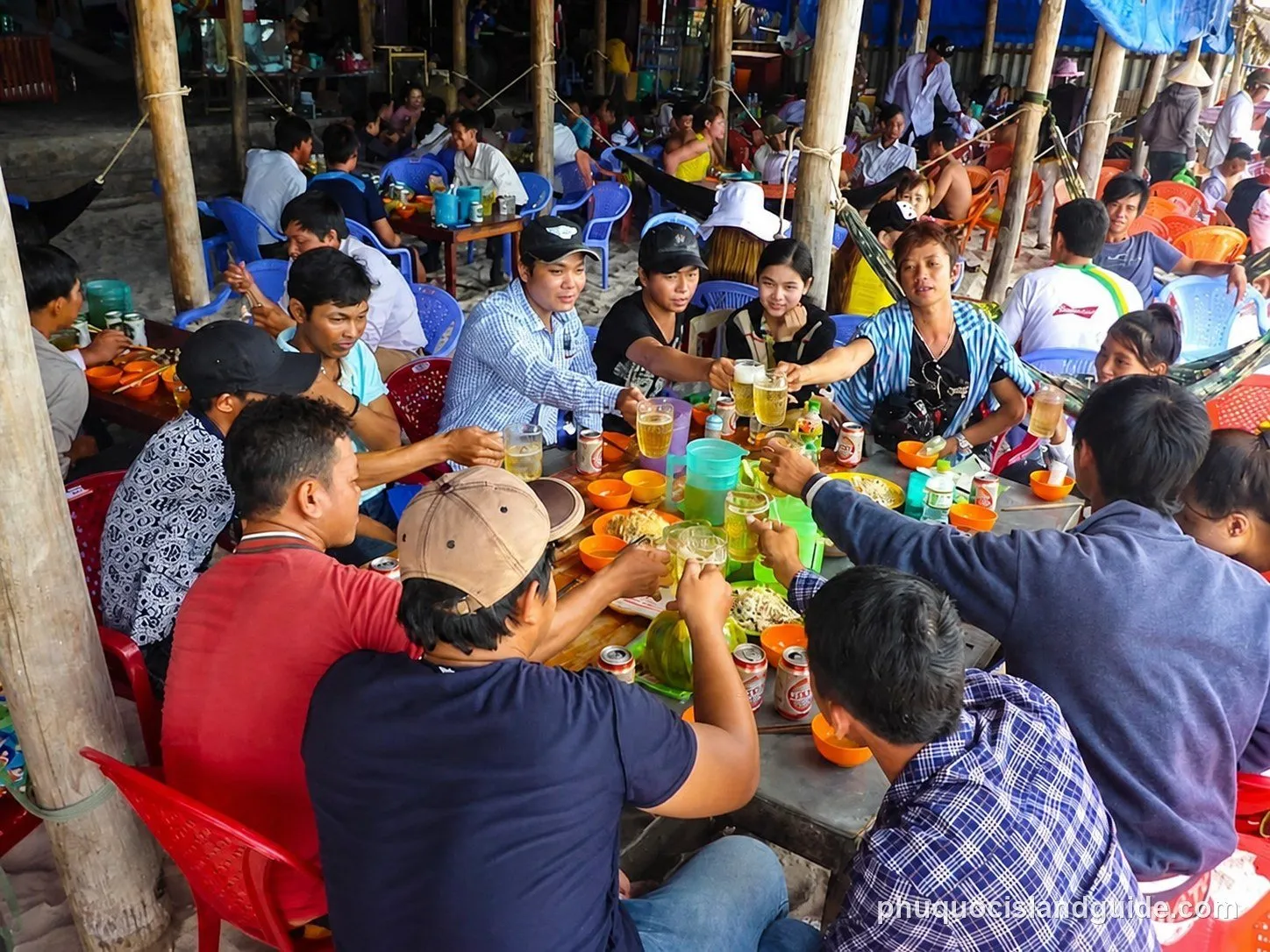
Where to try it: the beach restaurants at Bai Khem are a classic setting — Herring Bar on Khem Beach (4.6 on Google Maps from 387 reviews) is named after it. In Duong Dong, reviewers of Huong Bien (1 Vo Thi Sau, 4.7 from 801) say the staff show you how to roll it, and it turns up in reviews of most of the big seafood restaurants, from Xin Chao to Ra Khoi. Ask the price before you order; it is sold by the plate.
Crab noodle soup (bánh canh ghẹ)
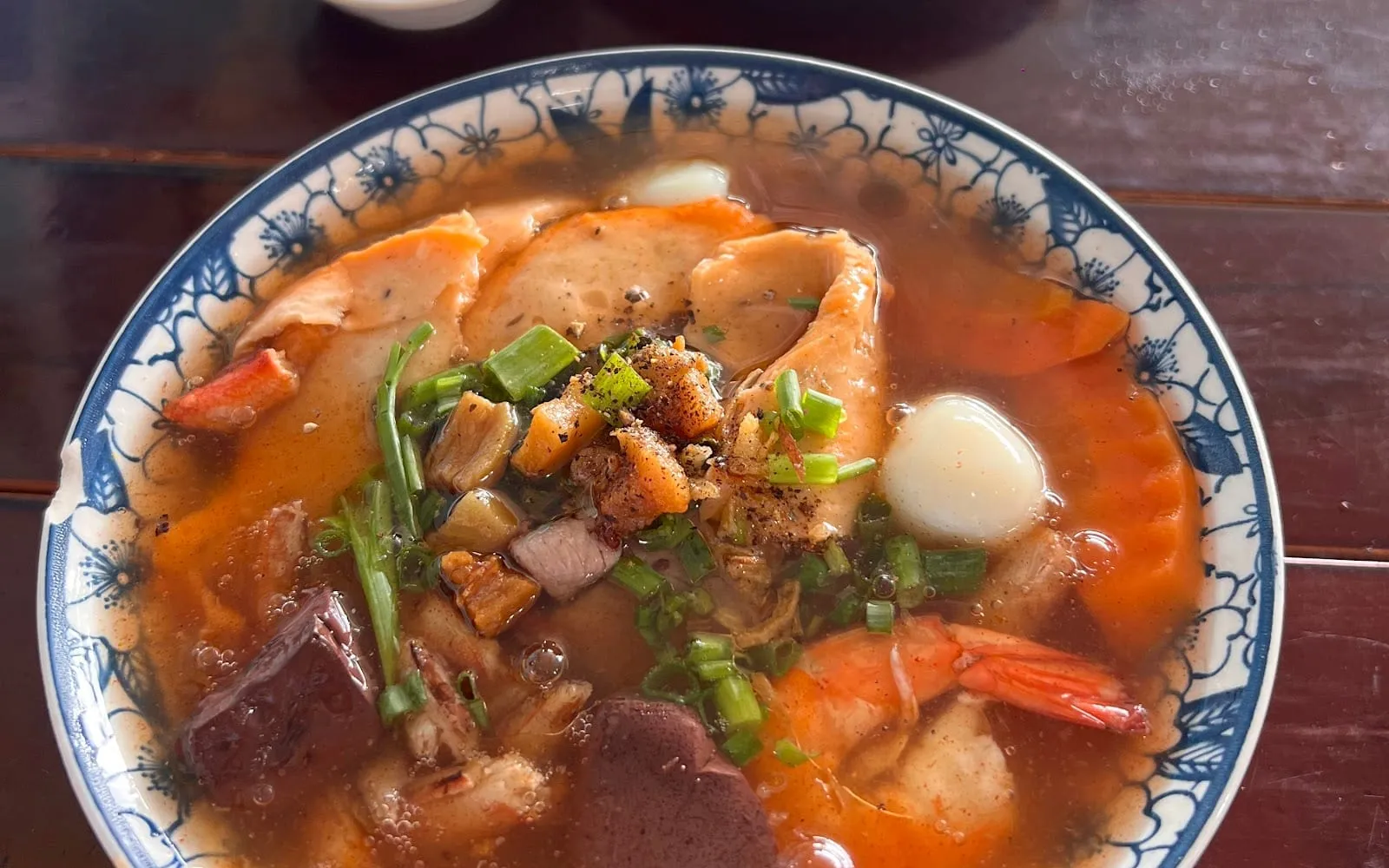
Thick, chewy tapioca noodles in a rich seafood broth, topped with blue swimmer crab, shrimp and fish cake. It is a breakfast and lunch dish all over the south of Vietnam, but on Phu Quoc it comes with local crab. Banh Canh Ghe BY in An Thoi (4.8 from 275) is one of the best-rated; in Duong Dong, see the banh canh stalls in our street food guide.
Bún quậy
Phu Quoc’s own noodle soup: fresh rice noodles made on the spot, with balls of shrimp and fish paste in a light broth. You mix your own dipping sauce at the counter from salt, pepper, lime, chilli, sugar and fish sauce, and stir it in — quậy means to stir. The best-known place is Bun Quay Kien Xay at 28 Bach Dang Street in Duong Dong (4.2 from over 6,400 reviews); see the street food guide.
Bún kèn
A noodle dish found mainly on Phu Quoc and in Ha Tien across the water: rice noodles in a broth of minced sea fish cooked with coconut milk and lemongrass, eaten with shredded green papaya, bean sprouts and herbs. It is a breakfast dish, and the small shops that make it often sell out by mid-morning. Bun Ken Co Thu in An Thoi (4.7 from 100) is one of the few listed on Google Maps.
Ham Ninh crab (ghẹ Hàm Ninh)
The small blue swimmer crabs from the seagrass beds off Ham Ninh on the east coast are the island’s most famous seafood. They are simply steamed and eaten with salt, pepper and lime. The place to eat them is Ham Ninh itself, at the seafood restaurants on stilts by the pier — see Ham Ninh fishing village.
Grilled sea urchin (nhum nướng mỡ hành)
Halved sea urchins grilled with spring onion oil and crushed peanuts, eaten with a spoon. You will find them at most seafood restaurants and at the night market; reviewers single out the grilled urchin at Ra Khoi in Duong Dong. On some boat trips you can even watch them being caught.
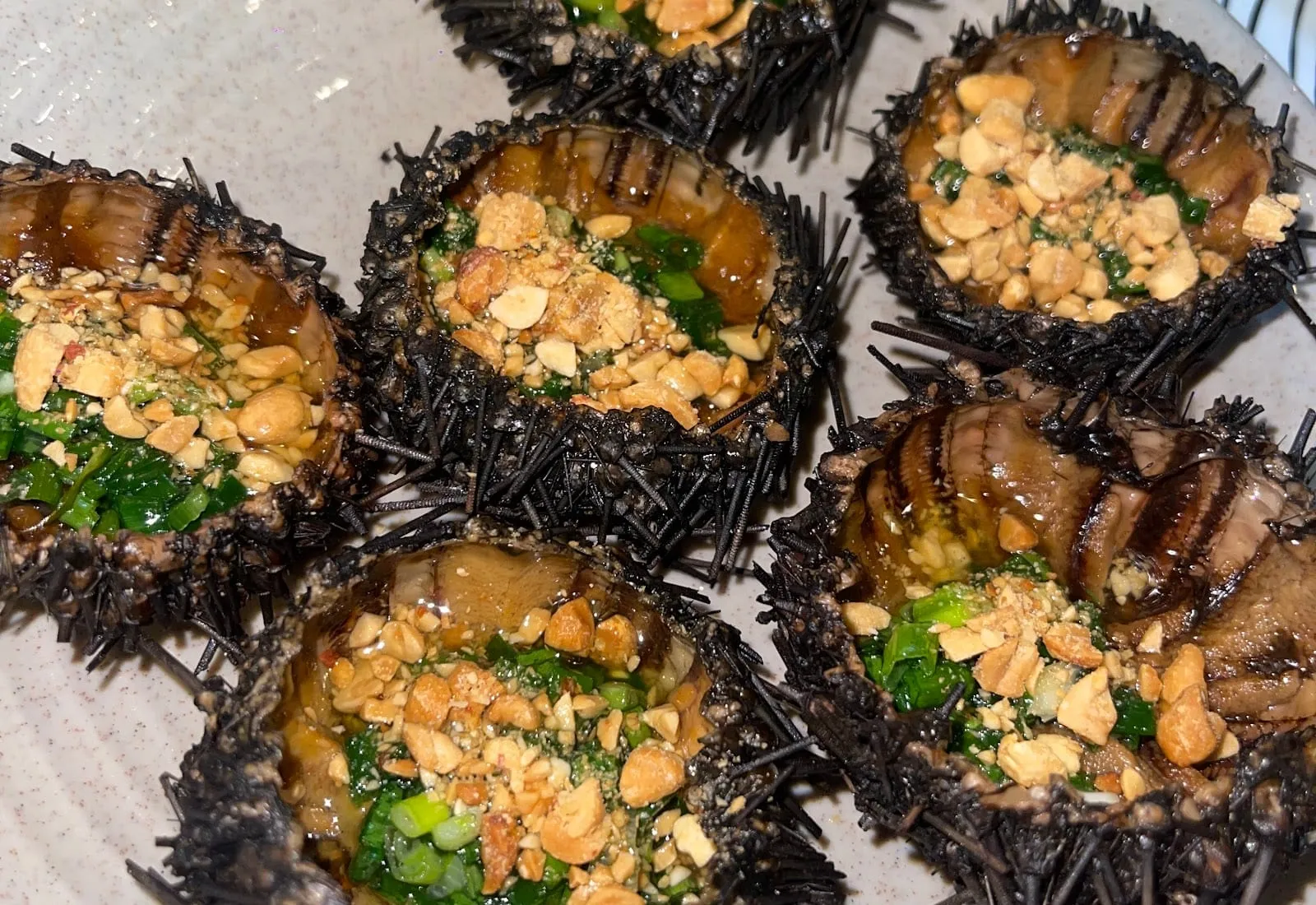 Photo: POP NALINRAT, via Google Maps
Tràm mushroom soup (canh nấm tràm)
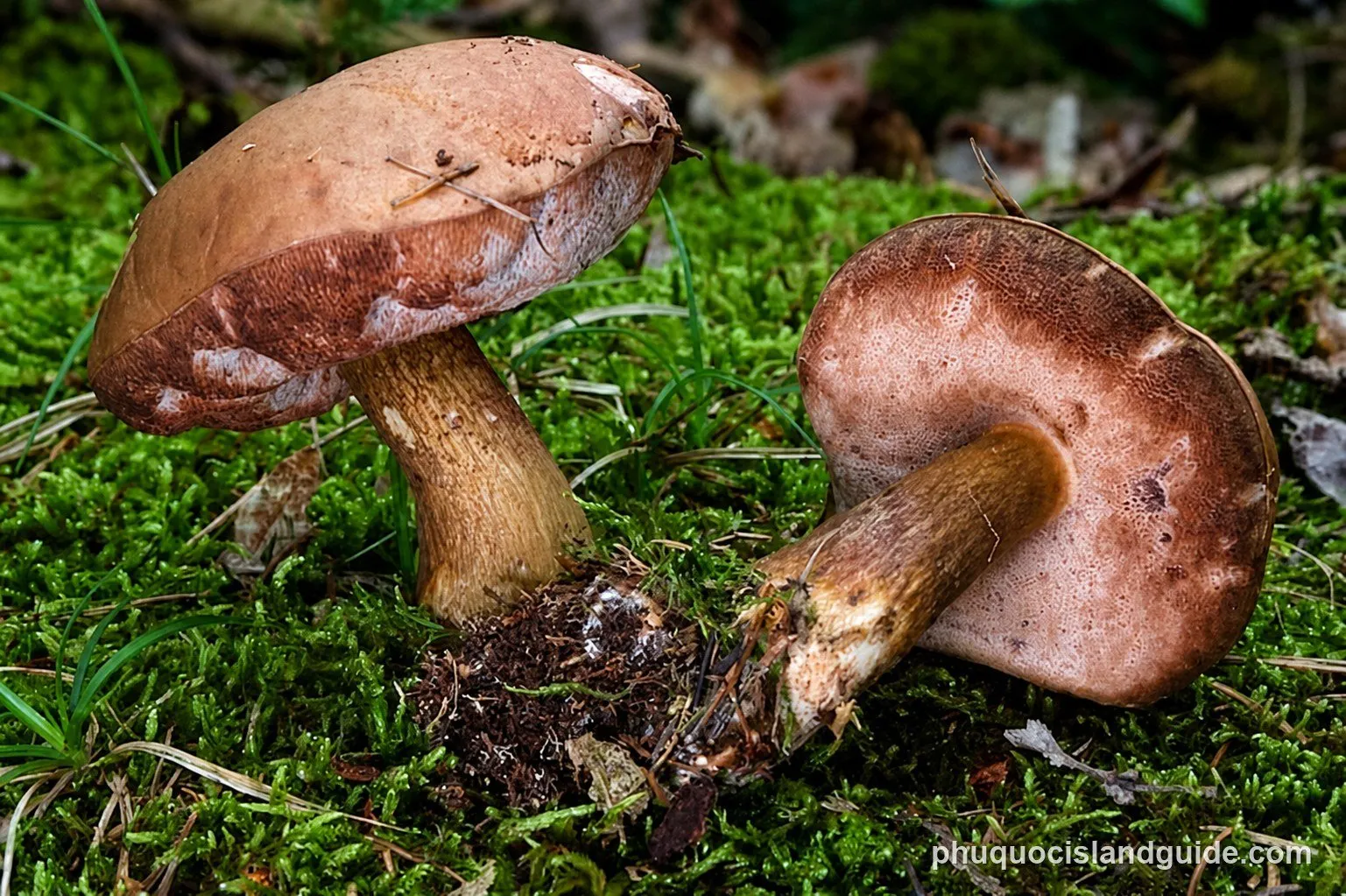
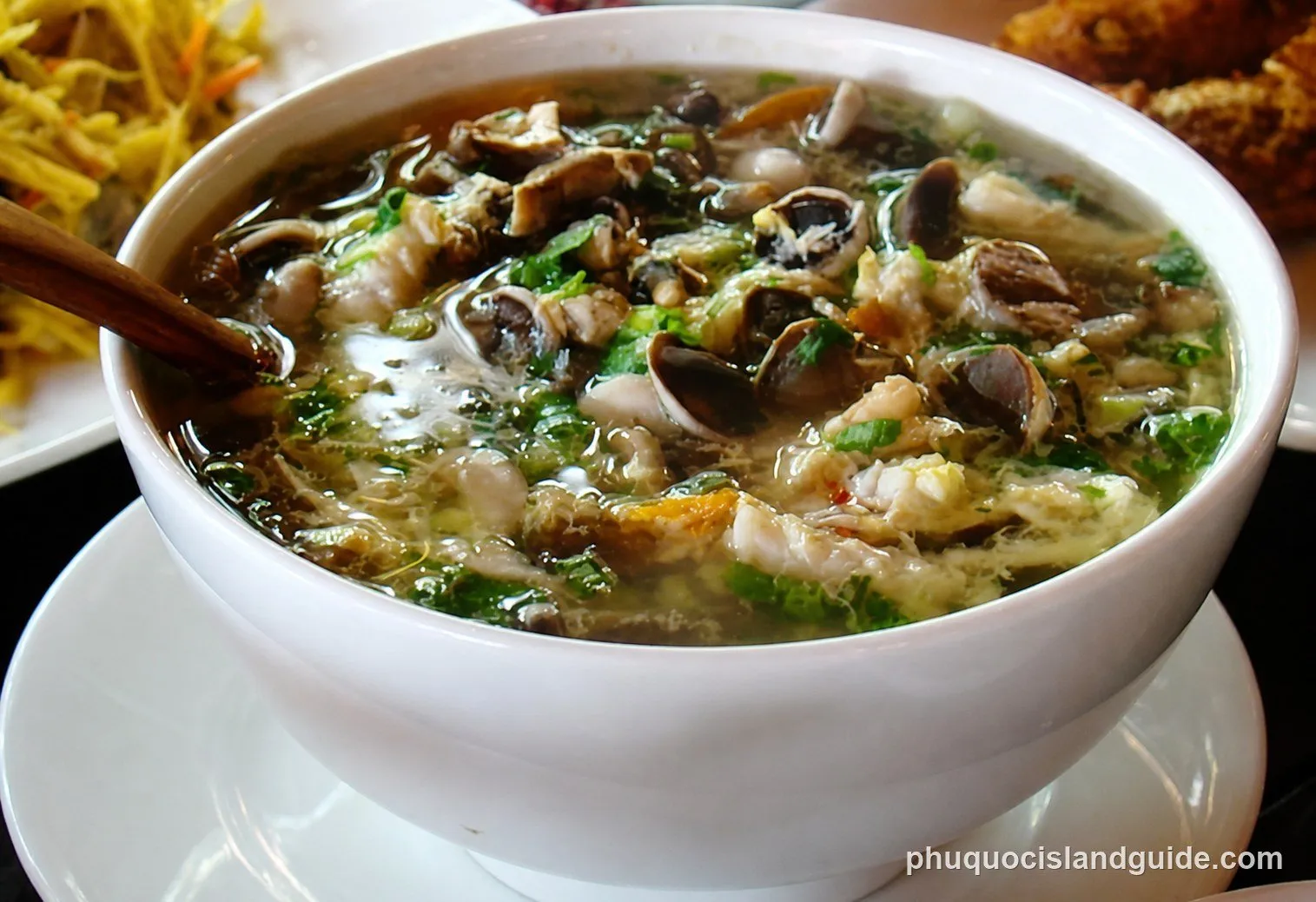
Tram mushrooms (also called melaleuca mushrooms) grow wild in the island’s melaleuca forests at the start of the rainy season. They are usually cooked in a clear soup with shrimp or chicken. Look for canh nấm tràm nấu tôm on the menu of Vietnamese restaurants in the season, or buy them dried at the Duong Dong market.
Sim wine
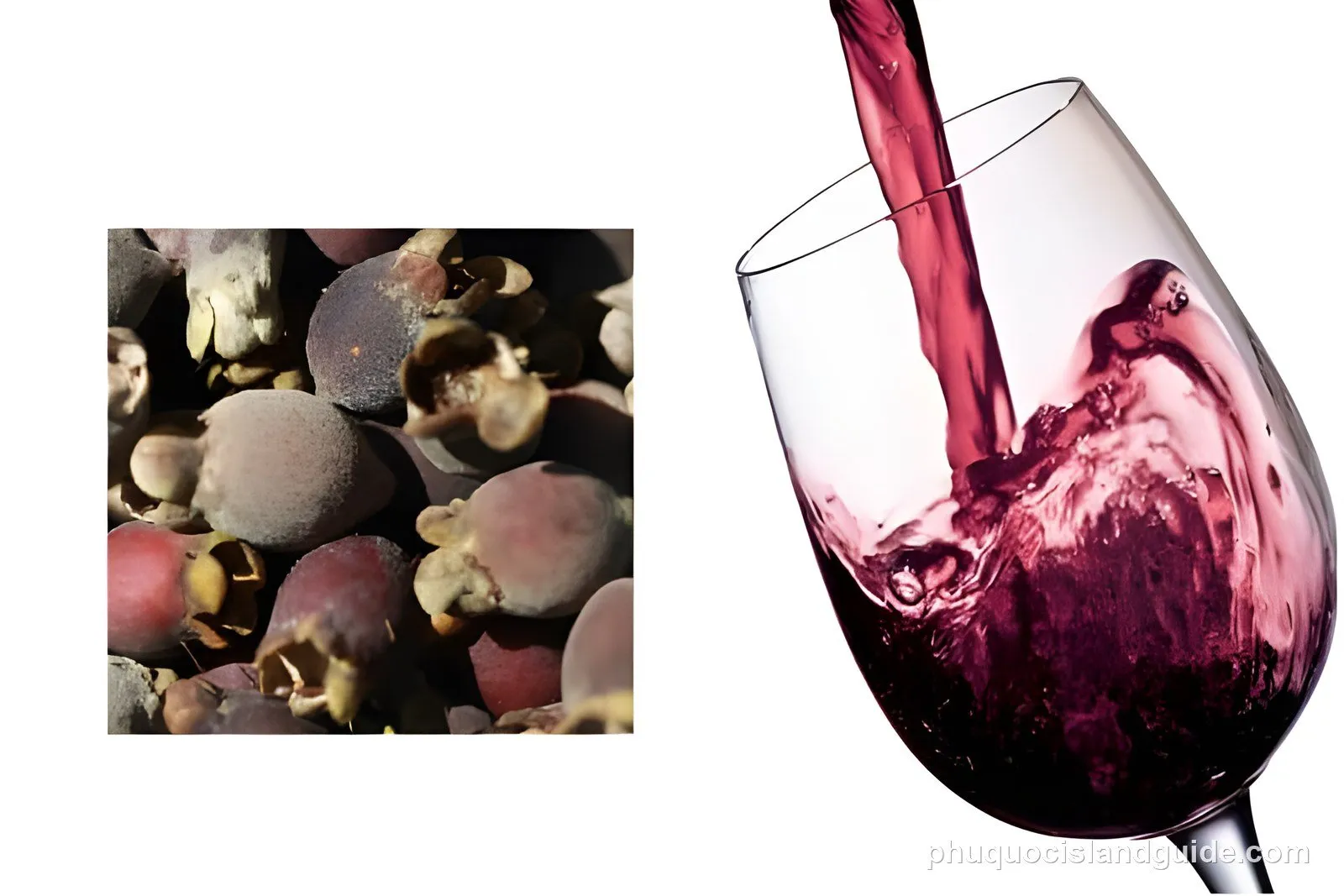
Wine made from the purple sim berry that grows wild on the island’s hills, sweet and fruity. Often drunk with herring salad. More in our sim wine guide.
Tet cake, Phu Quoc style
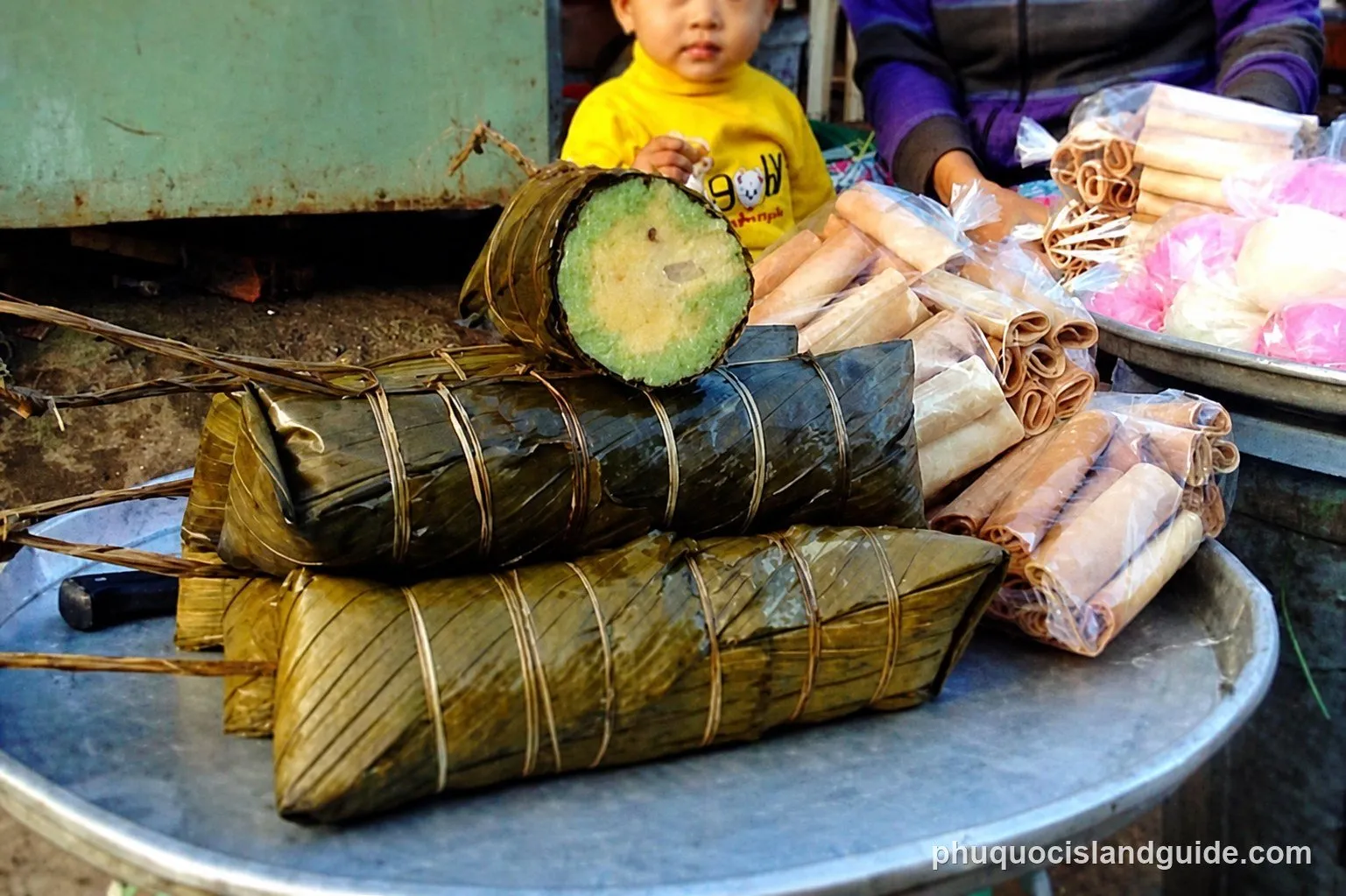
Bánh tét — sticky rice cakes filled with mung bean and pork — are eaten all over Vietnam at Lunar New Year. On Phu Quoc they are traditionally wrapped in the leaves of a local palm, Lanonia centralis, which grows on the Ham Ninh hills, rather than banana leaves. Look for them at the Duong Dong market in the weeks before Tết.
Sea cucumber
The waters around Phu Quoc have many species of sea cucumber, and you will see them dried in the markets. Most of the catch is exported, so sea cucumber dishes — soup, or braised with mushrooms — are a speciality of a few seafood restaurants rather than everyday food.
Fish sauce and pepper to take home
The two products you will be offered everywhere. Fish sauce is not allowed in the cabin on most flights; see our fish sauce guide for how to take it home, and the pepper farms guide for where to buy pepper.
A note on seahorse wine
In the markets, and at Ham Ninh, you will also see rice wine with dried seahorses in the bottle, sold as a tonic. Seahorses are listed under CITES, the international treaty on trade in endangered species, and many countries restrict bringing them home. We would leave it on the shelf.
For salt coffee, egg coffee and the island’s best cafés, see cafés on Phu Quoc.
Ratings and review counts: Google Maps, October 2026.