Sim wine (rượu sim) is Phu Quoc’s own drink, made from the small purple berries of the rose myrtle (Rhodomyrtus tomentosa), a shrub that grows wild on the island’s hills. It is sweet, fruity and deep purple, and you will see it in every souvenir shop on the island, often next to the fish sauce and pepper. Locals drink it with seafood, and especially with herring salad.
How it is made
Sim wine is not a grape-style wine. The ripe berries are fermented with sugar and then blended or steeped with rice spirit and left to age for a few months; producers today also use stainless-steel tanks and bottling lines alongside traditional clay jars. The berries ripen mainly in the rainy-season months, roughly May to August.
The recipe is usually traced to the ethnic minority peoples of Vietnam’s Central Highlands. On Phu Quoc it was turned into a commercial product by Mạc Văn Nghiêm, the founder of the Bảy Gáo brand, and in Vietnamese press reports from early 2013 it was described as one of Vietnam’s ten most unique wines in a list by the Vietnam Record Book organisation.
How strong is it?
Stronger than many visitors expect. The producers make several strengths:
- Light sim wine, around 10–14% alcohol — the one most people buy.
- Strong sim liquor, around 29–39% — closer to a spirit.
- Sim syrup and juice without alcohol, which you can taste at the gardens.
Bảy Gáo sells 10%, 14% and 29% versions and Sim Sơn 30% and 39% ones, according to a 2025 guide by VinWonders. Check the label: some older guides give a much lower figure.
Where to taste it
Three producers have gardens or showrooms near Duong Dong, 7 to 10 minutes by road from the town centre, and all let you taste before you buy. They are regular stops on island tours, so expect a sales pitch; reviews range from “a lovely free tasting” to “nothing to see”. Ratings from Google Maps, October 2026:
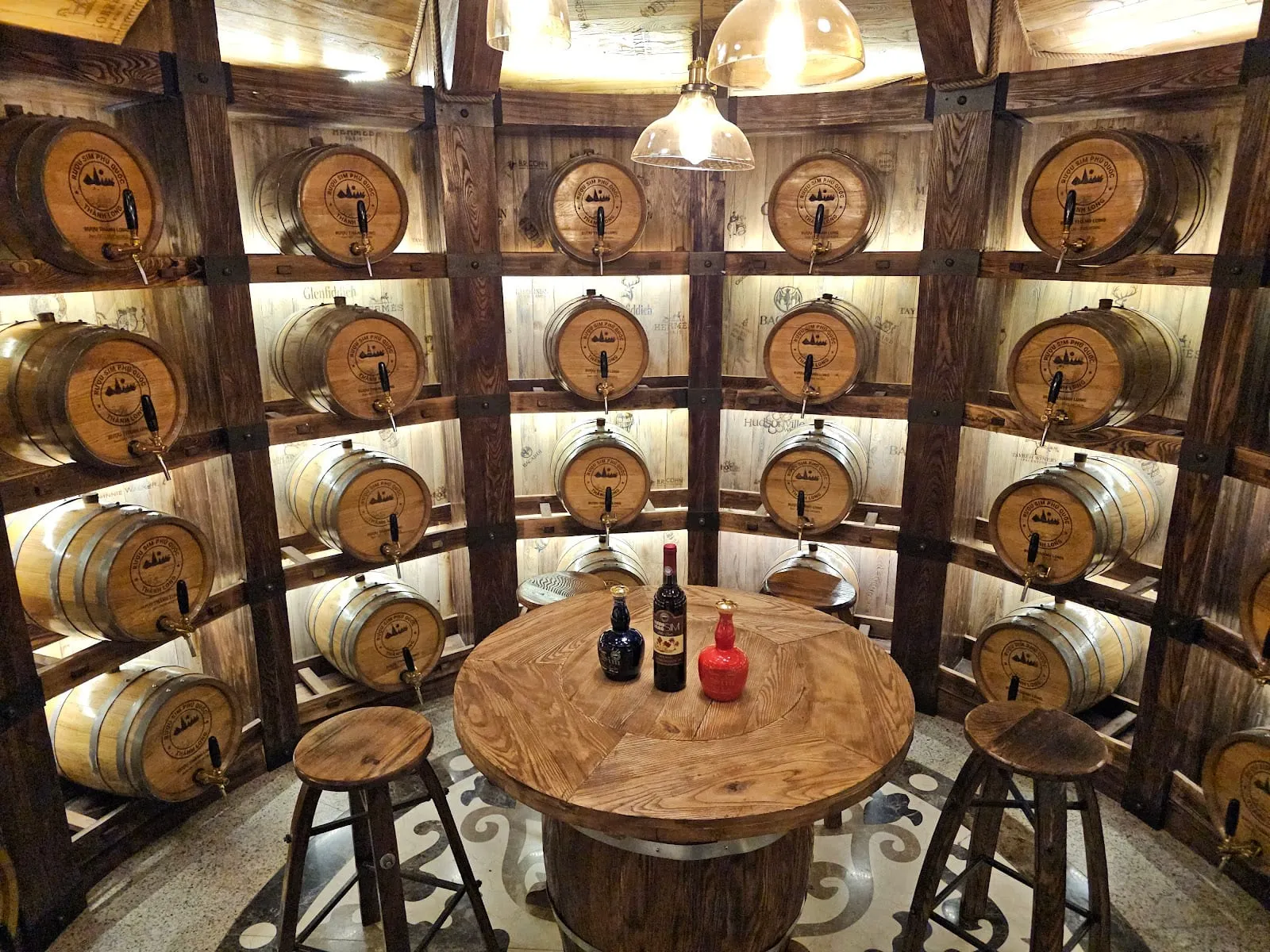
- Vườn Sim Thành Long (Suối Mây) — 4.1 from 129 reviews, open about 7:30–18:00. The most elaborate: a walk through the sim garden, a “wine castle” with a barrel cellar, and a free tasting of many types.
- Rượu Sim Bảy Gáo (Cửa Lấp – Suối Mây) — 4.1 from 726. The best-known brand’s garden and production site, with clay jars of fermenting berries and tastings of the different strengths. Bảy Gáo also has a shop at 124 Đường 30/4 in Duong Dong (4.0 from 166).
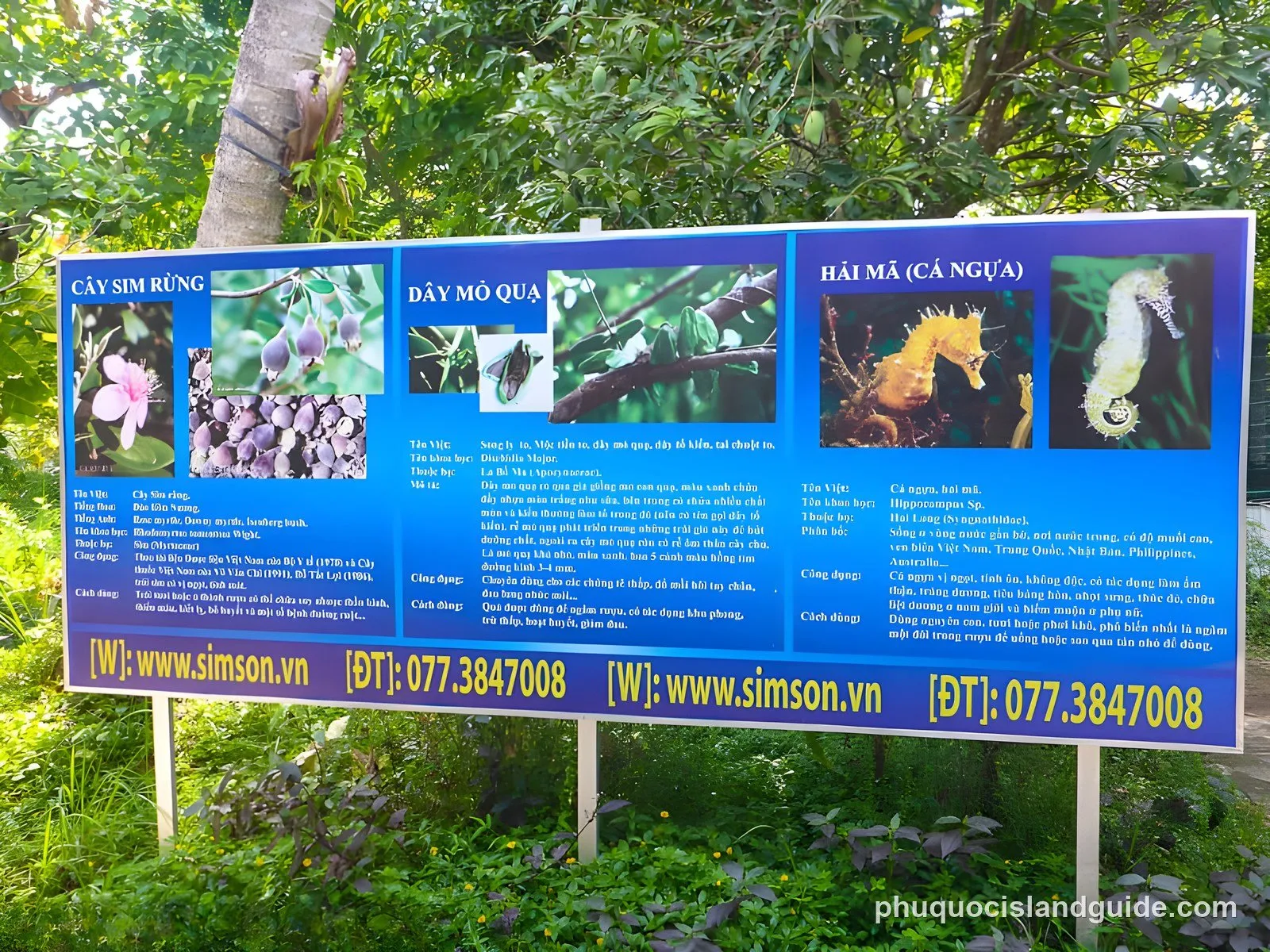
- Sim Sơn (Cửa Lấp) — 3.9 from 527, open 7:00–18:00. A shop and a small sim garden; known for its syrup (mật sim) as well as its wine.
What it costs
As a guide, VinWonders listed bottles at 140,000–200,000 dong for Sim Sơn, 180,000–340,000 dong for Bảy Gáo and 160,000–200,000 dong for Thành Long in November 2025. Prices in souvenir shops and at the night market are similar or higher, and much higher once a bottle reaches the mainland.
Taking it home
Bottles have to go in your checked luggage: liquids over 100 ml are not allowed in the cabin. Wrap them well, and check your airline’s and your home country’s alcohol allowances. You will be offered sim wine “for health” — it is sold as a tonic, but there is no medical evidence behind those claims.
For more to bring home, see souvenirs.
Ratings, review counts and opening hours: Google Maps, October 2026. Strengths and prices: producers via VinWonders, November 2025.
Map
Loads Google Maps when you tap. Or open in Google Maps.