Phu Quoc pepper is the island’s best-known crop after fish sauce, and a visit to a pepper farm is one of the easiest half-day trips on the island. The farms are not all the same, though: some are a proper guided tour, some are a family showing you their garden, and some are mainly a shop where the tour buses stop.
Which pepper farm to visit
| Farm | Area | What you get | Hours (Google Maps) | From Duong Dong |
|---|---|---|---|---|
| Pepper Farm Phu Quoc (The Countryside) | Ganh Dau, north-west | Guided tour with tasting; optional cooking class | 9:00–16:00 | about 20 minutes |
| Hai Duong pepper farm (Vườn tiêu Hải Dương) | Cua Can | The owners show you around their farm | 8:00–16:00 | about 20 minutes |
| Duc Thanh pepper garden (Vườn Tiêu Đức Thạnh) | Edge of Duong Dong | Short walk among the vines, then the shop | 7:00–17:00 | about 5 minutes |
The Countryside (4.8 from 807 Google reviews) is the one to choose if you want to learn something. Reviewers describe a 20–25 minute walk with an English-speaking guide through pepper vines, herbs and fruit trees, starting with a drink and a tasting of several peppers. In September 2026 a reviewer paid 110,000 VND per person. Some book the farm tour with a short cooking class — reserve a few days ahead (reviewers used WhatsApp); see cooking classes. The bee farm is down the same road, so many people do both. One reviewer found it further from town and smaller than expected, so allow about an hour, not half a day.
Hai Duong (4.9 from 324 reviews) is a small family farm in Cua Can. The owners walk you round their pepper, nuts and fruit and let you taste as you go. They speak little English, so the explanations come through Google Translate — reviewers found that part of the charm. There is no pressure to buy.
Duc Thanh (4.0 from 1,071 reviews) is the closest to town and the stop most island tours make. You can see the vines and try a peppercorn, but reviewers are clear that it is mainly a shop. Fine for 20 minutes; not worth a special trip.
Bring mosquito repellent to any of them — the vines grow in the shade.
How pepper grows here
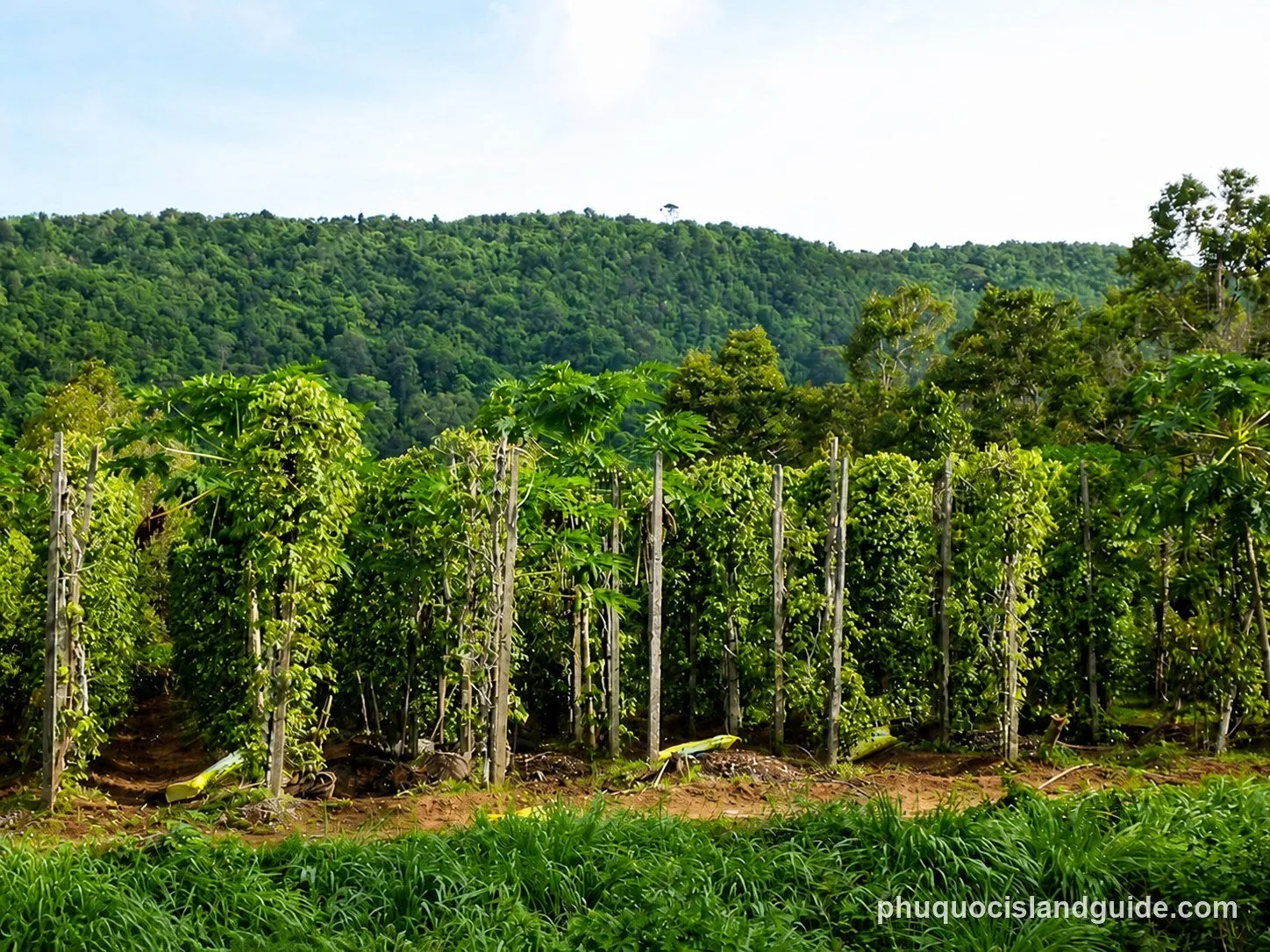
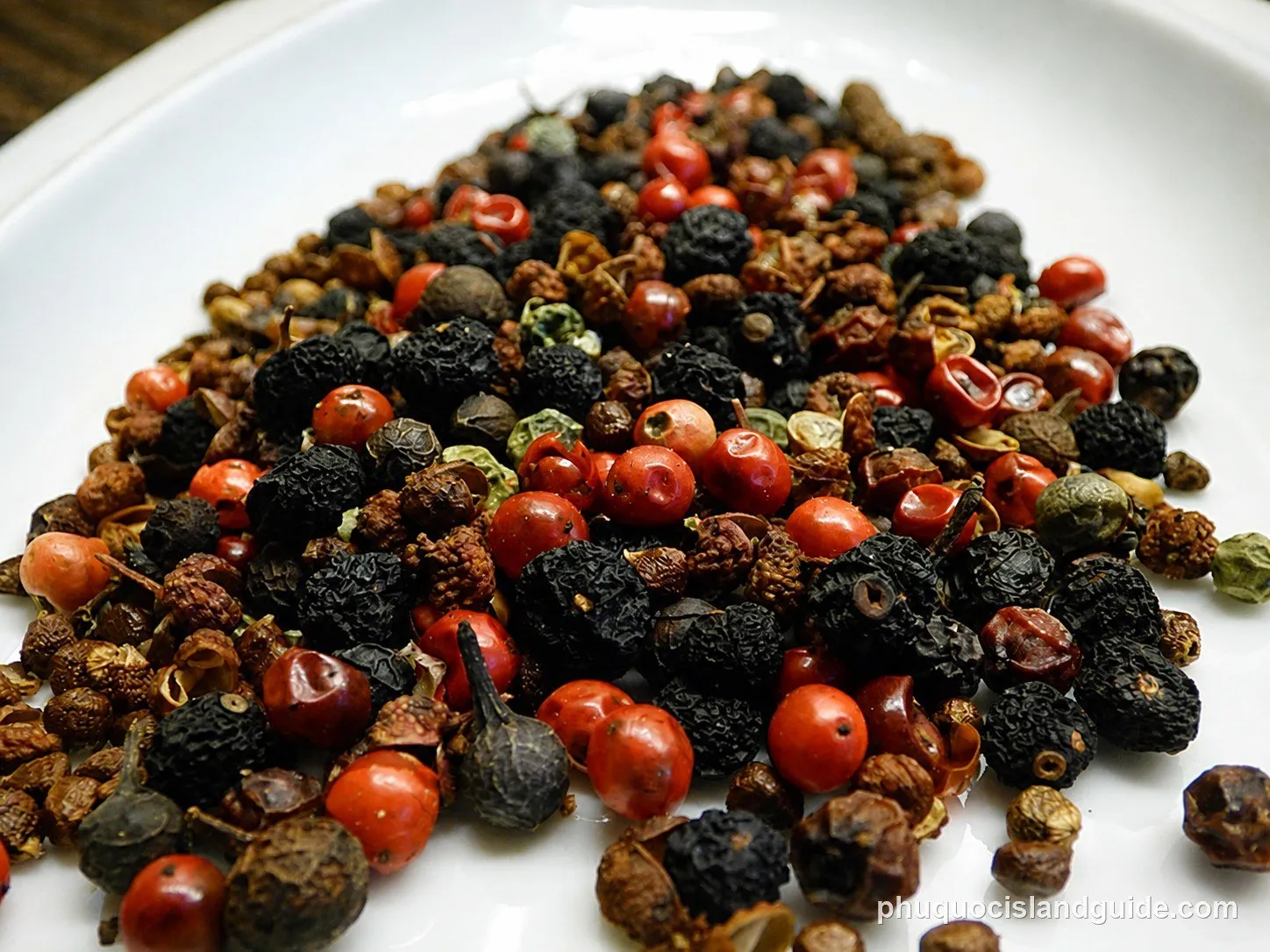
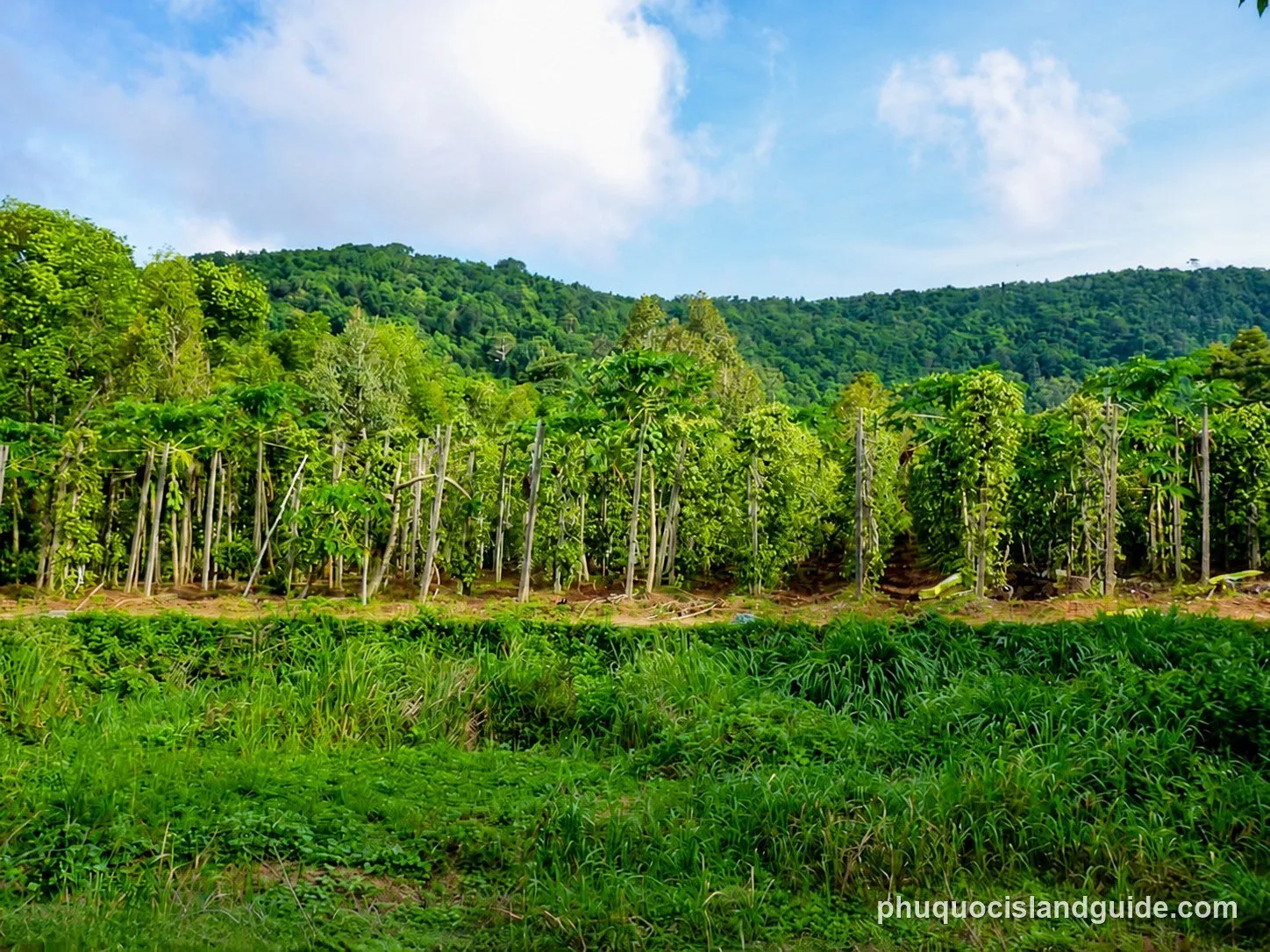
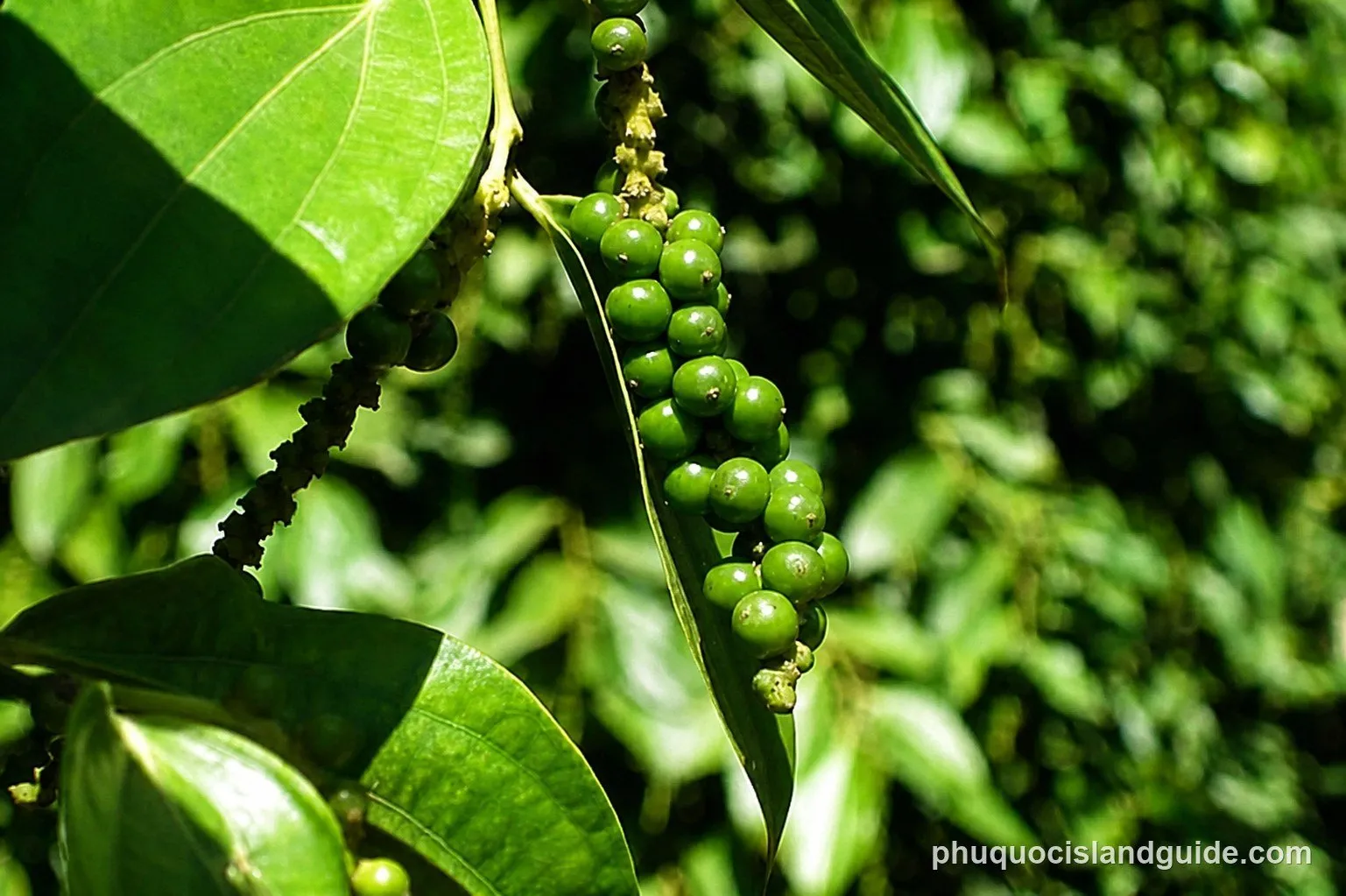
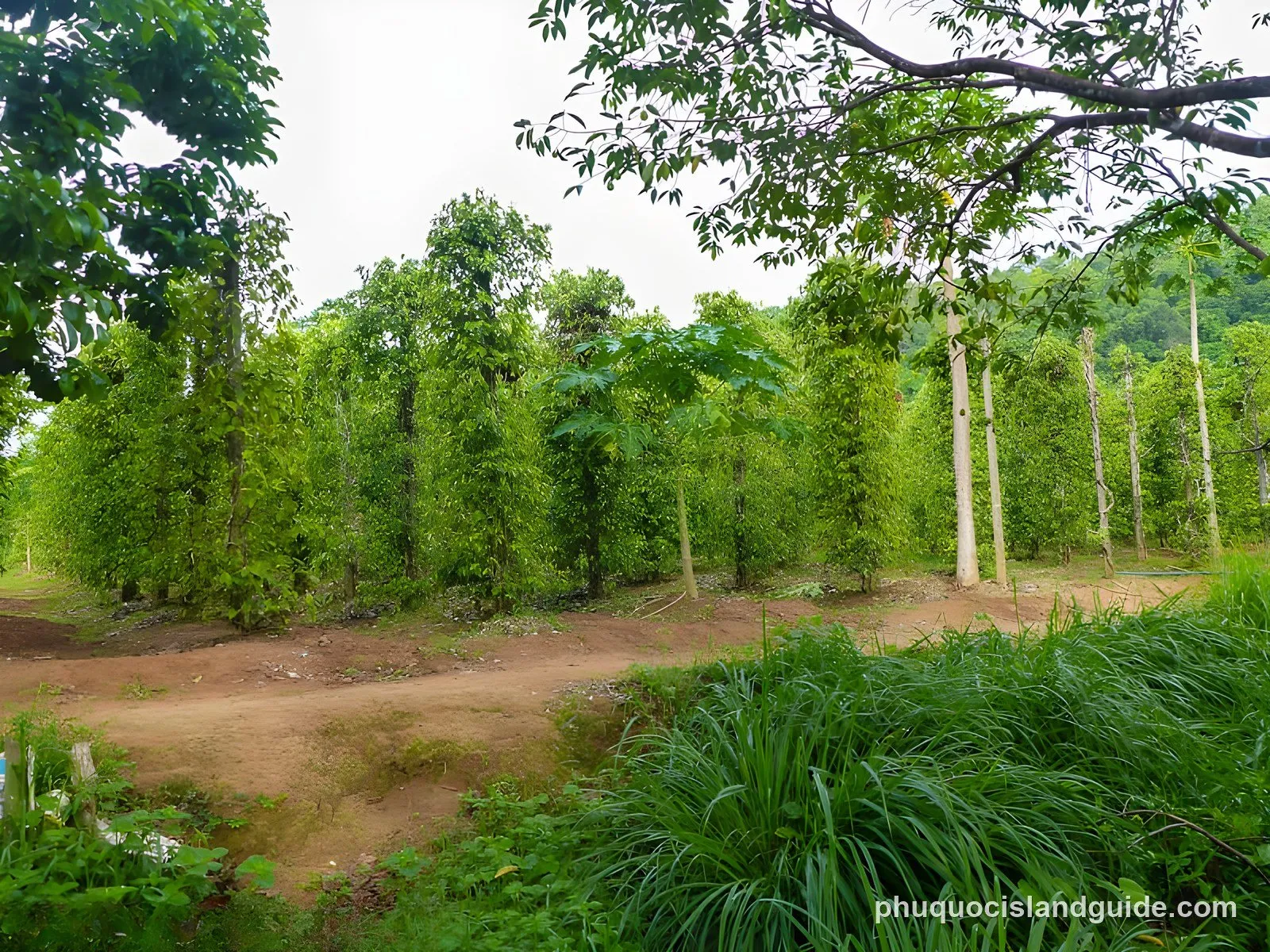
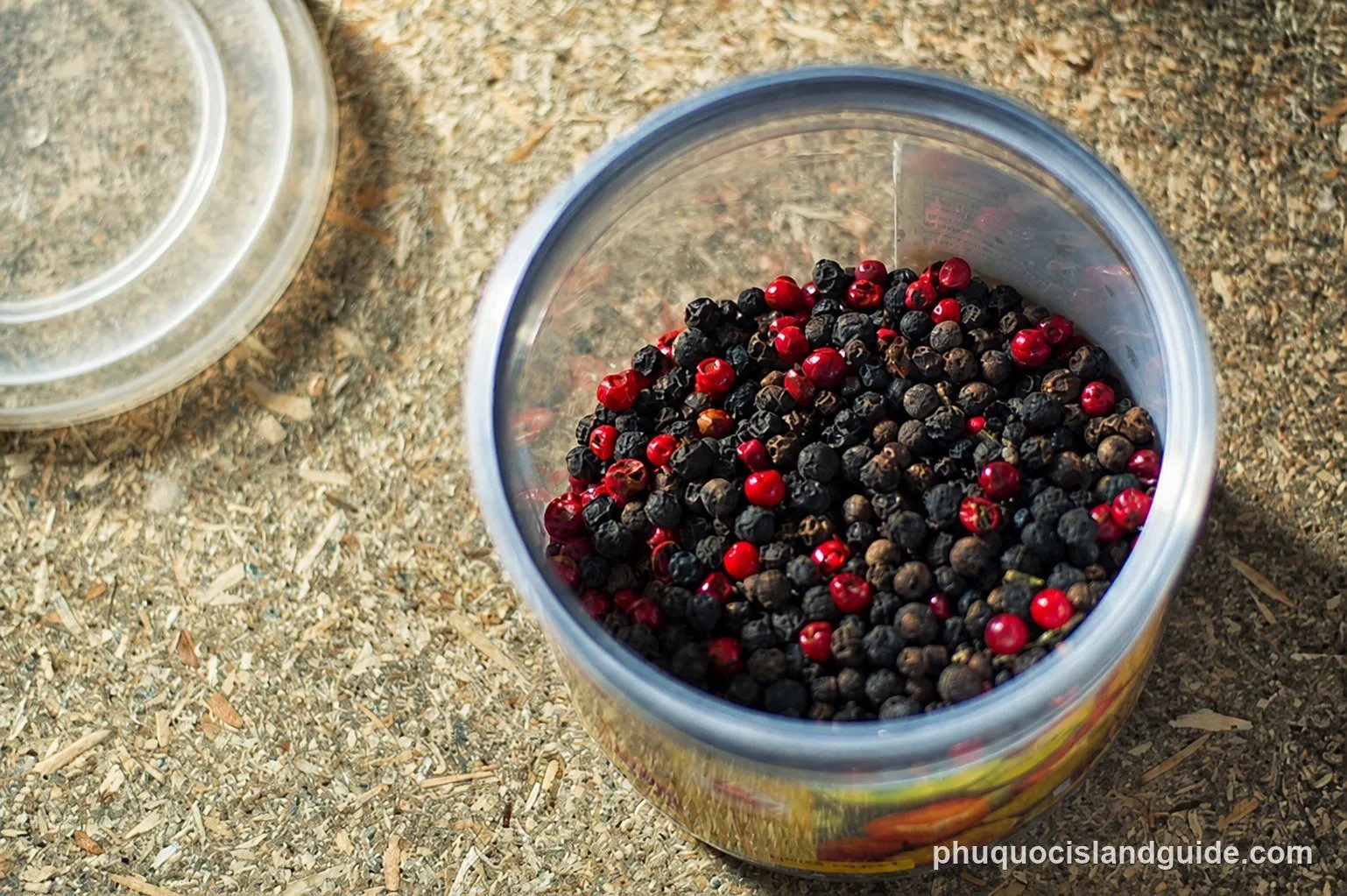
Pepper is a climbing vine, trained up wooden or concrete posts in neat rows. The same berries become different peppers depending on when they are picked and how they are processed: green when picked young, black when the green berries are dried in the sun, red when they ripen on the vine, and white when the ripe berries are soaked and the skin removed. You will see peppercorns drying on mats at most farms in the dry season.
Buying pepper to take home
Every farm sells its own pepper, salts, sauces and dips, usually at fixed prices. Buying at the farm is the surest way to get pepper actually grown on Phu Quoc — “Phu Quoc pepper” sold elsewhere may not be.
- Dried pepper is the safe choice. Black, white and red dried peppercorns in sealed packets travel well.
- Check your home country’s customs rules. Pepper is an agricultural product, and countries with strict biosecurity (Australia and New Zealand among them) require you to declare it. Fresh green peppercorns on the stem are the most likely to be refused.
- “Organic” is hard to verify at a farm shop. If it matters to you, ask the farm how they grow and what certification, if any, they hold.
More island products to bring home are in our souvenirs guide and the fish sauce guide.
Ratings, opening hours and reviews: Google Maps, October 2026. Drive times: OpenStreetMap routing (OSRM) from central Duong Dong.