Phu Quoc Scams
Phu Quoc is Vietnam’s busiest island destination, and like every busy destination it attracts people who make a living from tourists who do not know how things work locally. This page covers the ways visitors most often lose money here, and what to do instead. It is about patterns and how to protect yourself, not about naming businesses.
Phu Quoc Island Scams - An Introduction
Most visitors leave Phu Quoc without any trouble. When people do lose money, it is almost always in one of a few predictable ways:
- Price gouging — no price on the menu or the stall, and a tourist price at the end. Ask first, every time.
- Bait and switch — the seafood, room or tour you were shown is not the one you get.
- Fake “Phu Quoc” products — pearls, pepper and fish sauce sold as island-made but produced elsewhere, or not real at all. Buy from the farms and factories themselves, or from shops with fixed prices.
- Reviews are your best protection. Before paying for a restaurant, tour or rental, read the recent Google reviews — complaints about a specific trick usually show up there first.
1. Beach Access Fee & “Private Beach” Scam
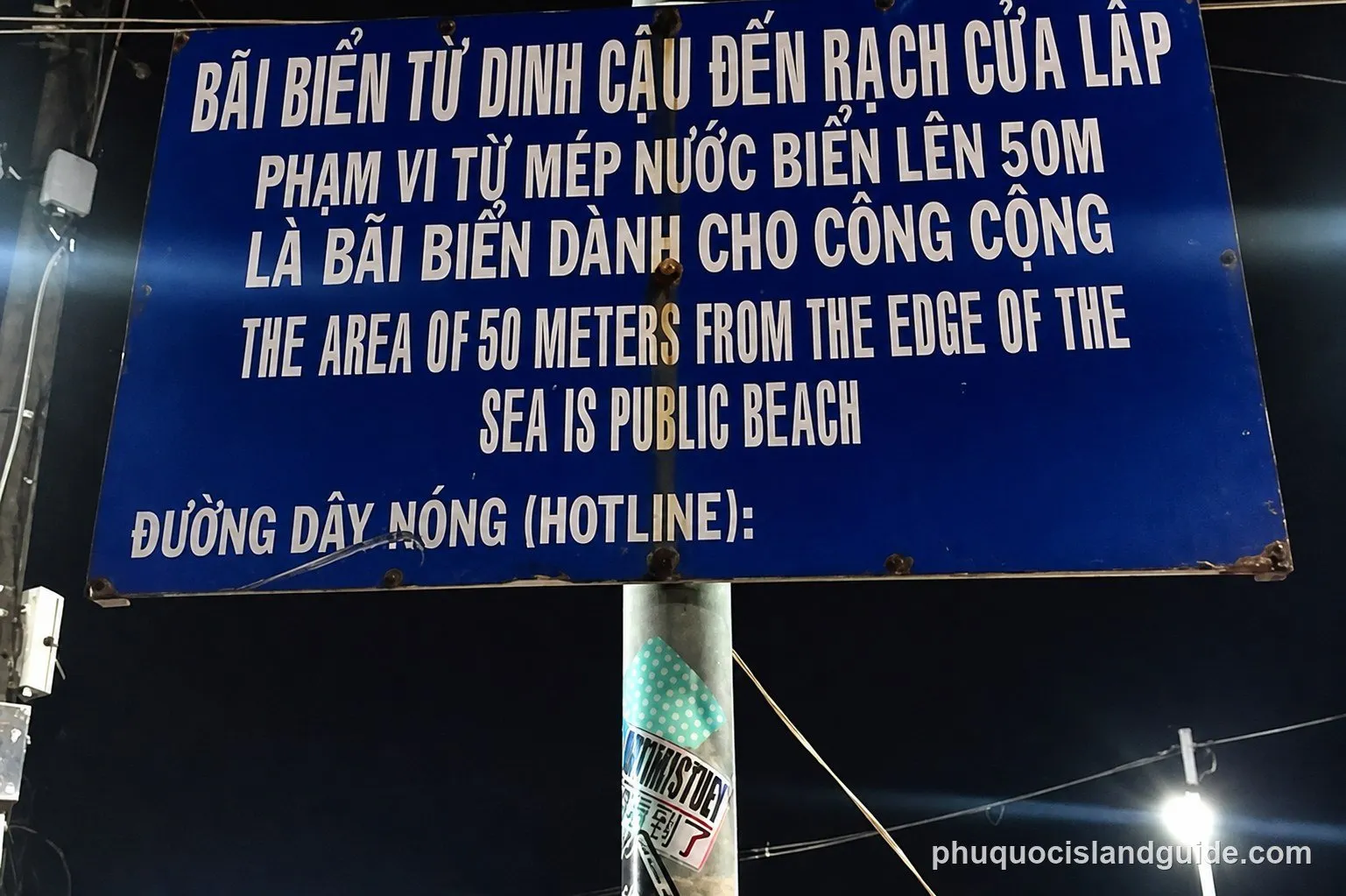
Beaches in Vietnam are open to the public. Vietnam’s Law on Natural Resources and Environment of Sea and Islands (Law 82/2015/QH13, Article 23) sets coastal protection corridors partly to guarantee people’s right of access to the sea, and the island’s beaches are not private property, apart from a few islets and military zones. Some beachfront businesses nonetheless post “guests only” signs, send staff to move non-guests on, or charge an entry fee simply to cross their land to the sand.
The line is simple: paying for a sunbed, a towel or a drink is fair; paying just to stand on the beach is not. You can usually reach the sand by a public path nearby. In 2026 this is most common at Sao Beach, where reviewers were charged about 60,000 VND to walk through a restaurant to the beach.
2. Phu Quoc Night Market Seafood Scam
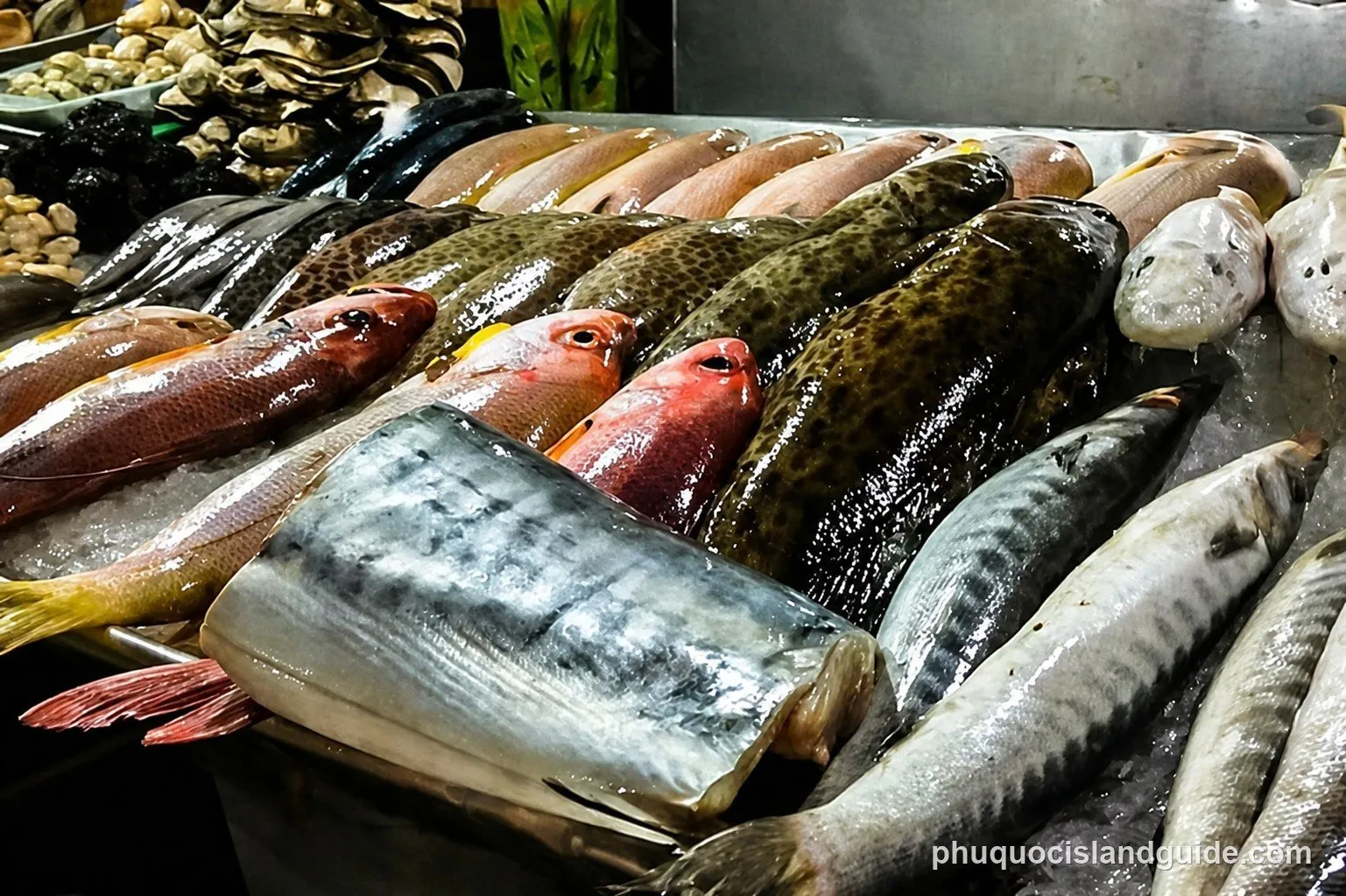
The Phu Quoc Night Market in Duong Dong is a few streets of food stalls, souvenir shops and seafood restaurants that display their catch on ice and in tanks. Two things go wrong here. First, seafood on ice may have been frozen and thawed more than once — it is not necessarily the day’s catch. Second, the fish you pointed at is not always the fish that comes back from the kitchen.
What to do: pick live seafood from the tank, agree the price per kilo and the weight before it goes to the kitchen, and choose busy restaurants with high turnover. Local catches — squid, cobia, crab — are fresher and cheaper than imported lobster or king crab.


3. Phu Quoc Taxi Scam
For the most part, taxi drivers working in Phu Quoc are honest. There are, however, some who will take advantage of customers by driving around and racking up fares. The more scheming ones will bring you somewhere secluded and then demand an exorbitant amount to send you back. To counter this, it is best to use your smartphones GPS device and Google Maps and show the taxi driver exactly where you want to go.
What to do?
Book through Grab where you can: the fare is fixed in the app before you get in. With a metered taxi, check the meter is running and note the car number. In an emergency, Vietnam’s police number is 113.
4. Dinh Cau Temple Touts

The Dinh Cau Temple is one of Phu Quoc’s most iconic landmarks and admission is free. However at the steps that lead to the top of the temple there sometimes will be touts, mostly children or older women, who will try to earn some money off you with a myriad of ways. Some may claim that you have to pay an entrance fee or claim that the temple is closed however if you pay a certain amount, you will be allowed in.
5. Motorbike Rental Scam
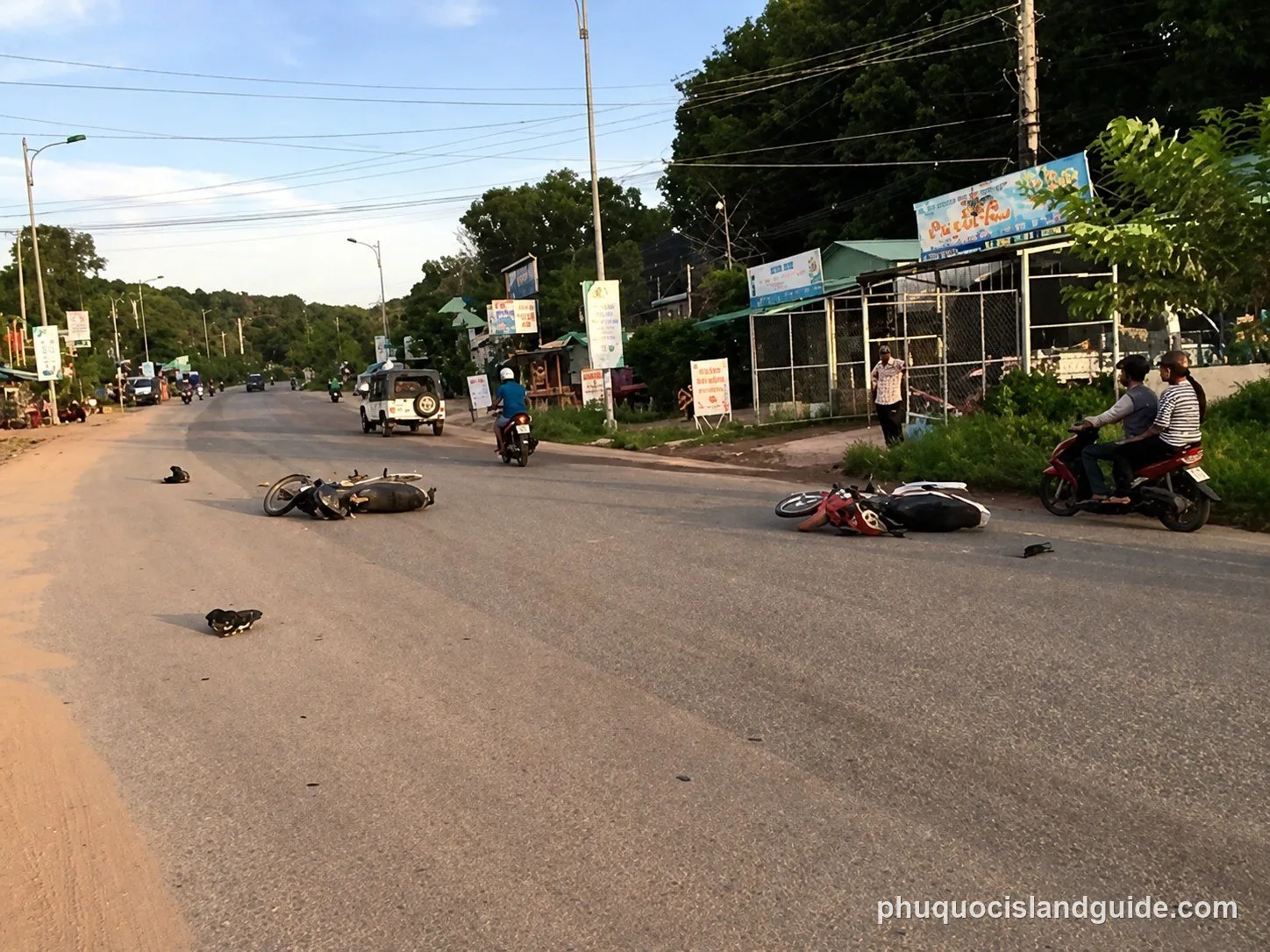
The motorbike scam: a shop rents you a bike with existing damage, then claims you caused it when you bring it back and demands an inflated repair fee — sometimes holding your passport until you pay.
What to do?
To avoid the hassle, inspect the bike and take photos and a short video of every side before you ride off, and never leave your passport as a deposit — offer a cash deposit or a photocopy instead. Also try to rent a motorbike from your resort. If they do not have one available, then try finding a place that exclusively rents out motorbikes – most of which can be found in Long Beach Village.
6. Credit & Debit Card Scams
ATM skimming devices are becoming more common in remote areas of the island. To avoid being scammed, withdraw money from Duong Dong Town, Bai Ong Lang, at the Phu Quoc International Airport, or at Long Beach Village. All these areas have cameras and transactions for the most part are secure.
7. Phu Quoc Visa Scam
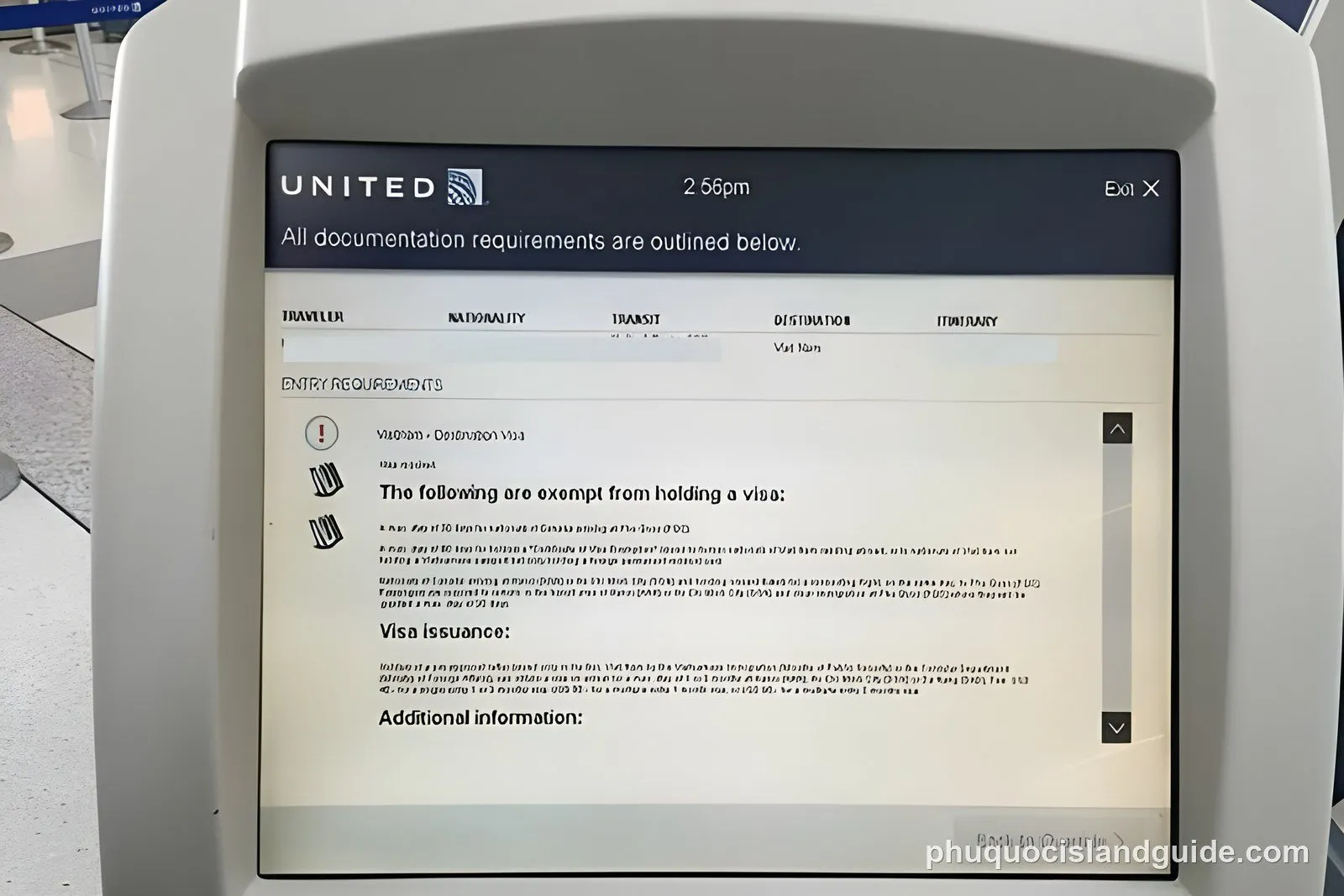
Every nationality flying into Phu Quoc from abroad gets 30 days visa-free on the island. You do not have to fly in direct — connecting through another Vietnamese international airport is fine as long as you stay airside — but the exemption ends at the island. The full rules, including the ferry route where it does not apply, are on our Phu Quoc visa page.
The problem here is not usually a scam but a mistake: travellers eligible for the Phu Quoc visa exemption are told at check-in abroad that they need a Vietnam visa, or are asked to pay to board. Most of the time this is due to lack of training – not everyone working in travel knows that Phu Quoc has its own visa exemption, separate from the rules for the rest of Vietnam. As such, we have provided an International Air Transport Association (IATA) screen that states that Phu Quoc is indeed a visa exempt region in Vietnam. Guests only need to remind the airline check-in counter employees to review their IATA terminal for Phu Quoc to verify.
8. “Local” Guide Scam
You can see all of Phu Quoc’s main sights without a guide, but if you want one, choose carefully. Anyone can introduce themselves as a “local guide” on the beach or online. Licensed guides in Vietnam carry a tour guide card under Article 58 of the Law on Tourism (Law 09/2017/QH14) — ask to see it, book through an established tour company or your hotel, and agree the itinerary and the full price, including entry tickets and lunch, in writing before you start.