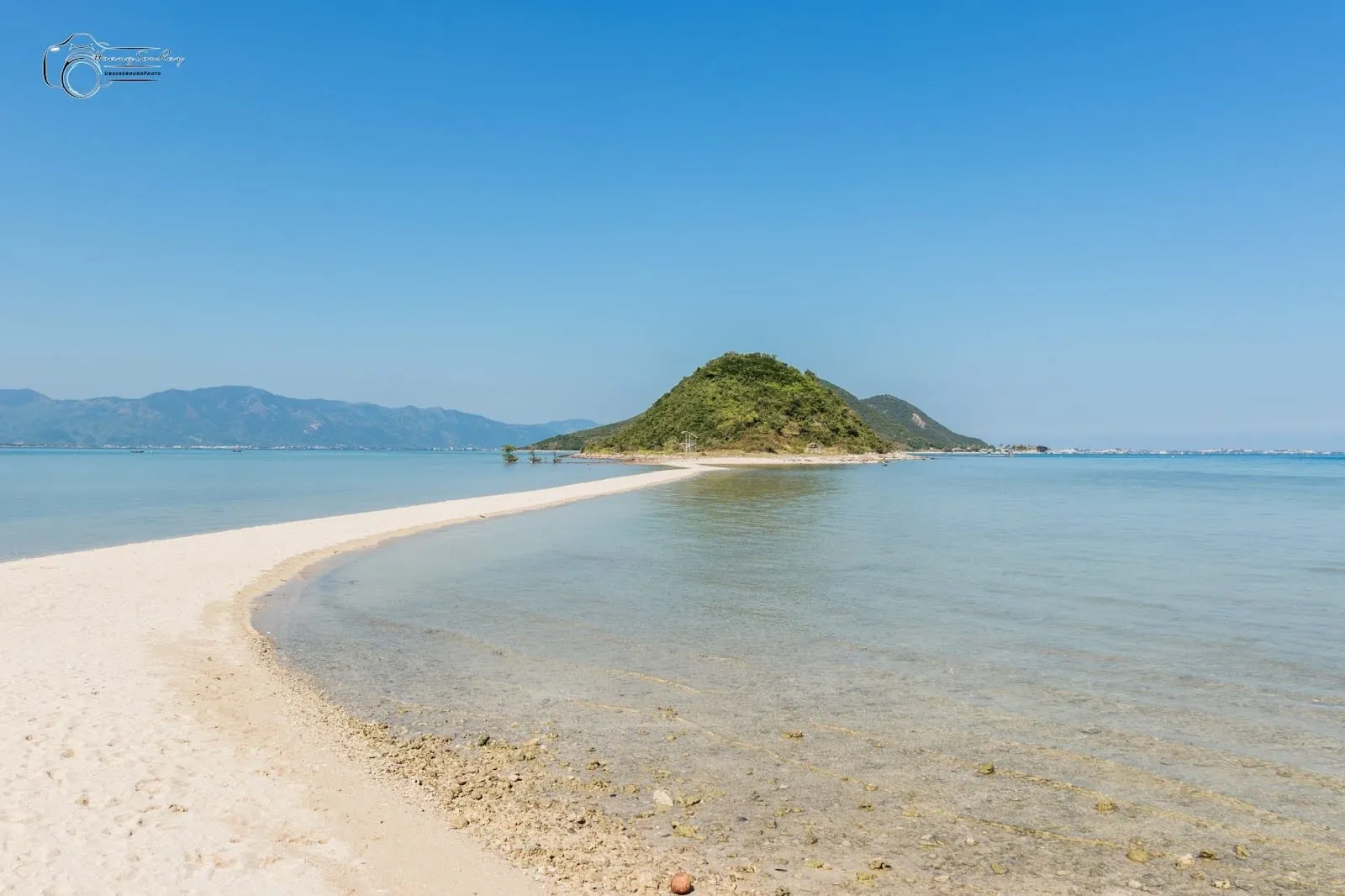
Diep Son (Điệp Sơn) is a cluster of three small islands in Van Phong Bay, on Vietnam’s south-central coast about 60 km north of Nha Trang — a long way from Phu Quoc, but a trip some of our readers combine with it now that there is a direct flight. It is famous for one thing: a narrow ribbon of white sand that runs out across the sea from one islet to the next, so that at low tide you can walk across the bay with water on both sides.
Since July 2025 the islands have been part of Dai Lanh commune in the enlarged Khanh Hoa province (they were previously in Van Thanh commune, Van Ninh district).
The road in the sea
The sandbar links the largest island, Hon Bip, where the boats land, to the smaller islets beyond; Vietnamese reports put its length at more than 800 metres. Locals call the island group “Phật Nằm”, the Reclining Buddha, after its outline.
- Tides decide everything. At low tide the sand stands clear of the water; at high tide it is covered — about half a metre deep, and up to the waist at the highest tides (Báo Văn hóa, 2024). Early morning is often best; day-trippers who arrive late in the morning may find it partly under water. Check a tide table before you go.
- The sandbar changes. Several reviewers from 2021–2022 found it shorter or broken compared with older photos; others in 2025–2026 walked it end to end. It shifts with the sea.
- Swimming: the shore is shallow and stony in places; wear swim shoes. Reviewers have mixed views on cleanliness — some found rubbish along the shore.
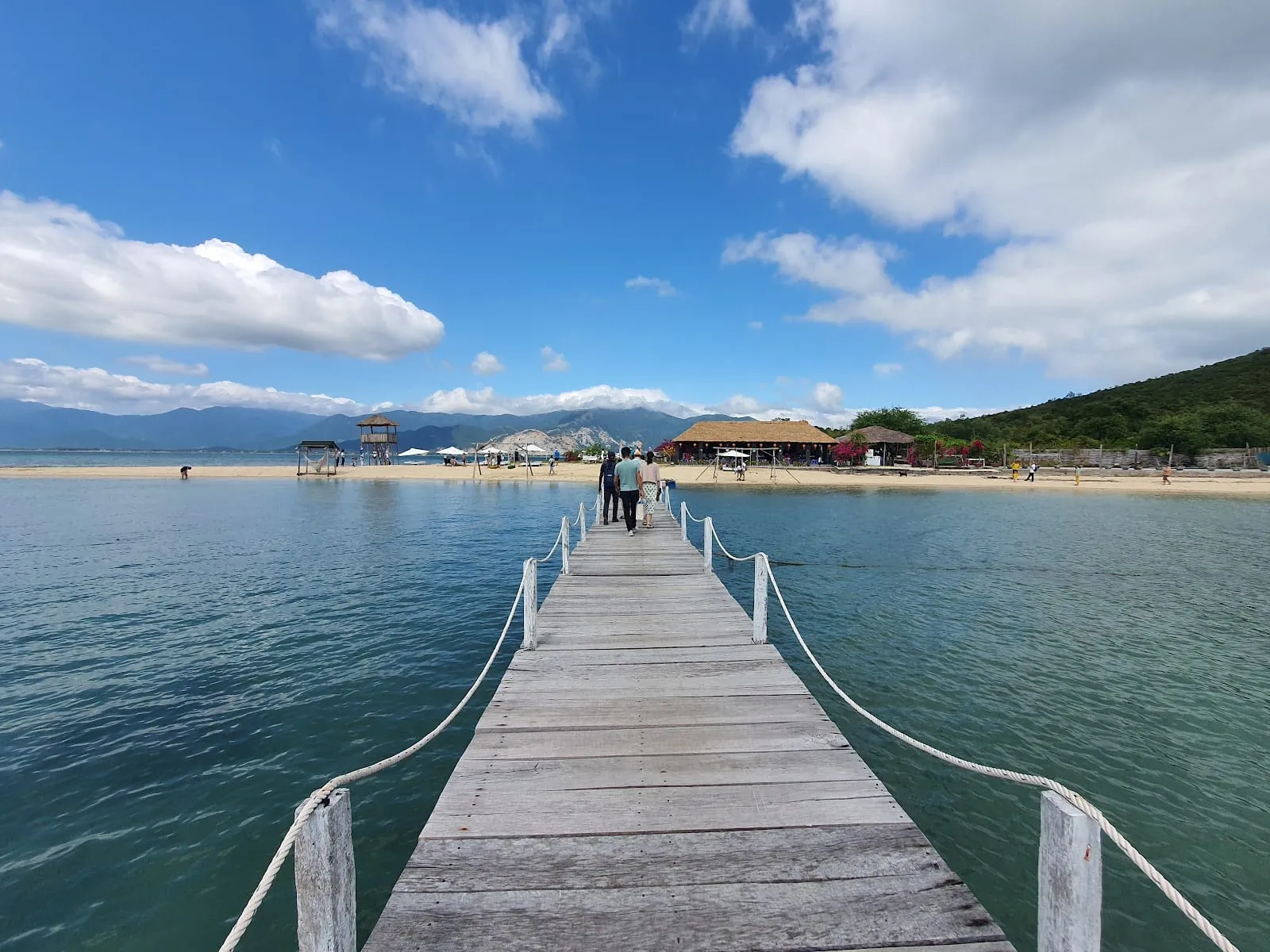 The jetty on Hon Bip. Photo: TLKH, via Google Maps
On the island
Around 90 households live on Hon Bip, mostly from fishing and fish farming. Tourism is small-scale: a main restaurant and a few drink stalls, simple bungalows and tents for overnight stays, and limited electricity and fresh water — bring cash. Guests who stayed overnight in 2026 enjoyed the quiet and the hosts, some of whom take visitors crabbing at night; others complained about prices and rubbish. On Google Maps the island scores 4.1 from 288 reviews (October 2026).
A 2025 provincial zoning plan earmarks the islands for a large high-end resort and marina, keeping the sandbar as a feature; we found no news of construction yet.
Getting there
- From Nha Trang: about 60 km by road (around 1¼ hours) to Van Gia, in Van Ninh commune, where boats leave from the pier on the seafront. Speedboats take 10–15 minutes and wooden boats 30–45; a 2026 guide quotes 200,000–350,000 dong per person return (operator prices), and reviewers have paid more when travelling as a couple or alone. Agree the return time — afternoon boats can be scarce.
- From Phu Quoc: Sun PhuQuoc Airways started direct flights from Phu Quoc to Cam Ranh airport (for Nha Trang) in March 2026, about an hour in the air. From Cam Ranh it is a long drive north to Van Gia, so plan a night in Nha Trang or on the island. See getting to Phu Quoc for the island’s flight network.
- Season: December to June has the calmest sea; from about July to November the bay can be rough and boats may not sail.
Other islands from Phu Quoc
Closer to Phu Quoc, the Nam Du and Tho Chu islands are reached by boat from the Mekong Delta coast, and Con Dao by air via Ho Chi Minh City.
Ratings and visitor comments: Google Maps, 2018–2026. Facts: see sources.
Map
Loads Google Maps when you tap. Or open in Google Maps.