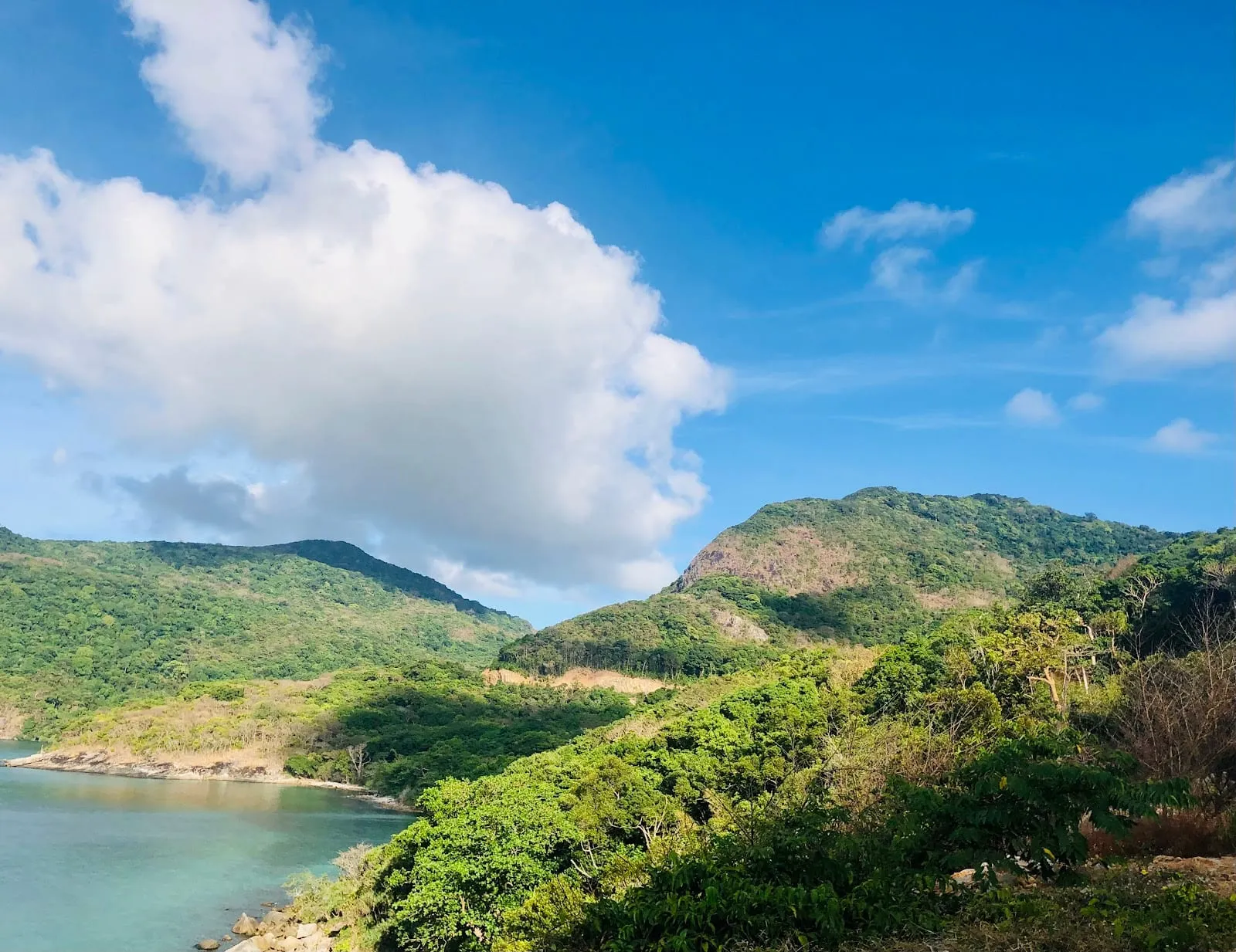
The Nam Du Islands archipelago consists of 21 islands which are located off the southern coast of Vietnam’s An Giang Province in the Gulf of Thailand. As Phú Quốc quickly becomes Asia’s next top luxury vacation destination, Nam Du remains its sleepy underdeveloped cousin and more frequented by Vietnam’s growing backpacking community as well as package tourists. While Phú Quốc has better beaches, Con Dao has better diving, and Nha Trang has a better nightlife what they do not have are Nam Du’s breath taking panoramic views which is why some people often call it Vietnam’s “mini Halong Bay“.
We were disappointed to find very limited and inaccurate information about Nam Du while conducting our own research and travel planning and thus after our trip to the Nam Du Islands we created this resource for the benefit of the local and global travel community. In the following sections you will find the worlds most comprehensive travel guide on Nam Du, the first of its kind. Please like and share this page if you found this information beneficial to your travel planning while in Vietnam.
- Part of Kien Hai Special Zone (Đặc khu Kiên Hải), An Giang Province, since 1 July 2025.
- Twenty one islands, Hon Lon is the main island.
- Population as of 2018: ~6,000
- 250 km from Ho Chi Minh City.
- Get there by ferry from Rach Gia or private boat from Phu Quoc or Saigon.
- Minimum time required: 1 day, 1 night.
- Famous for seafood, lighthouse views, and low cost.accommodations.
Nam Du (area ~40 square/km) is part of Kien Hai Special Zone, a special zone that consists of 73 islands with Hon Tre Island, the special zone’s administrative seat, being approximately 25 km away. The sea route from Rach Gia (Rạch Giá) to Nam Du is about 90 km, and 40km south of Phu Quoc Special Zone, the more famous island archipelago in Vietnam. The terrain on Nam Du is mountainous and very rugged, formed as result of seismic activity in the area, with the highest point at 309 meters above sea level.
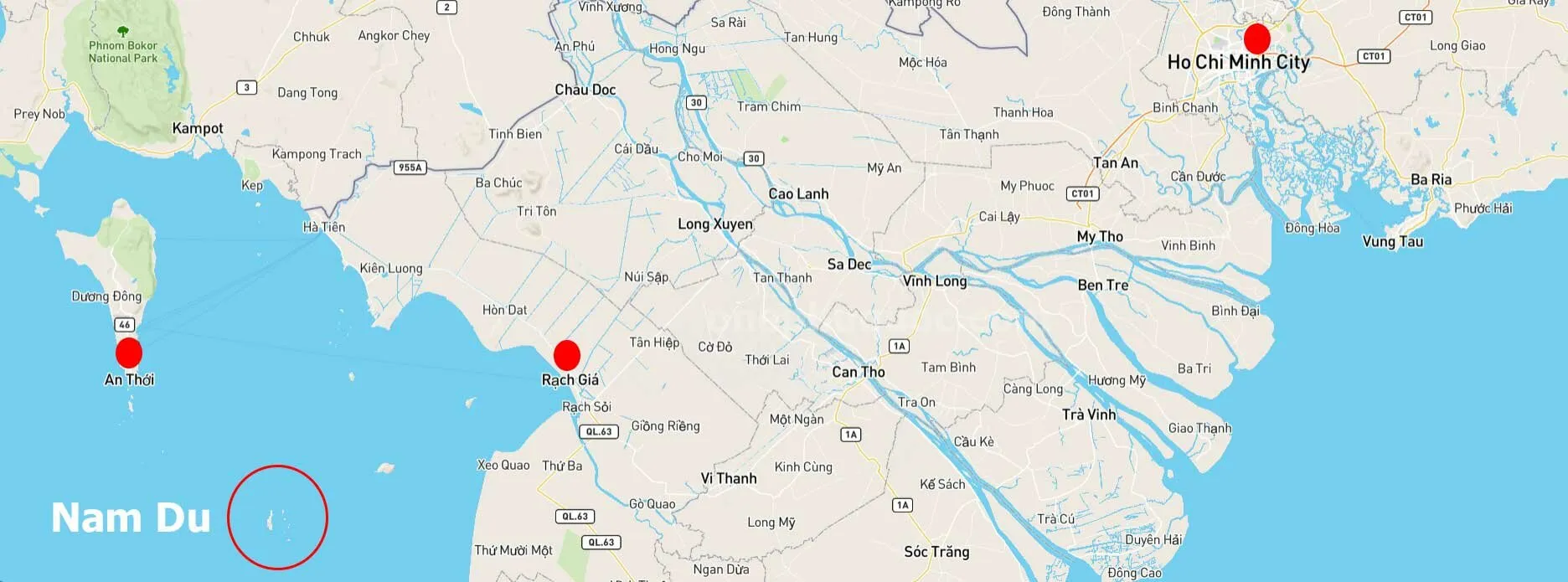
The largest island and the center of all economic activity is called Hon Lon, or “Big Island“, which is part of An Son Commune. The major town of Hon Lon is known as Cu Tron (Ấp Củ Tròn) with Bai Tret (Bãi Trệt) being the small, but growing, seaside community where you will find the main ferry port, accommodations, restaurants, and more.
People & Culture
Nam Du’s inhabitants are simple people who live and die by the sea. There are roughly 6,000 people who live in one of the 2 communes found in the archipelago: An Son Commune or Nam Du Commune. Most of the people of Nam Du are ethnically of Kinh origins with a small population being Khmer (Cambodians).
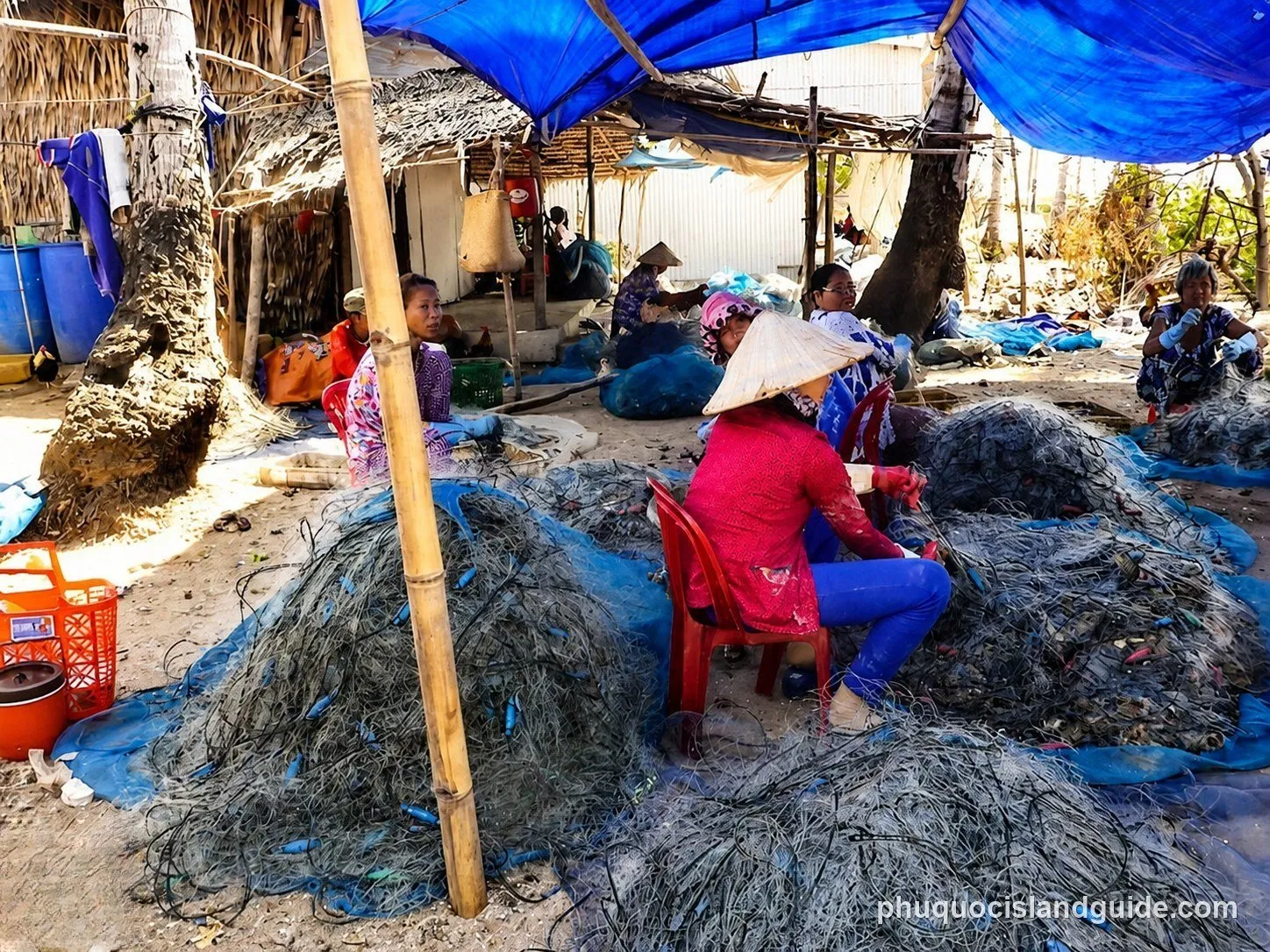
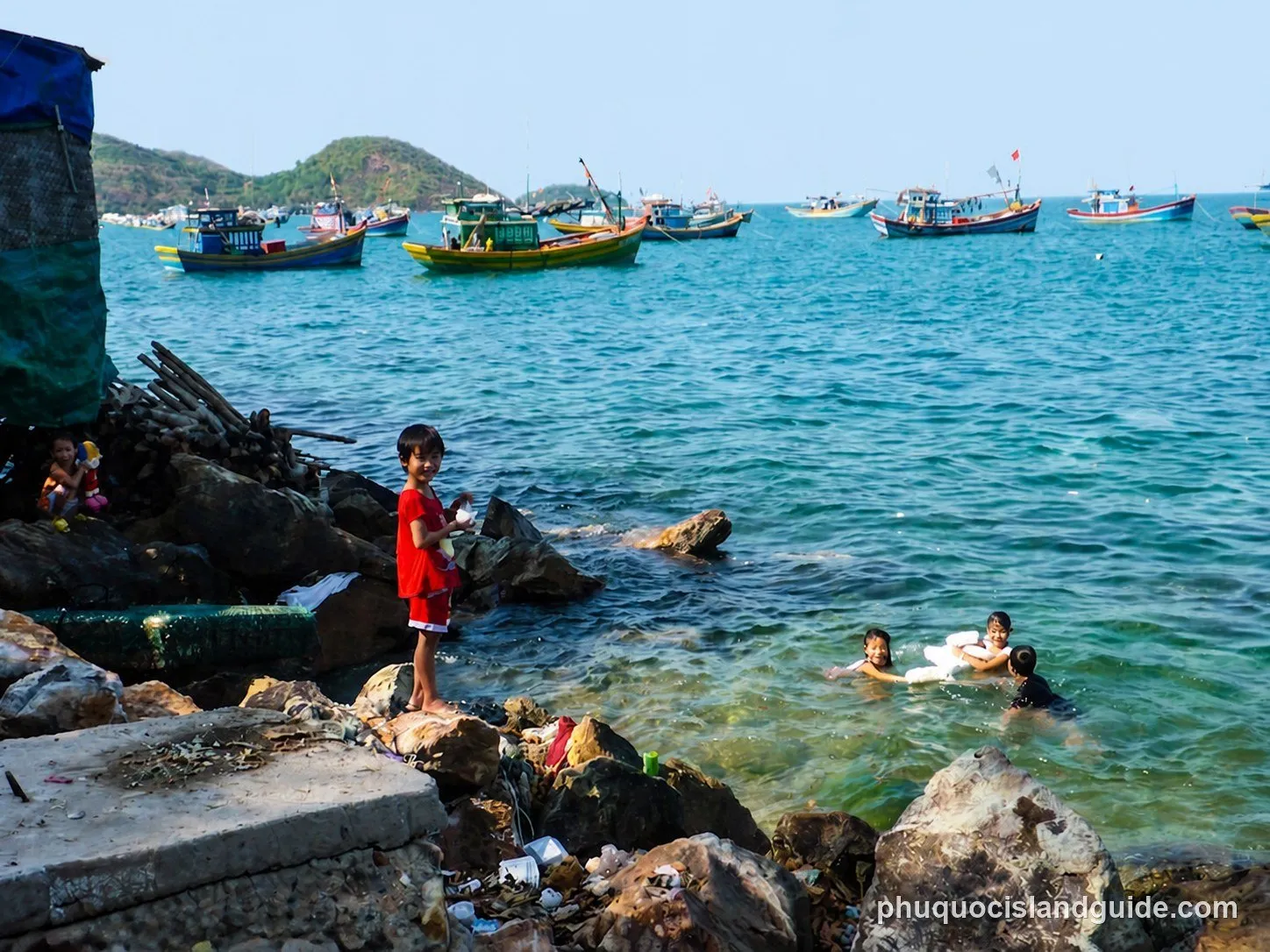
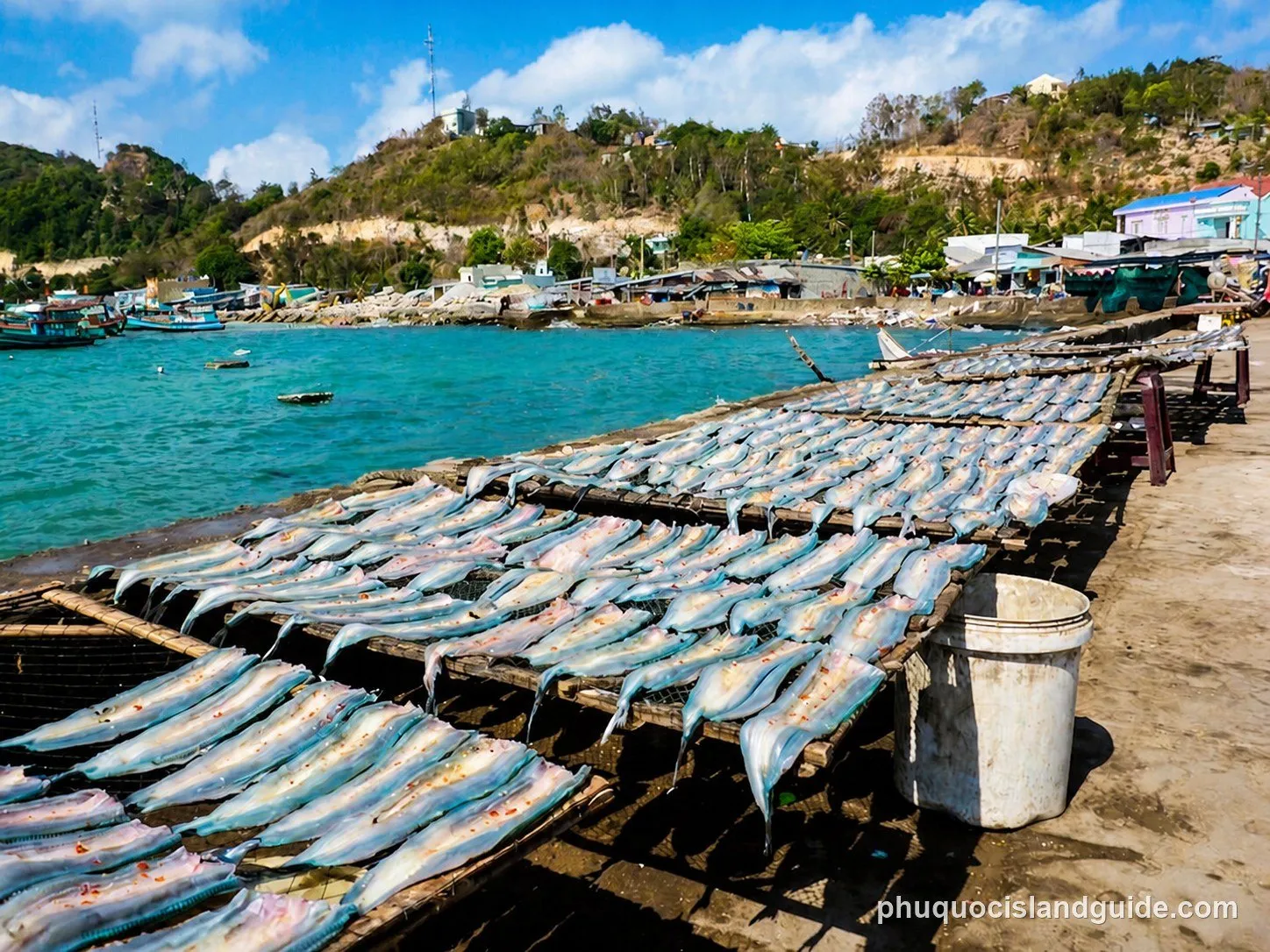
The main source of income comes from the fishing industry.
Given the success of nearby Phu Quoc, some locals are now transitioning from the labor intensive fishing industry to the more lucrative travel and tourism industry (accommodations, food and drink, motorbike rentals, tours, and ticketing).
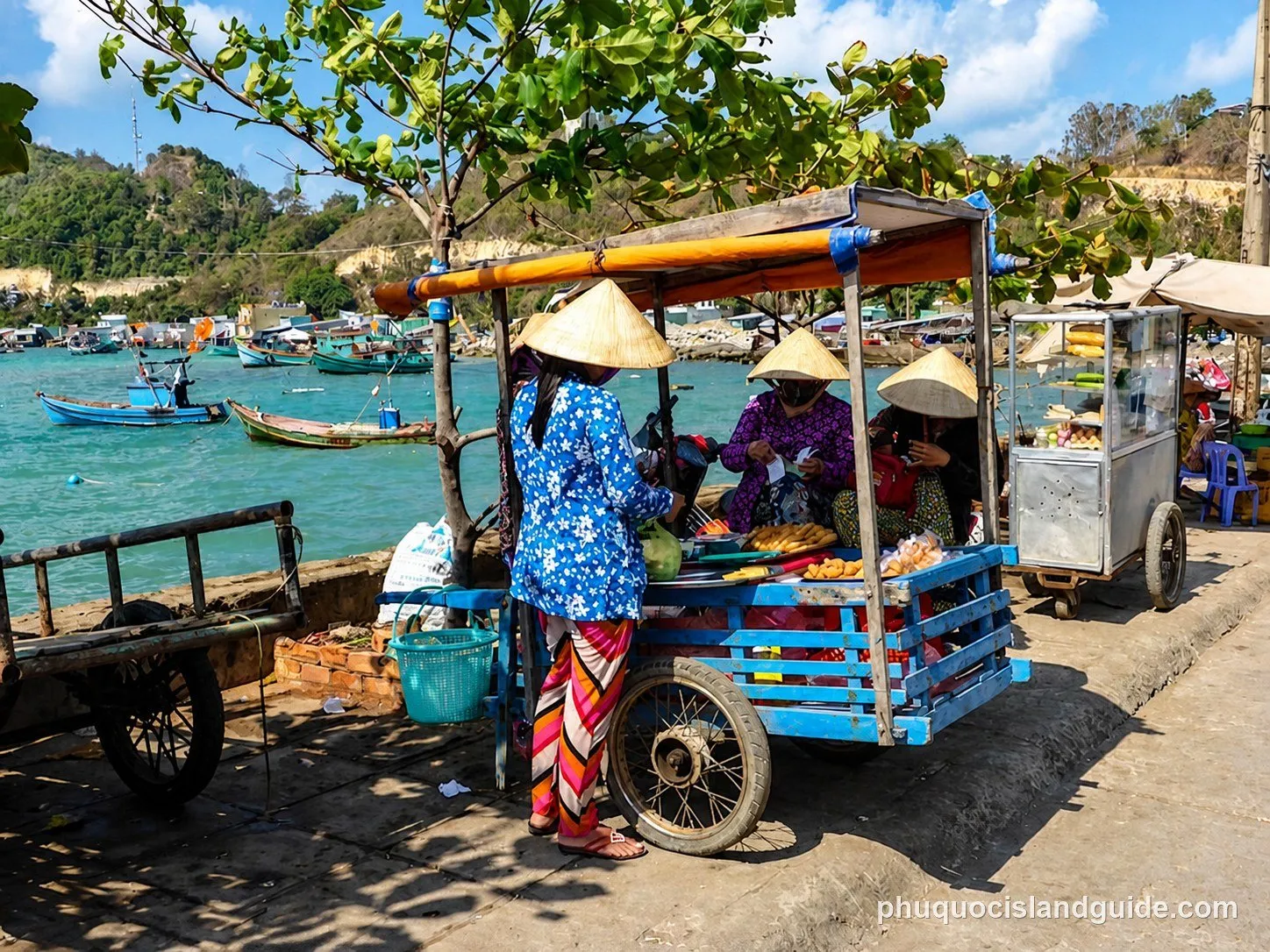
Nam Du is not yet connected to Vietnam’s power grid: as of July 2025 the archipelago still ran on fuel generators around the clock, while the grid had reached Hon Tre and Hon Son (Tuổi Trẻ / Người Lao Động, 3 July 2025). There were no major hotels or resorts on the islands as of 2018.
The Beaches
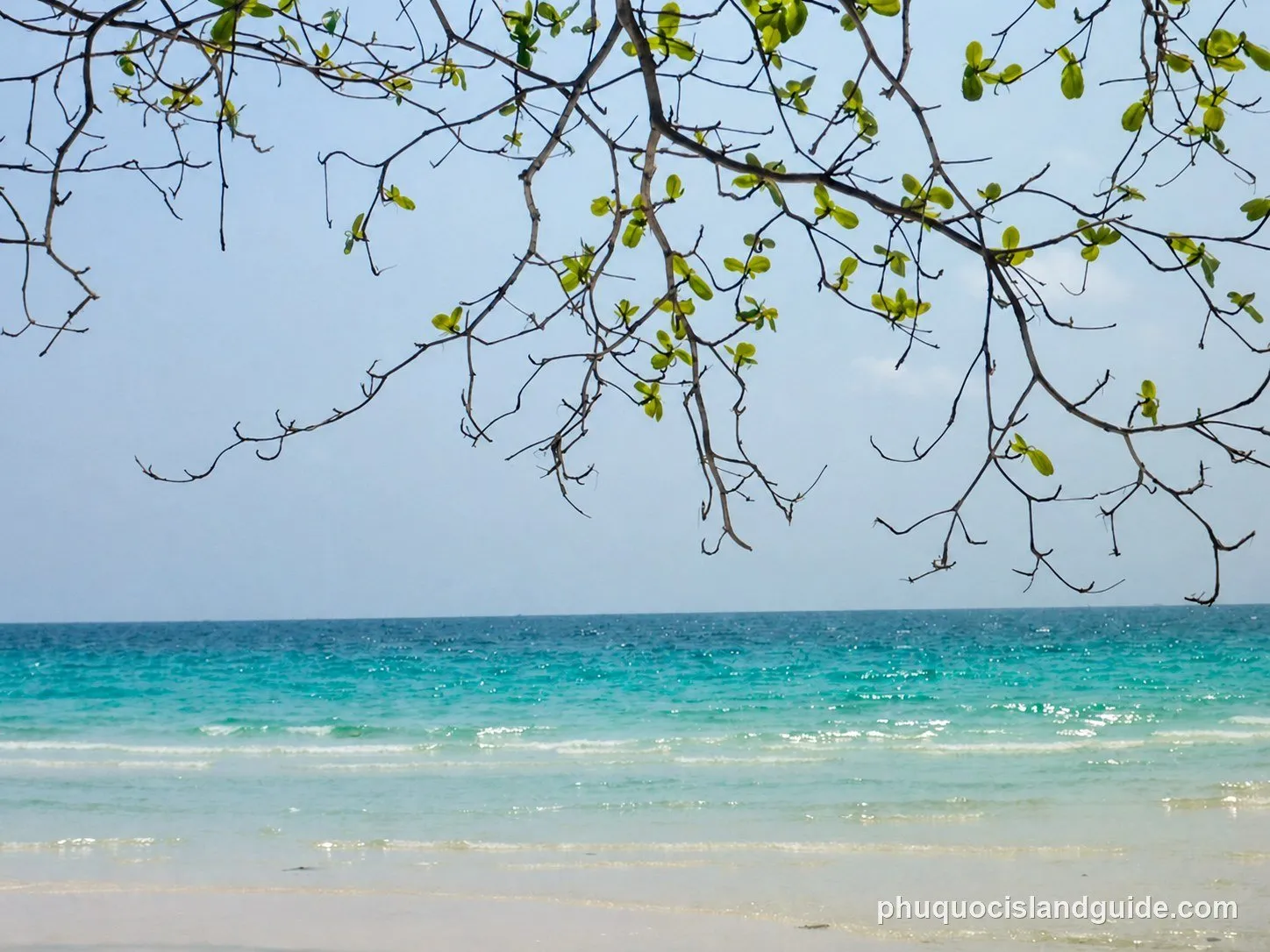
Most people who come to Nam Du expect to find island upon island of pristine white sandy beaches, much like those seen on nearby Phu Quoc. However this is not the case. There are only 3 real beaches (see below) in Nam Du, and only one real white sand beach.
Best Time To Visit
The Nam Du archipelago is affected by the same monsoonal weather as Phu Quoc and thus has only 2 real seasons, a dry season from November to May and a wet season from mid May to mid October. The best time to travel to Nam Du is from December to March, as the seas are calm, the weather is consistent, and the temperature is comfortable. There are also more ferry’s running during this time period. The only way to reach Nam Du is by ferry, as the archipelago’s rough mountainous terrain is too rugged for an airport strip.
Nam Du Today
Thanks to the increasing media coverage about the various islands off Rach Gia, shared photos on social media sites like Facebook, and videos posted on Youtube, more and more holidaymakers are visiting Nam Du to relish the advertised charms for themselves and tourism authorities are still struggling to cater to the burgeoning travel demand. During the weekends hordes of package tourists invade Hon Lon Island, Nam Du’s most popular island, and the limited rooms that are available on the island are often booked in advance. However the island is rapidly developing and building the necessary infrastructure needed to cater to the new pent up demand. New accommodations are rapidly being built, there is electricity available 24 hours a day now, the main road is now paved, 3G connectivity is good and WiFi can be found at most motels. Several fast boats sail between Rach Gia and the Kien Hai islands each day (see the ferry schedule below). With all this new-found tourist interest, prices have also increased especially during the weekends.
Nam Du Permits For Foreigners:
Nam Du sits inside Vietnam’s sea border area. Article 7 of Decree 71/2015/NĐ-CP says foreigners living in Vietnam who go to sea border areas or offshore islands need a passport, a visa (unless exempt) and a permit from the provincial police, with an exception for designated tourism, service and economic zones; a Vietnamese organisation that brings foreigners in must notify the provincial police and border guard. We found no separate rule or guidance for tourists heading to Nam Du. If you are not Vietnamese, check with the immigration department of An Giang provincial police, or have your tour organiser or accommodation handle it, before you travel. Checked 8 October 2026.
Nam Du: Overview of the islands
Nam Du Islands ( Đảo Nam Du) consist of twenty one big and small islands that collectively are known as the Nam Du Archipelago. There are 4 big islands that have relatively decent infrastructure that makes exploration a bit easier. They are: Hon Lon, Hon Dau, Hon Ngang, and Hon Mau. You can commission a boat from local people and travel to these islands.
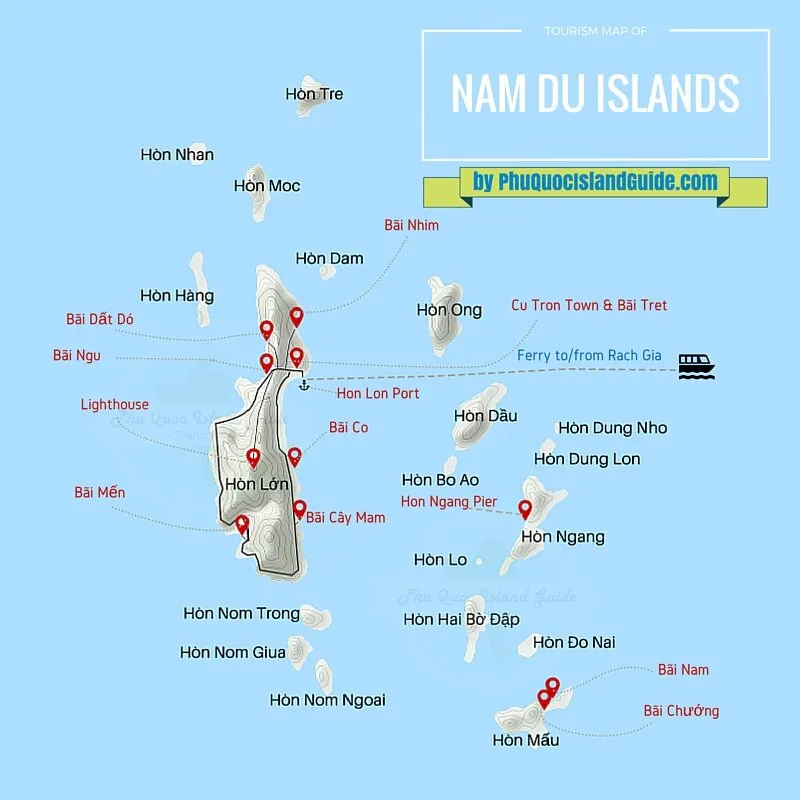
In the following section, we highlight what you will see at Nam Du’s most interesting and popular islands.
HO LON ISLAND
Hon Lon (Hòn Lớn), also known as “Big Island”, “Nam Du Island” and sometimes erroneously referred to as Củ Tron Island (Ấp Củ Tròn) is Nam Du’s largest island at 9 square km. Hon Lon, which is part of An Son Commune, is the epicenter of all tourist activity in Nam Du and it is here where you will find he majority of accommodations, restaurants, and the ferry dock where you can catch a ferry to and from Rach Gia.
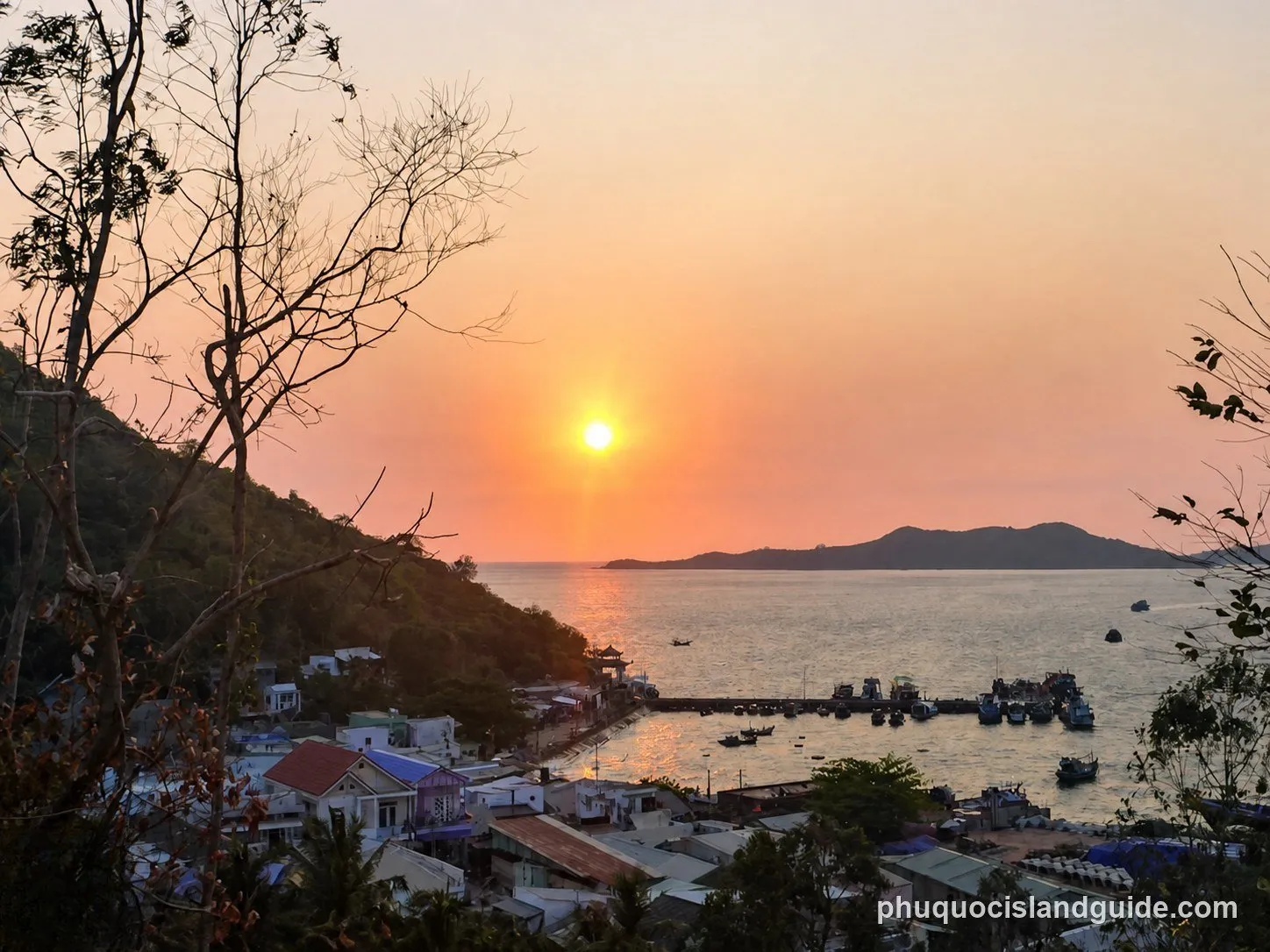
Hon Lon Islands main town is called Cu Tron and the island also has 3 small coastal communities:
- Tret Beach (Bãi Thệt) – the community around the pier.
- Ngu Beach (Bãi Ngự) – the coastal community located at km 1 and about 4 km from the pier on the other side of the island, and
- Co Beach (BãiCo) – a coastal community 2 km south of Tret Beach. Apart from “seeing how the locals live” there isn’t much to see and do at these coastal communities. These small coastal communities also do not have a beach.
Hon Lon Island is famous for its lighthouse (Hải đăng Nam Du), a restricted military zone and for a having a few beaches: Dat Do Beach, Nhun Beach, Men Beach, and Mam Beach. Only Dat Do Beach and Men Beach are beaches that have actual sand. The rest are rocky shoals.
Nam Du Lighthouse
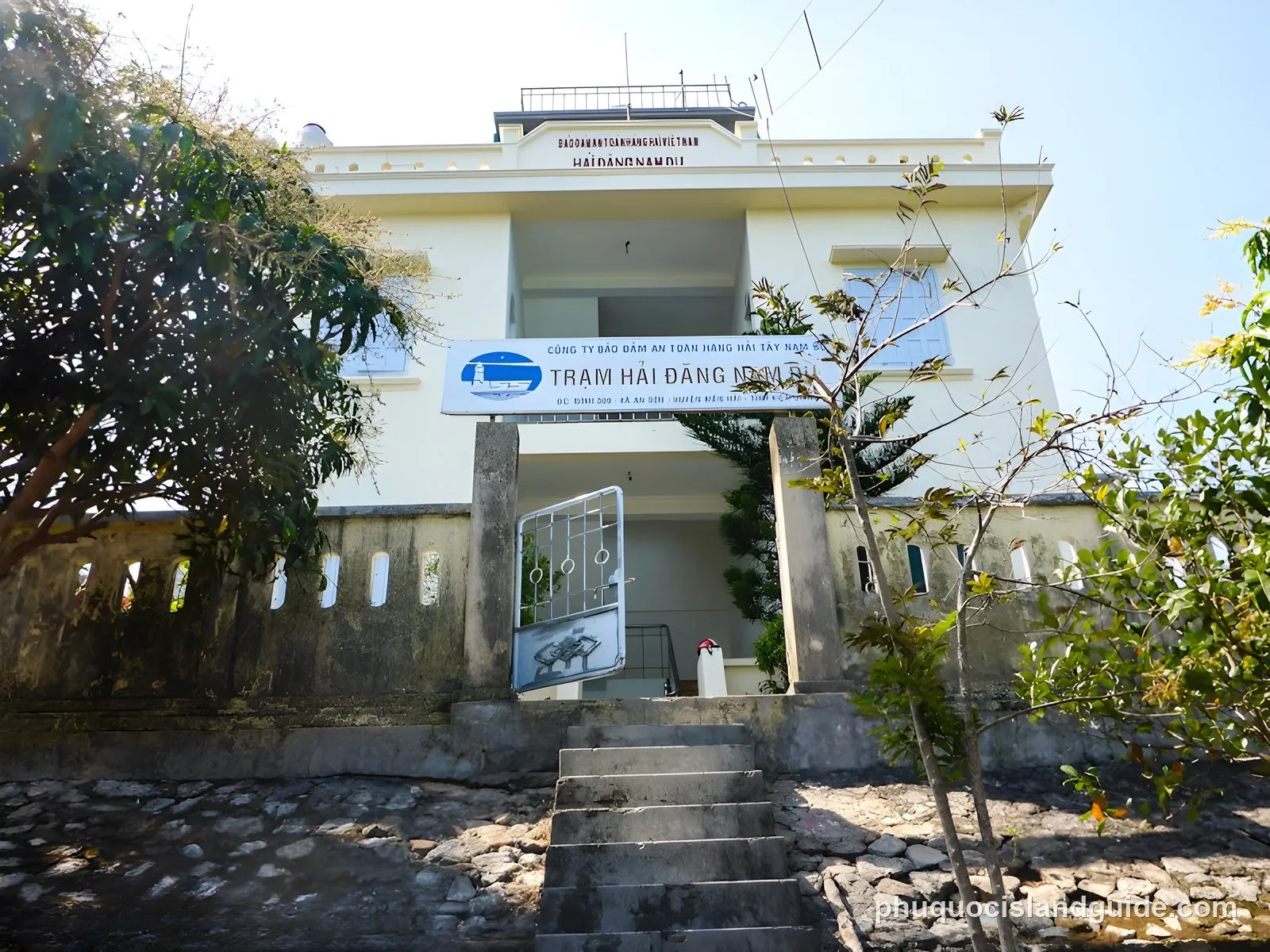
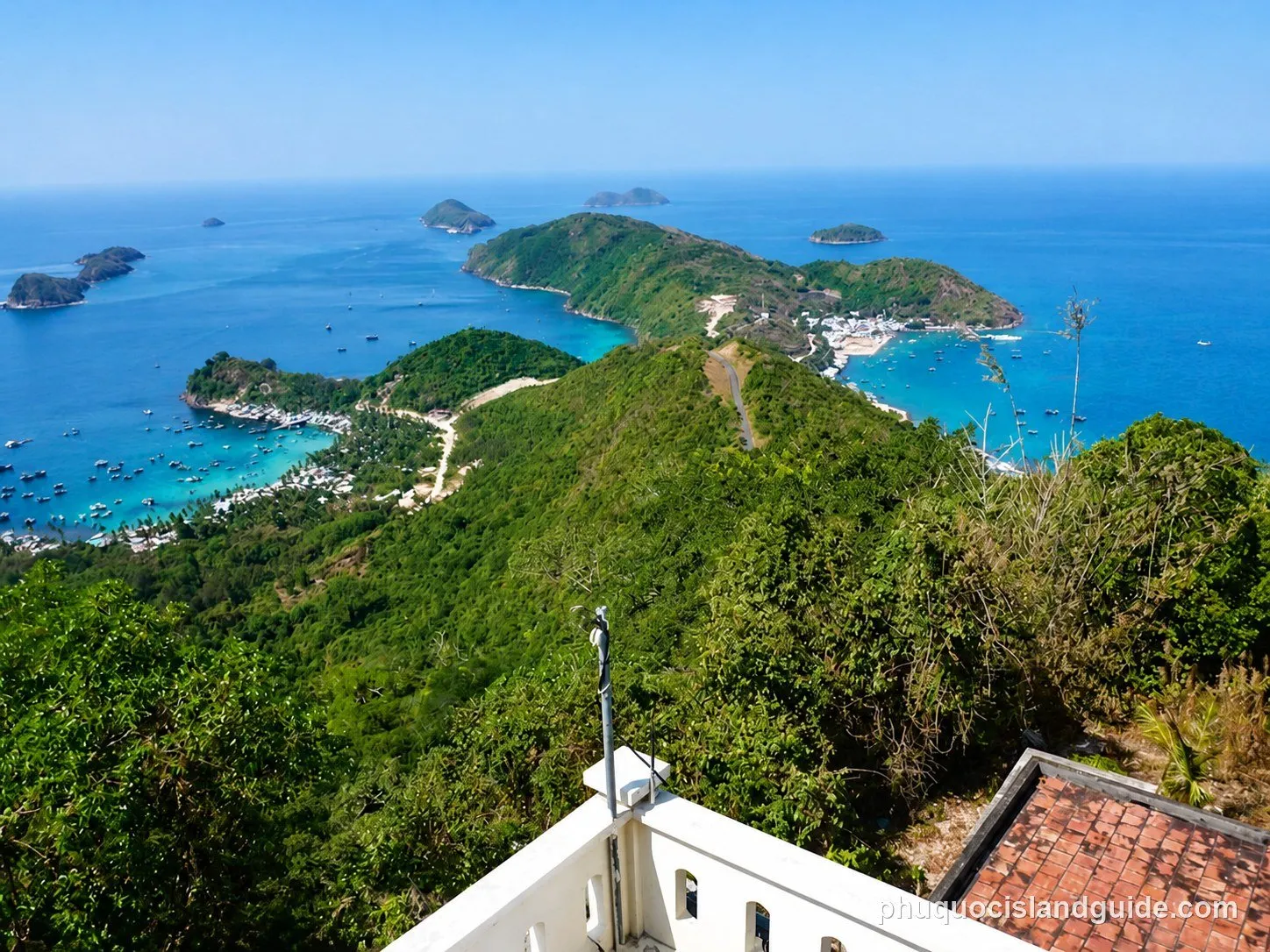
Nam Du Islands lighthouse is the most famous site in Hon Lon Island if not Nam Du, not for the actual lighthouse, which is a bit disappointing compared to other lighthouses, but rather for the view from the lighthouse. The Nam Du Lighthouse is located 300 meters above sea level and it is one of the highest lighthouses in all of Vietnam. Today the Nam Du lighthouse is classified as a restrictive military zone and tourists are strictly forbidden. The military has even place a barrier on the road hoping to deter tourists. You can, however, still visit the lighthouse by”tipping” someone. Ask around the market in Bai Tret town for more details.
Dat Do Beach
Dat Do Beach (Bãi Dất Dó) is a small beach located on a quiet bay just before Bai Ngu. It is a perfect spot for drinks and here you find a great view of Hon Hang Island (Hòn Hàng). The narrow beach here has yellow sand and the sea is turquoise in color. Dat Do Beach is the closest beach to Cu Tron Town.
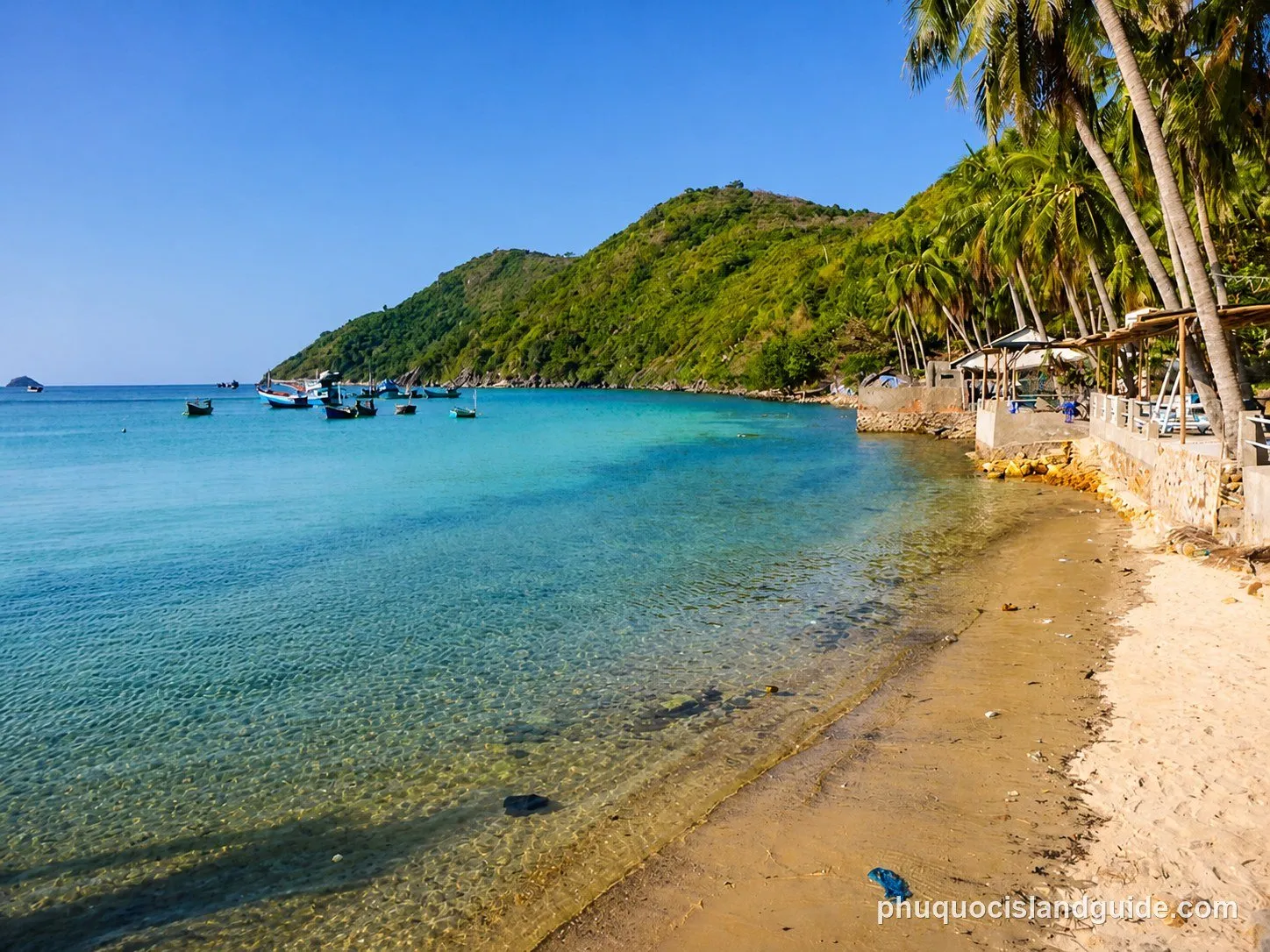
To get there you must travel down a steep paved road. Those who are not comfortable riding a motorbike up and down steep paths should either walk to Dat Do Beach, get dropped off via a Motorbike Taxi, or simply avoid it altogether.
Nhum Beach
Nhum Beach is a small beach located on the northern side of Hon Long Island. It’s located behind the island’s fresh water source and it is a bit difficult to reach as you need to hike through a small trail. The beach itself consists of rocks and there is a family living nearby.
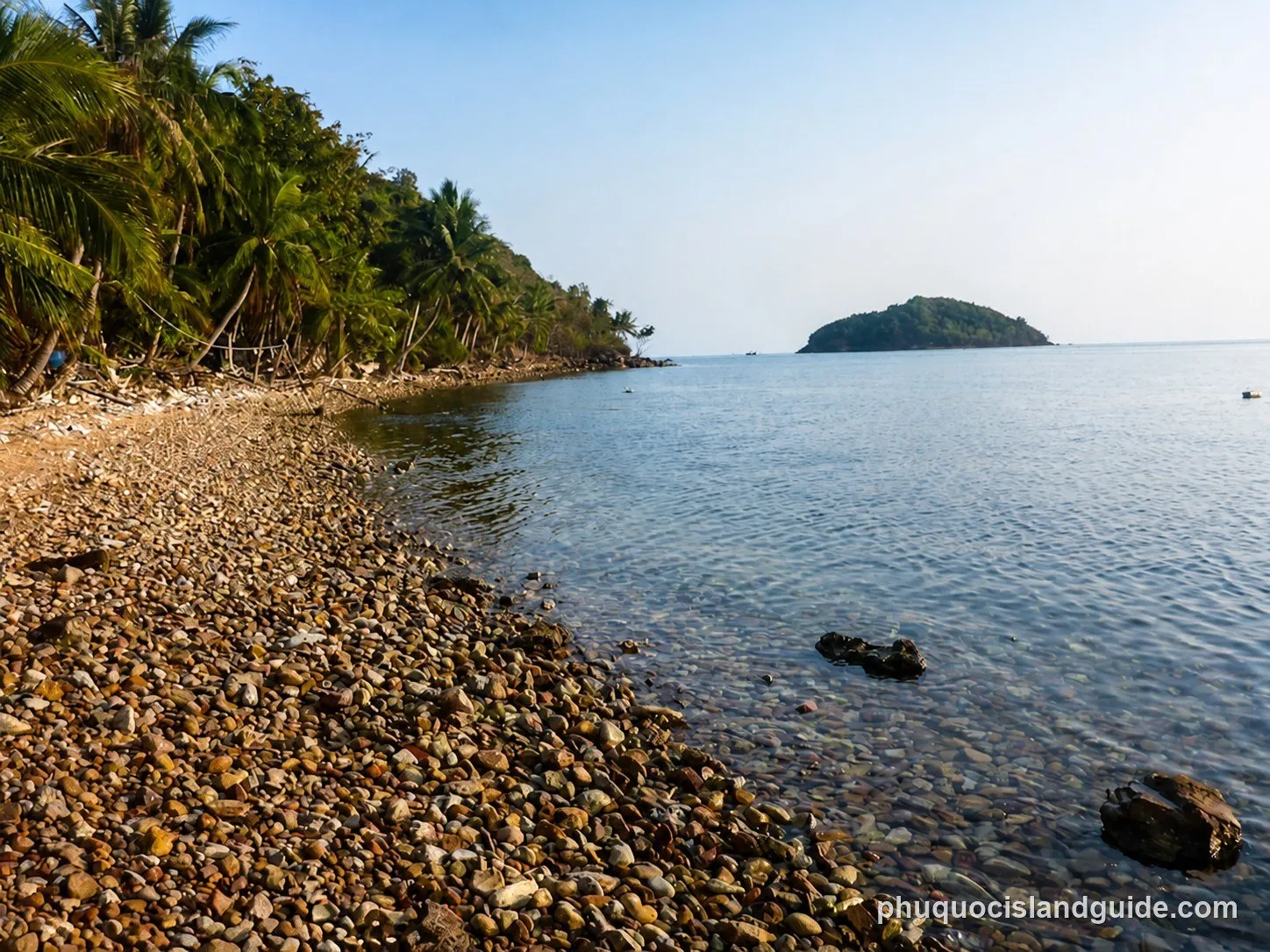
Men Beach
At just 600 square meters, Men Beach (Bãi Mến) is the best beach on Hon Lon Island and the second best beach in all of Nam Du.
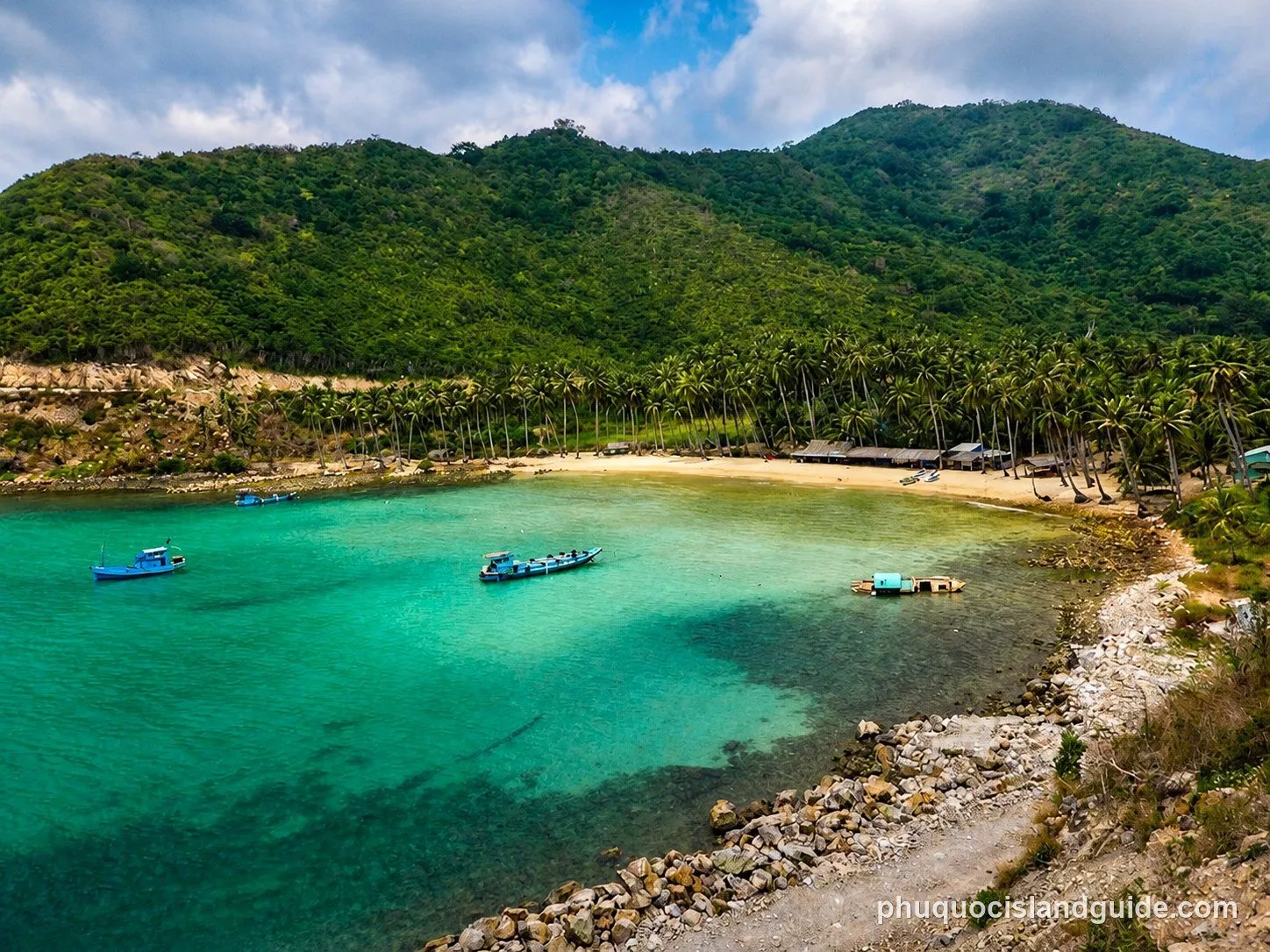
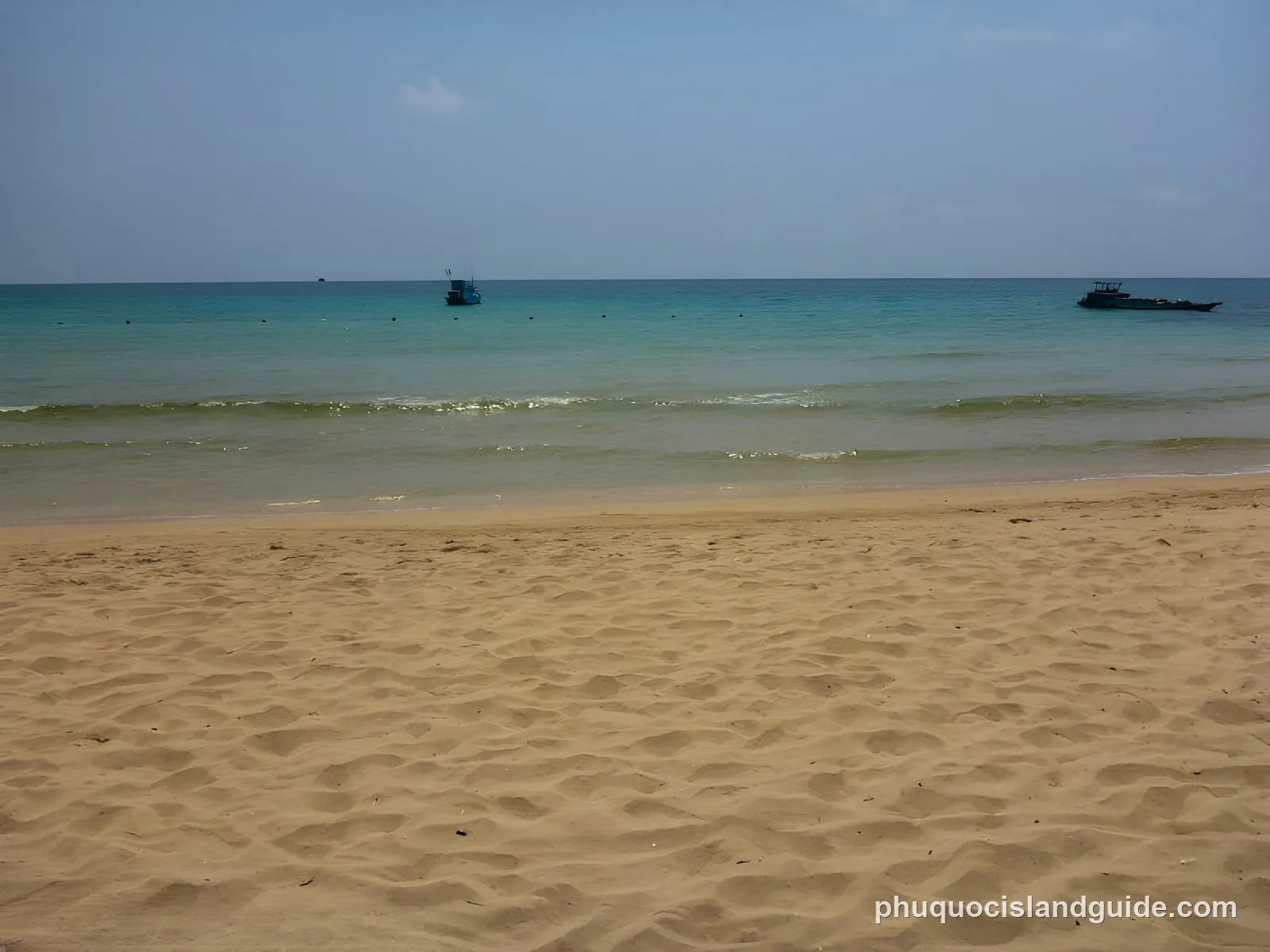
The yellow sand here is soft, the sea is turquoise and green in color, and the banks are inundated with coconut palm trees. There is even some coral at the far edge of the beach. You can have drinks and food here, rent jet skis, and even stay here with a family that keeps this beach clean. Bai Men Beach is located the 4km mark.
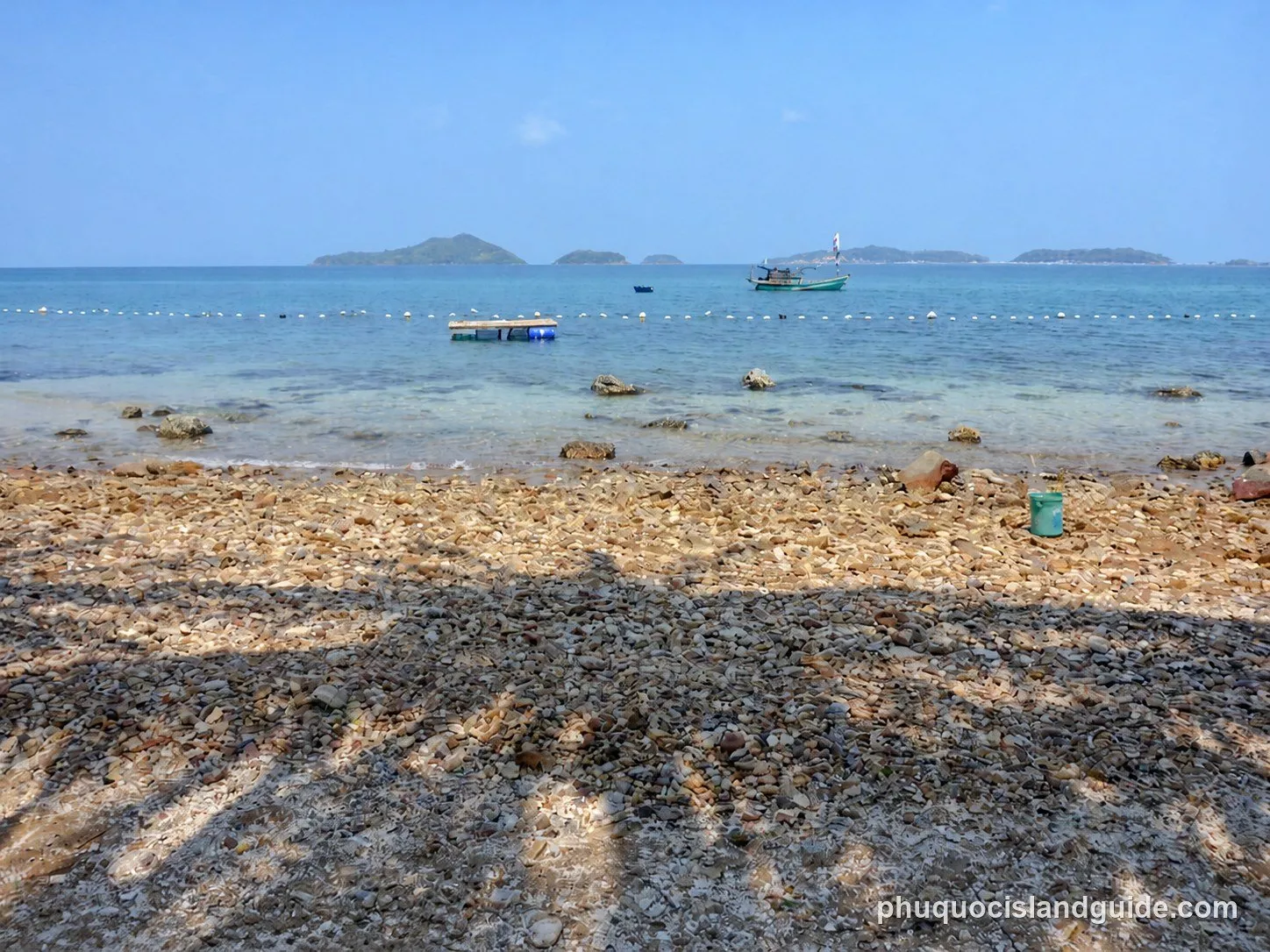
Mam Beach
Mam Beach (Bãi Cây Mam) is owned by a very friendly Saigon-ite. The water is calm and you can snorkel and have a beach BBQ here. He also arranges nightly baby octopus fishing trips. Located at km 7.3 km from Bai Tret.
HON DAU ISLAND
Hon Dau Island (Đảo Hòn Dầu) is located directly east of Hon Lon Island and this island is famous for its old growth forest, simple yellow sand beach, and a coconut tree that bends towards the ocean, which has become a popular spot for selfies among tourists who visit here.
The sea surrounding Hon Dau also has some coral reefs, but they are not as healthy as the reefs found around the other Nam Du Islands.
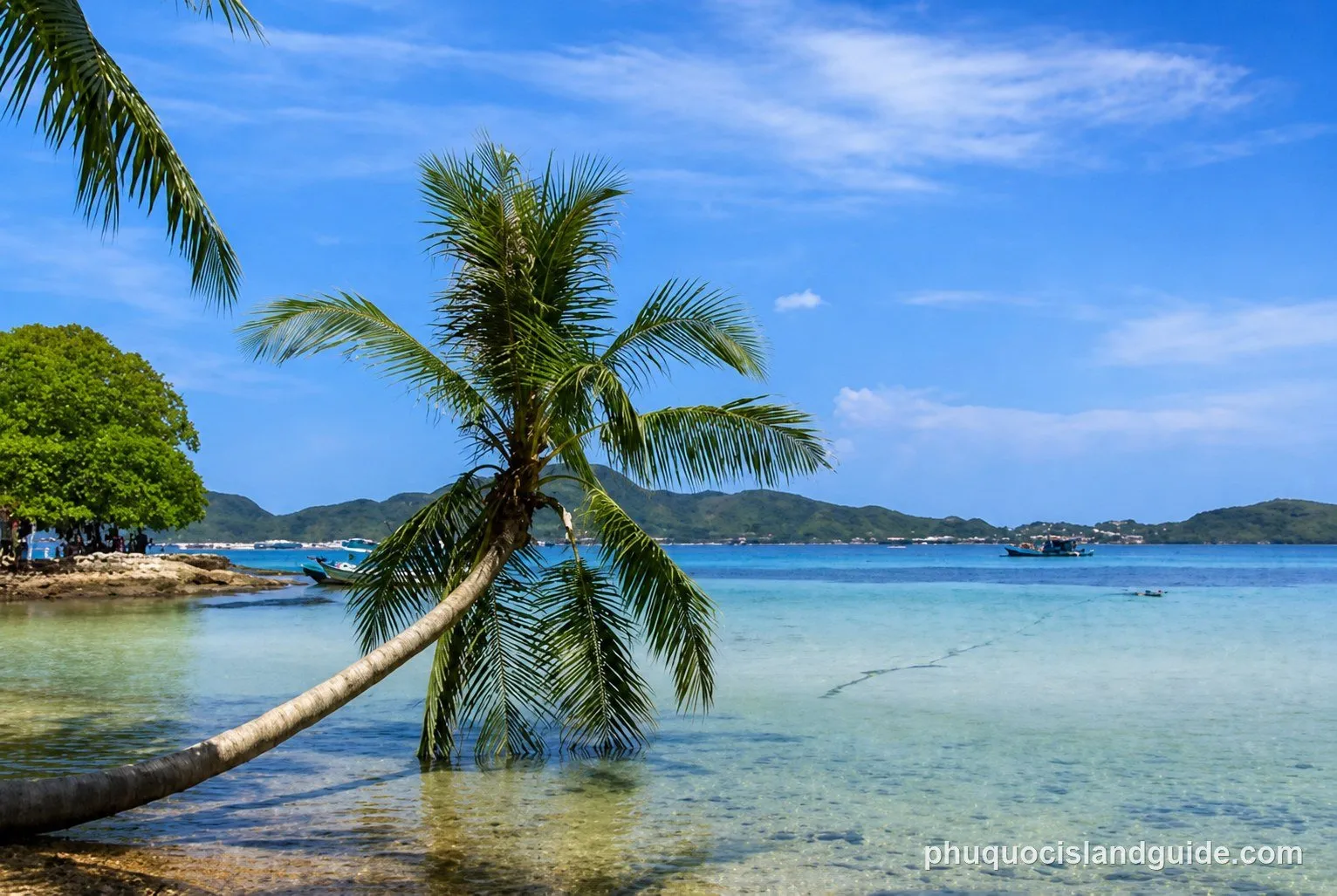
HON NGANG
Hon Ngang Island (Hòn Ngang) consists of two towns (An Binh town and An Phu town) that fall under Nam Du commune. It is where most of Nam Du’s fishermen live. There are no decent beaches here and not much to do other than visiting the pier to see a sea inundated with fishing boats and fish farms for a photo opportunity.
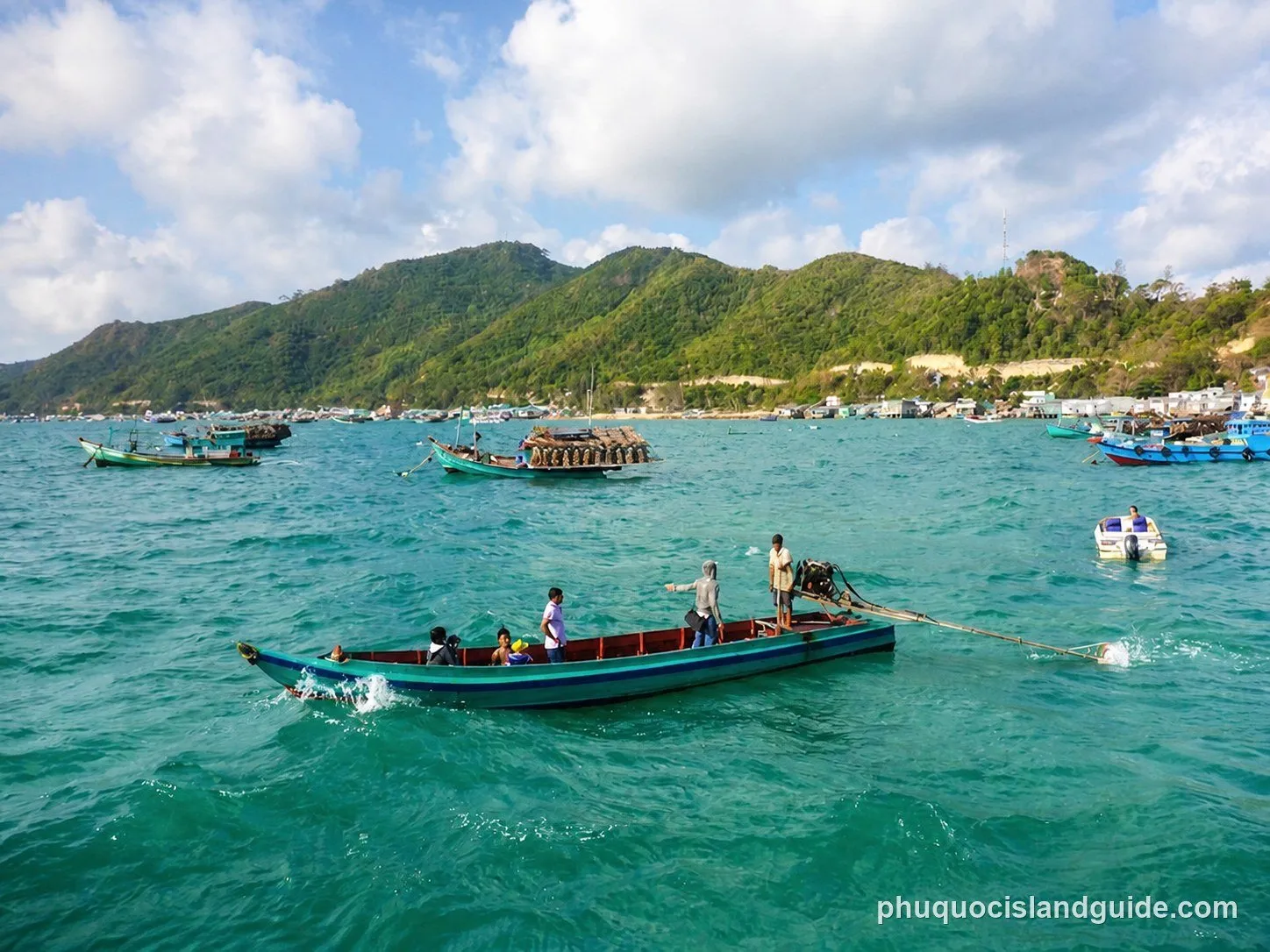
HON MAU
Hon Mau Island (Hòn Mấu) is a small island (~200 hectares) of about 600 people, most of whom make their living off the bounty found in the sea as well as catering to tourists.
Hon Mau has five beaches, and the best is Chuong beach (Bãi Chướng) which is Nam Du’s only real white sand beach. The other beaches are Nam Beach, Nom Beach, Da Den Beach, and Da Trang Beach. Out of the 5 beaches found on Hon Mau, only Choung Beach and Nam Beach are worth visiting as the other 3 beaches consists of a variety of rocky shoreline. Hon Mau is rapidly expanding to accommodate the tourist surge and there is now a sizable community found on the island that cater to the growing tourism sector.
Chuong Beach
Chuong Beach (Bãi Chướng) is arguably the most beautiful beach in all of Nam Du. The sand is blindingly white and the shallow turquoise sea is extremely beautiful.
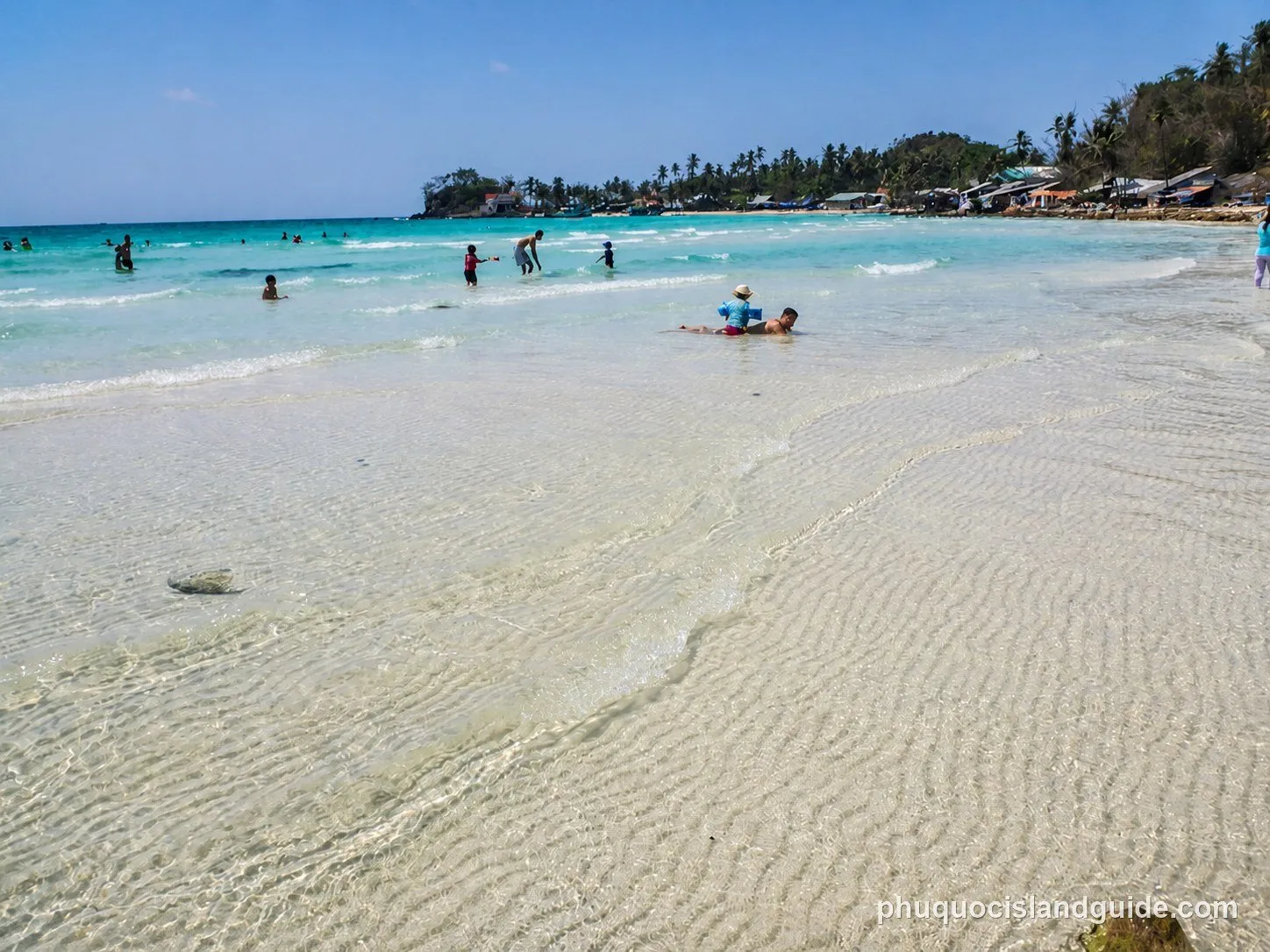
Nam Beach:
Nam Beach is a yellow sandy beach where all the boats that visit Hon Mau dock. The sea is very clean and it is one of the best snorkeling spots in all of Nam Du. Most tourists do not spend too much time at Nam Beach as they are all eager to visit Chuong Beach, however if you plan on coming to Hon Mau, spend some time exploring the beautiful coastline found here.
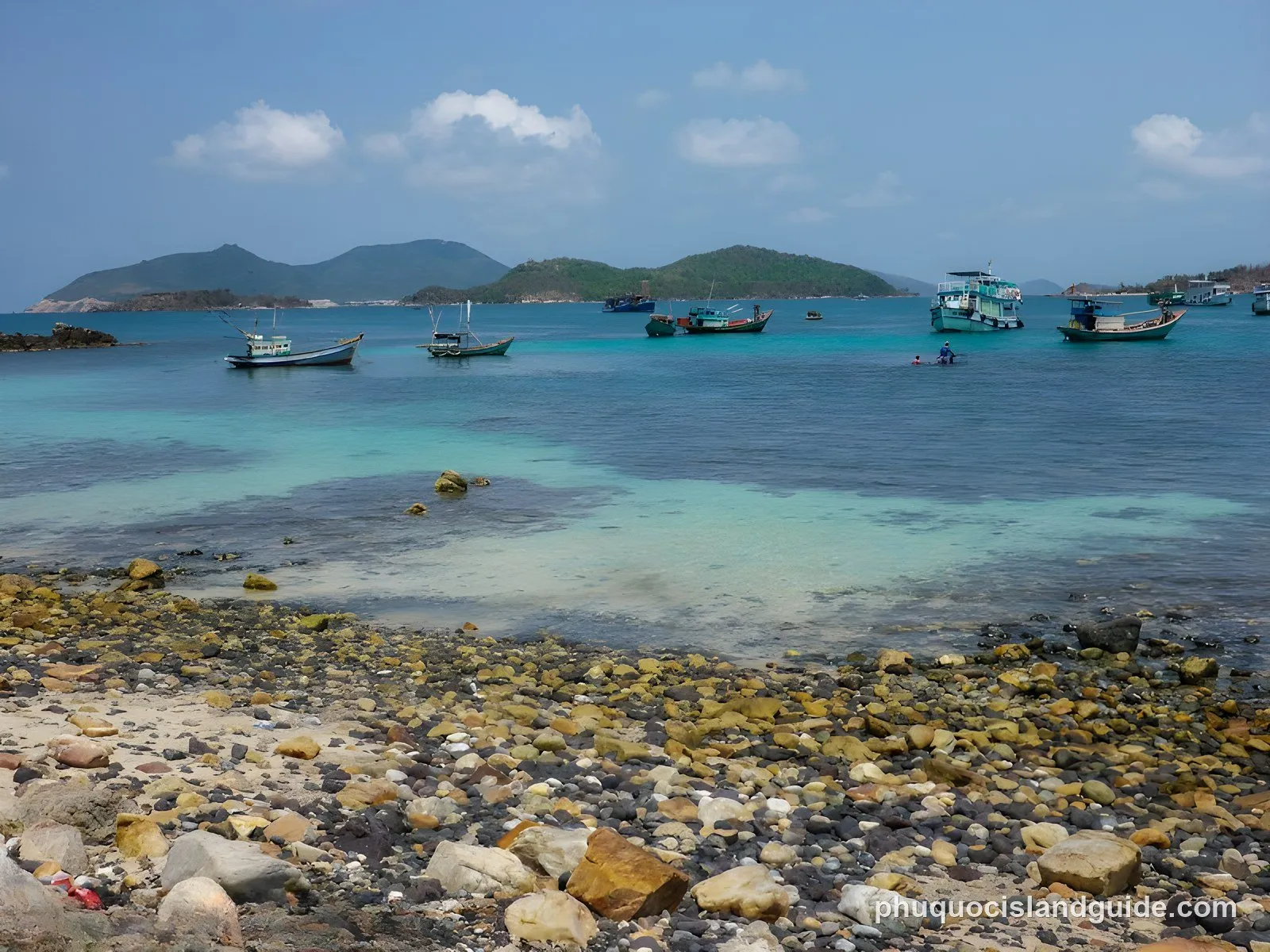
Da Den Beach:
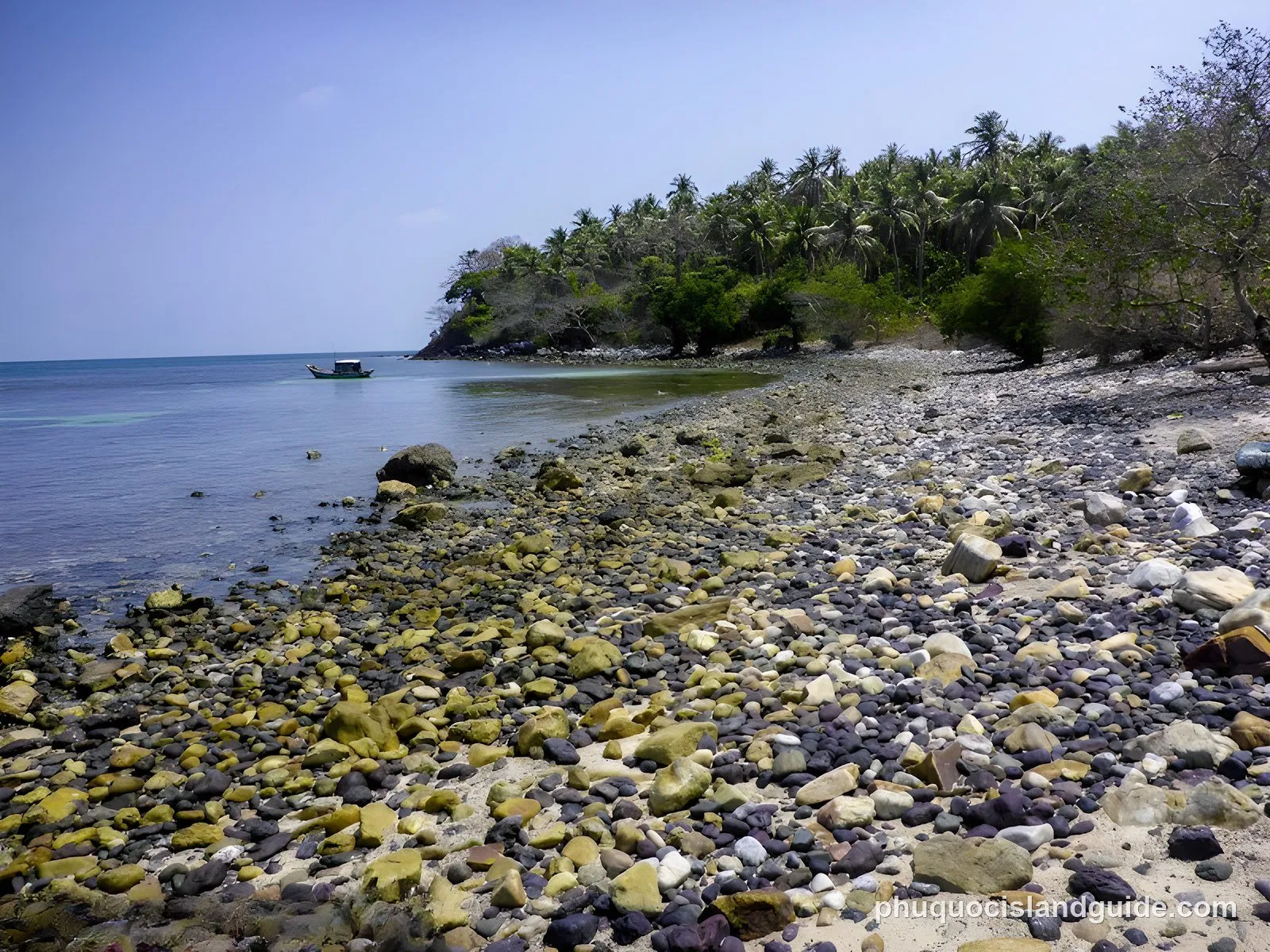
Da Den Beach (Bãi Ðá Ðen) is a rocky beach that consists of mainly black rocks of various sizes. There is nothing else here but rocks and most tour operators who take you here do so to fill up their daily activity itinerary. If you do come to Da Den Beach, be careful with your footing as it is easy to twist your ankle due to the uneven terrain.
Da Trang Beach:
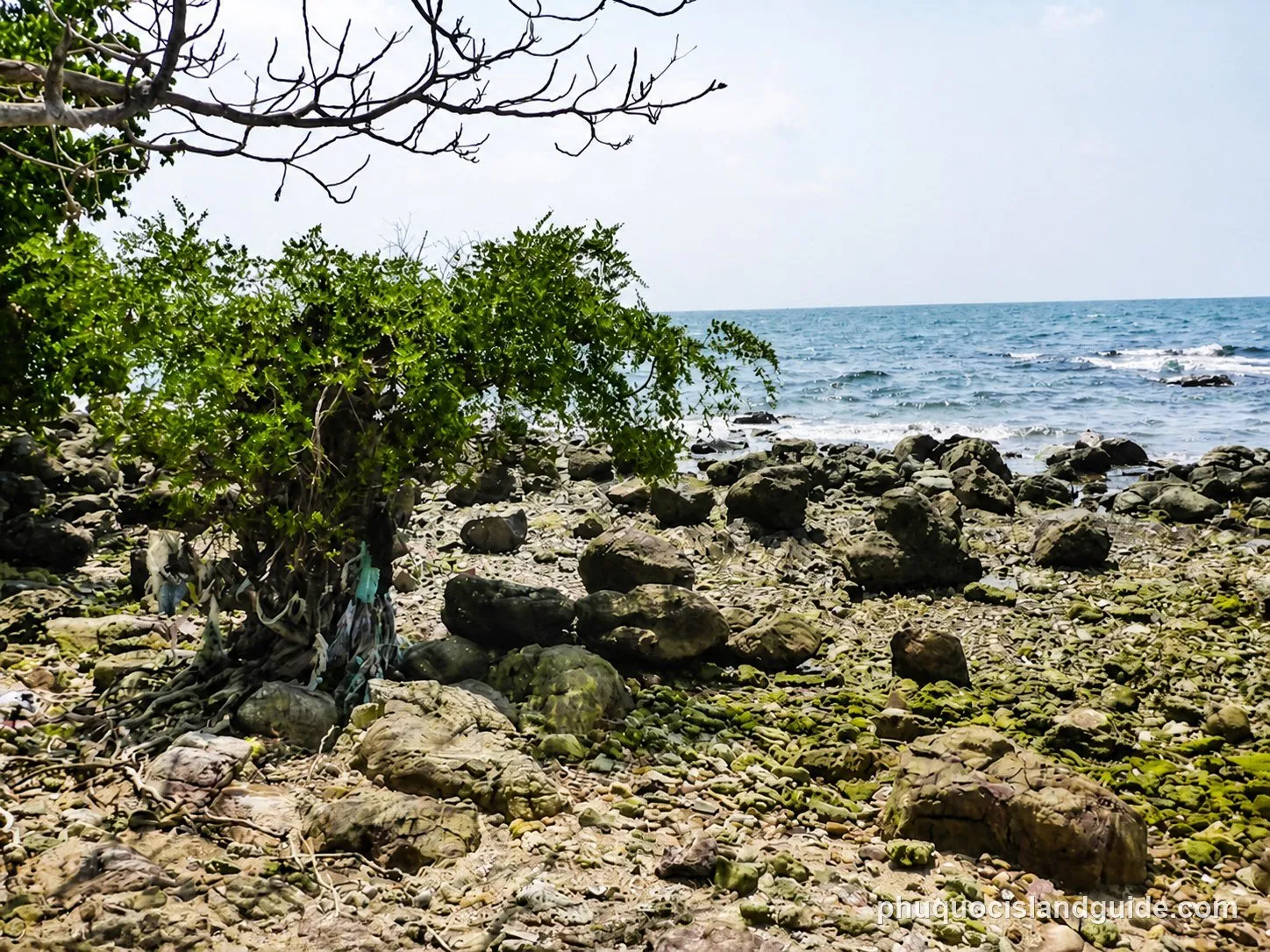
Da Trang Beach (Bãi Ðá Trắng) is another rocky beach that consists of lighter colored eroded rocks. If you like to look at rocks, then you may enjoy this beach.
HAI BO DAP ISLAND
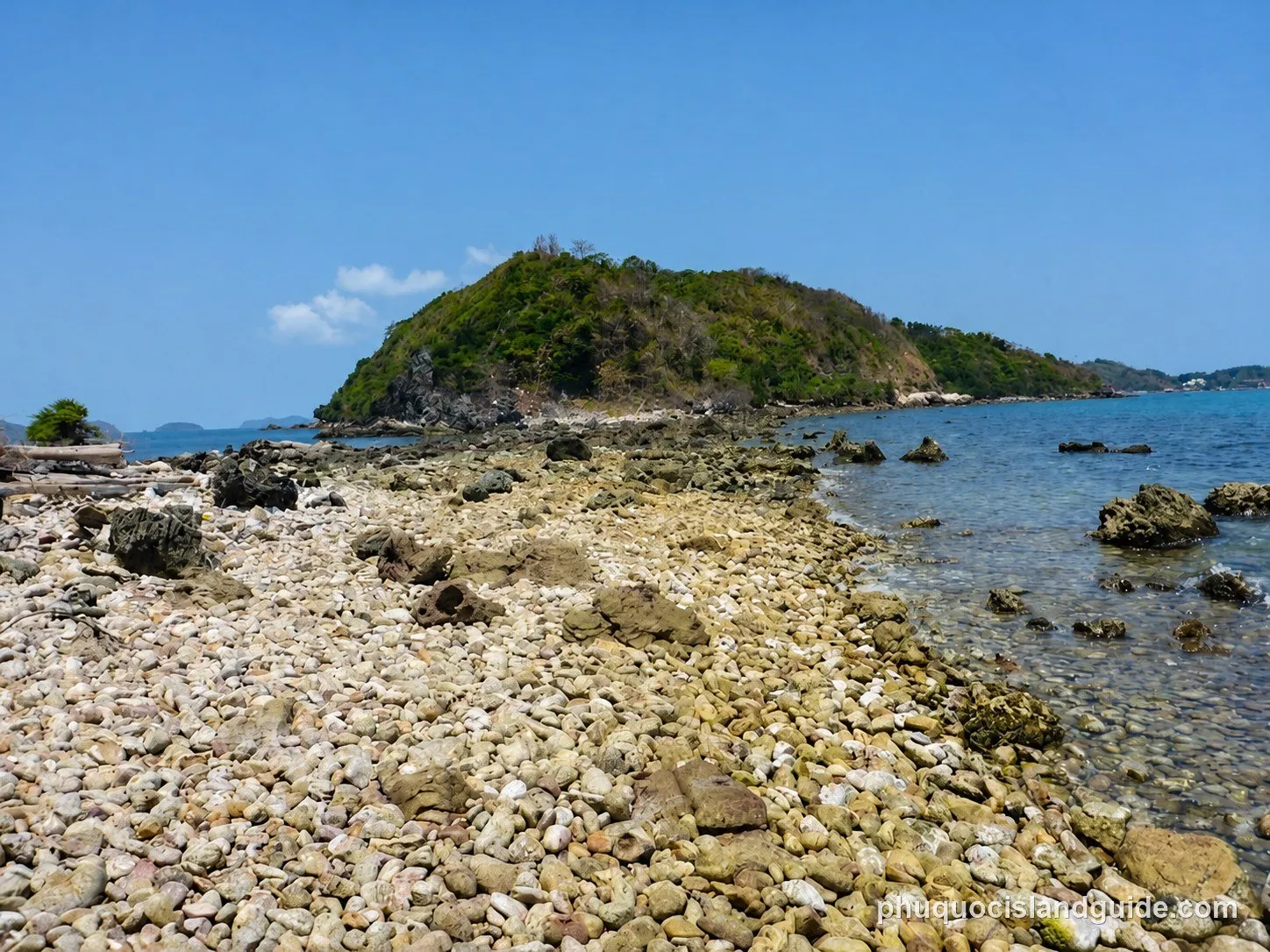
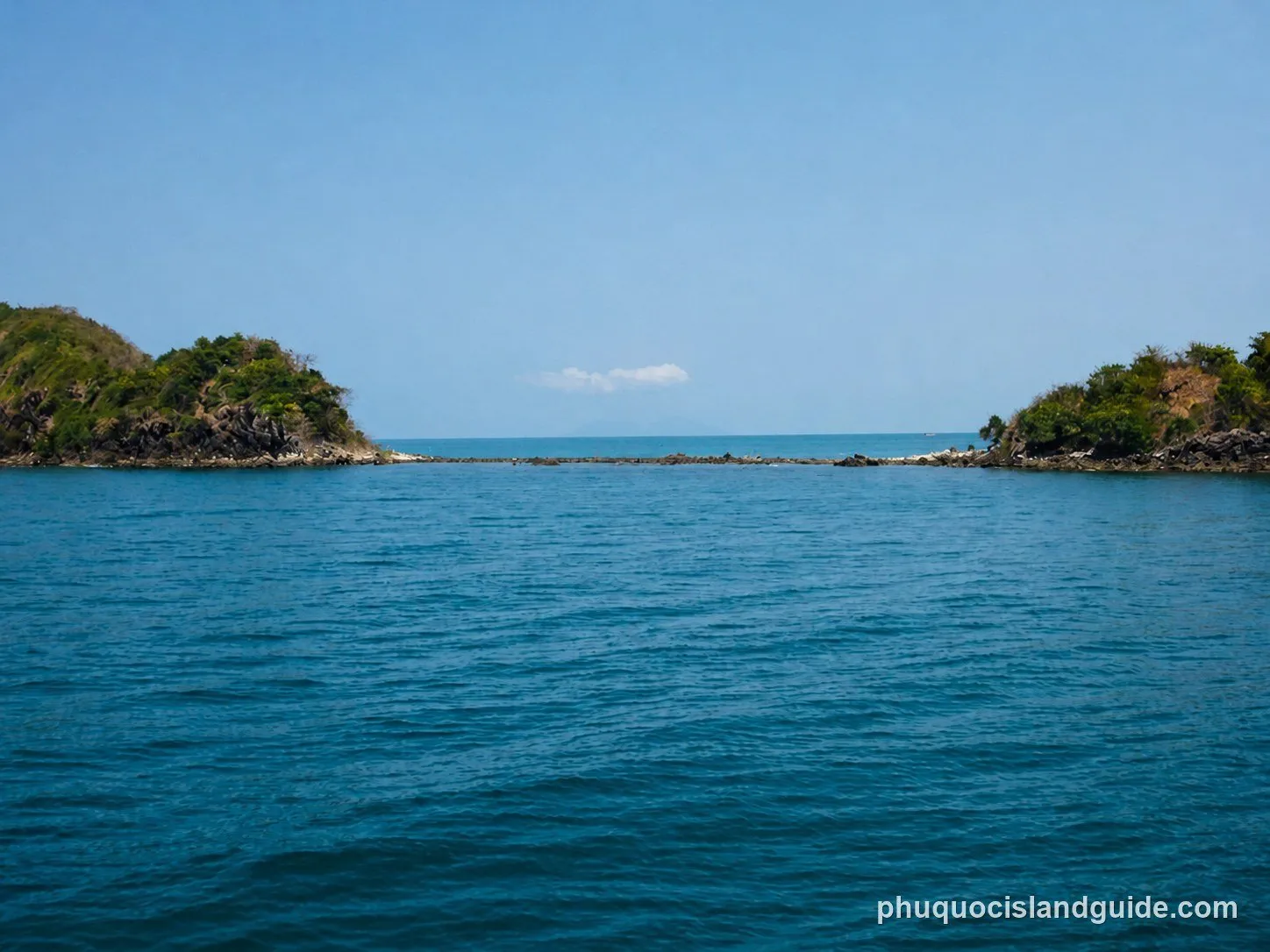
Hai Bo Dap Island (Hòn Hai Bờ Đập) is a uninhabited island that is surrounded by coral. Most island hopping tours stop here so their guests can swim and snorkel. One of the unique features of this island is its natural bridge that connects two islands together to form Hai Bo Dap. This natural sea bridge can only be seen at low tide.
HON LO ISLAND
Hon Lo Island (Hòn Lò) is a very small islands which is only 200 meters square in size. It is surrounded by coral and most snorkeling and island hopping tours stop here.
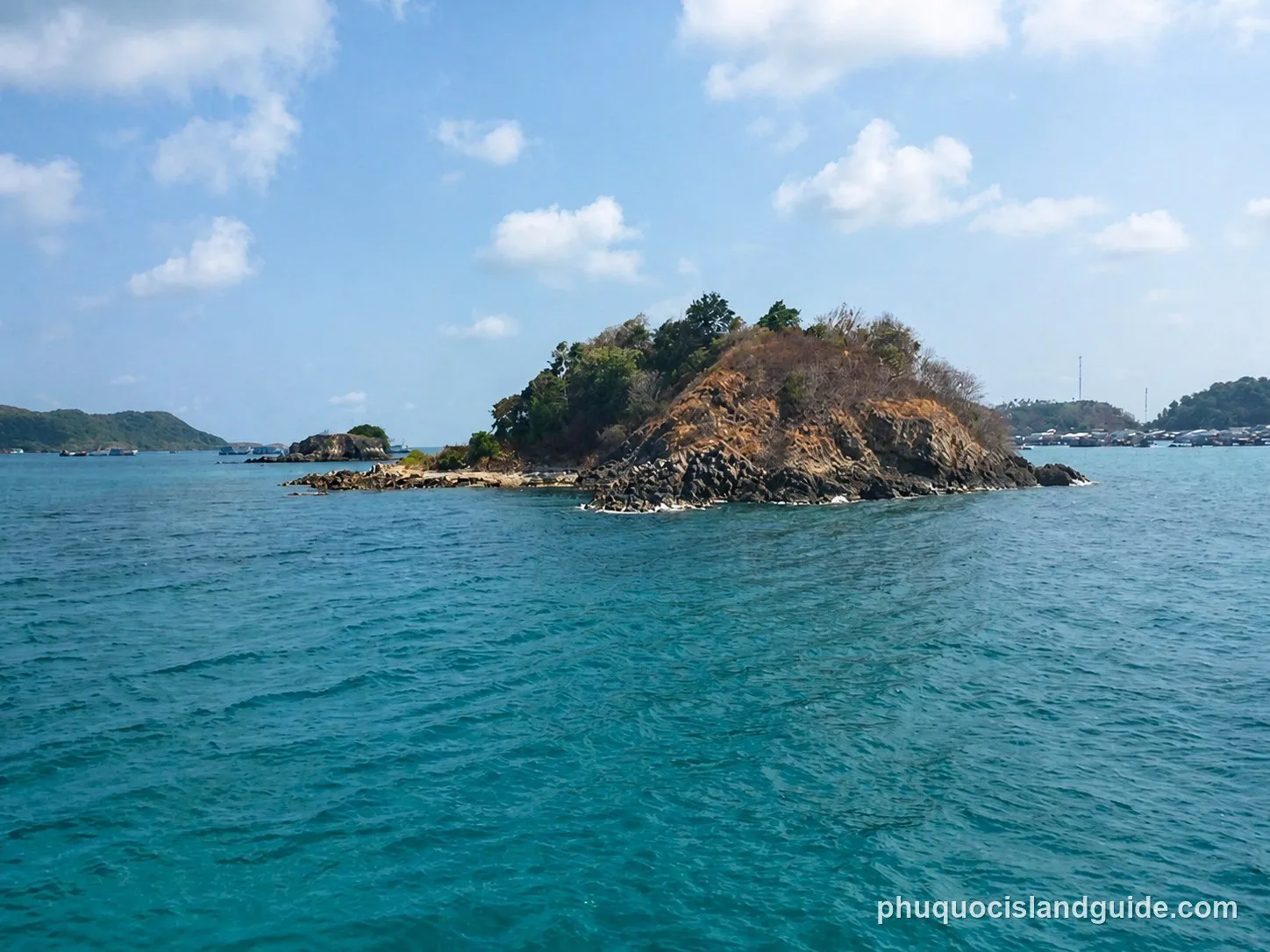
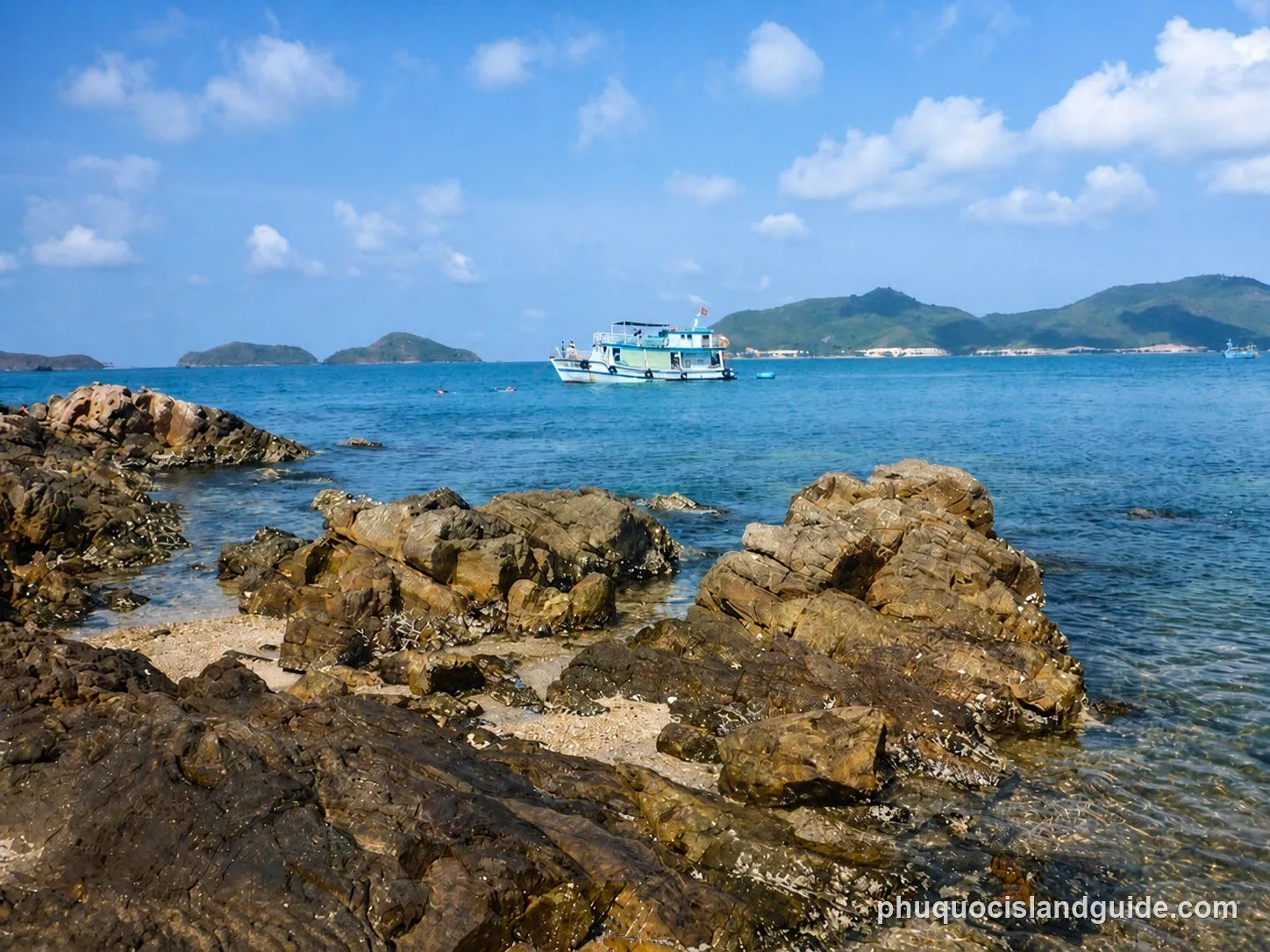
Things To See and Do In Nam Du
Nam Du is blessed with natural beauty and this is the real draw of this tiny archipelago. The following are some of the things you can see and do in Nam Du:
Nam Du Island Discovery Tour
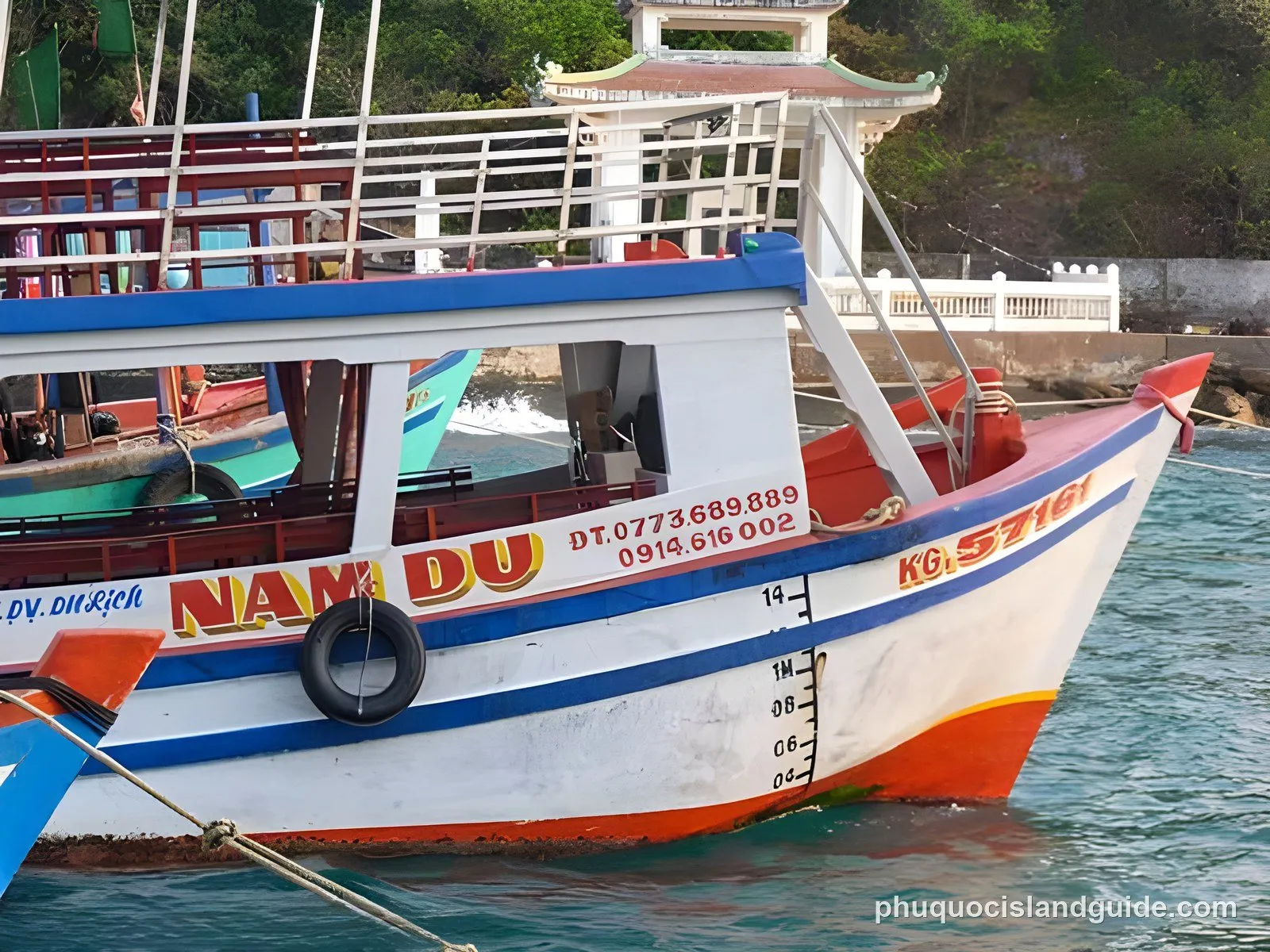
Discover the Nam Du archipelago by joining a full or half day tour of the Nam Du Islands. The itinerary for these tours consists of visiting the popular islands, swimming at calm bays, snorkeling in areas that have good coral, and visiting Nam Du’s best beaches. There are 2 tours available, a full day tour or half day tour. The full day tour begins at 7am and ends at 6pm and includes 1 meal. This tour visits more islands and you will have more opportunities to swim and snorkel. The half day tour has two start times one being in the morning from 7am to 1pm and the other being in the afternoon starting at 1pm and ending at 6pm. The half day tours visits Hon Lo island for snorkeling and fishing, then Hon Mau Island to discover the beaches and for lunch, and finally Hai Bo Dap for more snorkeling. Life jackets and googles are included. If you do plan on participating in one of these island tours, make sure you bring plenty of sunscreen and drinking plenty of fluids.
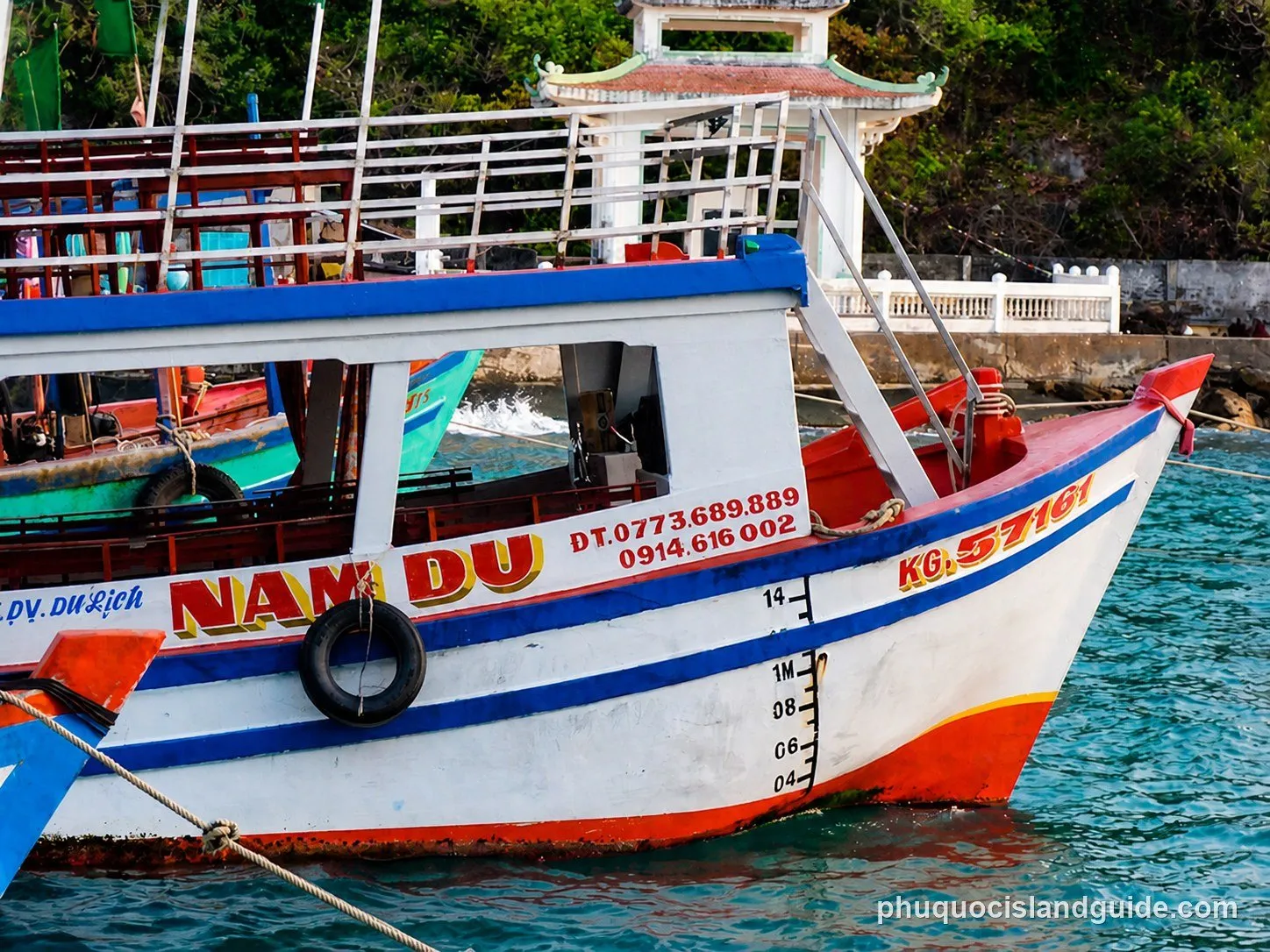
Tour Operators:
Most guesthouses by the pier sell these tours or will call someone who does. Three that were still trading on Google Maps in October 2026:
- Sáu Có (Sau Co) – Tel: 0907 172 656. Also a guesthouse, right by the pier. 4.4 from 39 Google reviews.
- Huỳnh Hua (Huynh Hua) – Tel: 0919 115 543. Runs Huỳnh Hua 2 hotel near the market and its own boats.
- Phúc Nam Du Island Stay & Tour – Tel: 0334 884 843. In Củ Tron, about 1 km from the pier. 5.0 from 48 reviews – a small sample, but the best-rated tour seller on the island.
Prices change with the season and the size of the group, so agree the price and the list of stops before you board.
Hon Lon Island Discovery
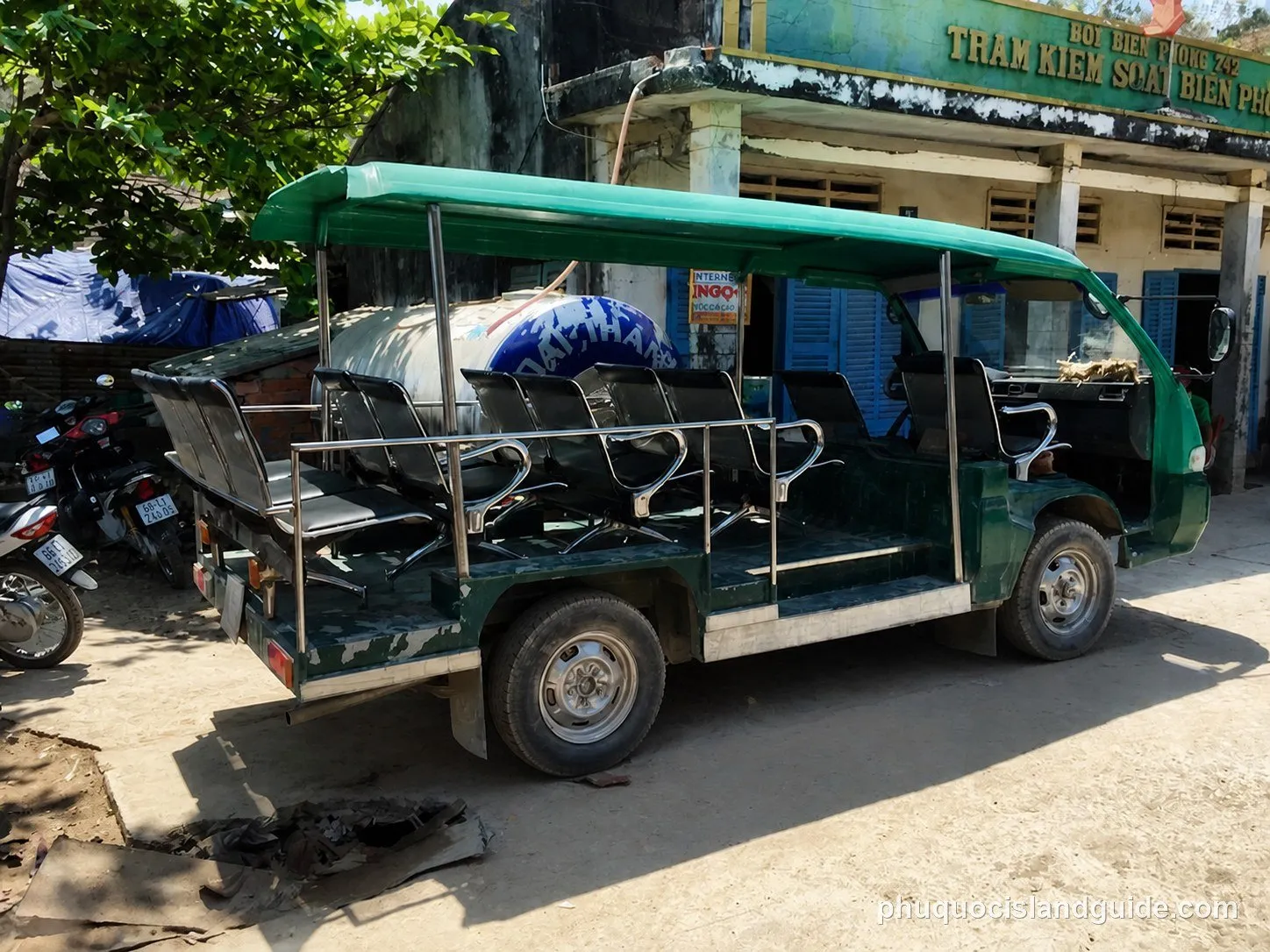
If you want to see all the major sites of Hon Lon Island without renting a motorbike or via motorbike taxi then you can hop on a tourist shuttle bus and join a morning or evening island tour. The tourist shuttle bus can be found near the Hon Lon island market and a trip around the island costs a small fee per person.
Motorbike Around Hon Lon Island’s Coast
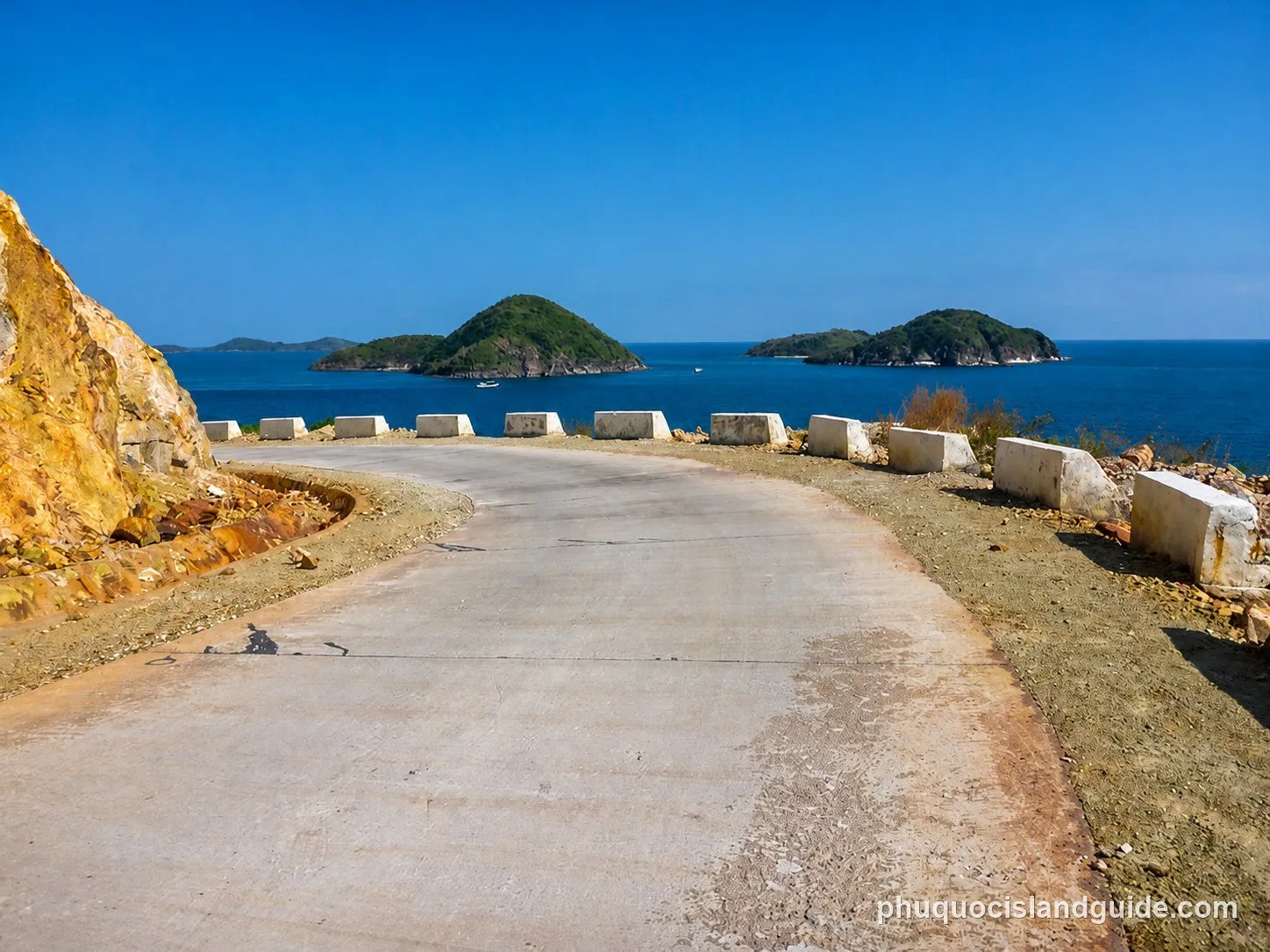
Hon Lon Island has a beautiful cost and the road is well paved. One of the most memorable things to do in Nam Du is to ride around the coast at sunset. The scenery is stunning and ocean sunset is absolutely gorgeous.
Fishing & Foraging On Nam Du
The fishing is great on Nam Du. You can either fish from the main pier, commission a small boat, or rent a boat. There are also night squid and baby octopus fishing excursions that may be of interest to you. You can also forage for your own food as all the Nam Du Islands are blessed with many wild edibles and seafood such as sea snails, oysters, clams, and sea urchins.
Watch Sunrises & Sunsets
Nam Du’s ocean sunrises and sunsets are some of the best you will ever see in Vietnam and since the island is so small you can actually watch both from a single location. Watch our Nam Du sunrise and sunset collection video below for inspiration:
Snorkeling
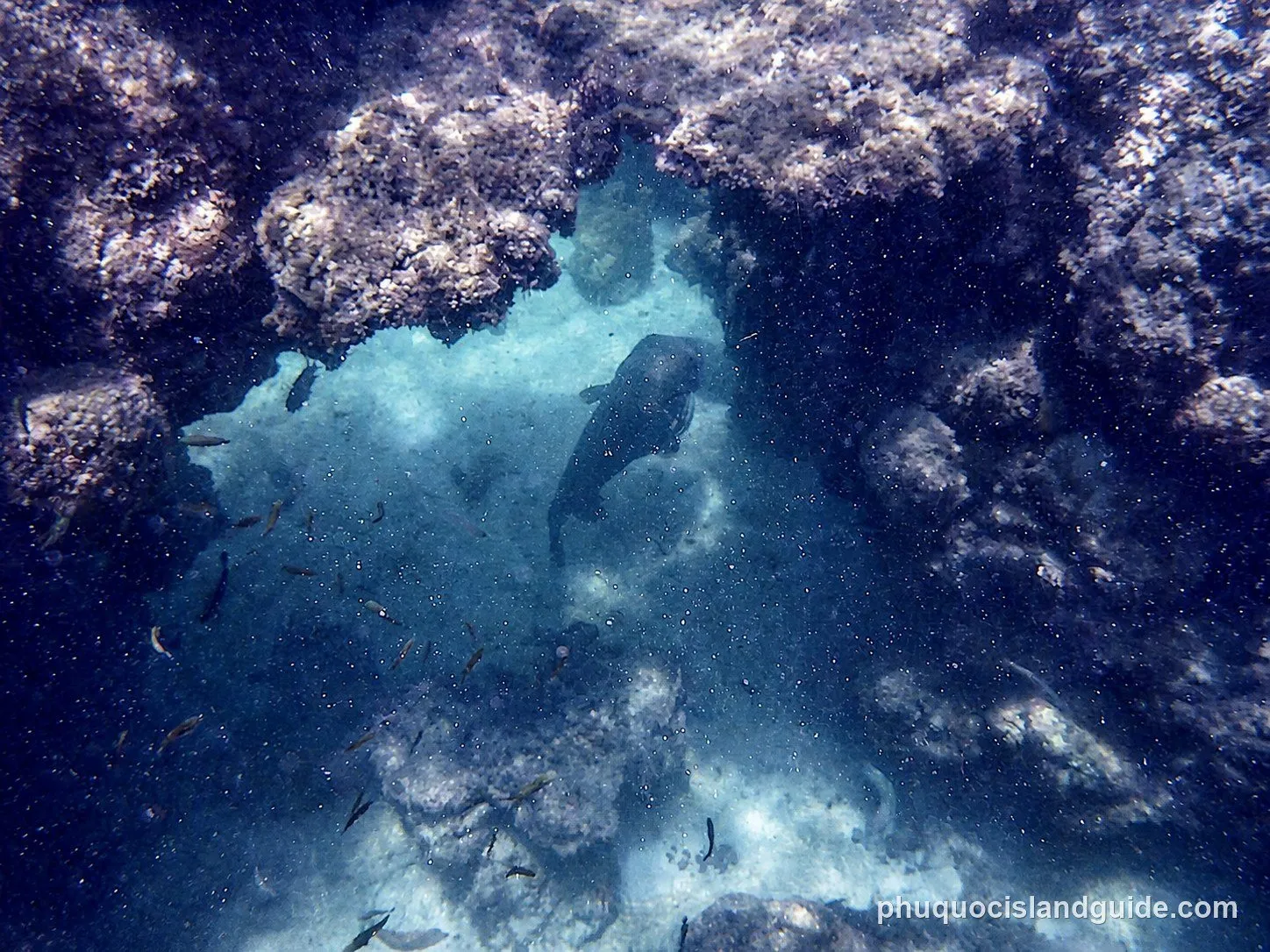
The Nam Du archipelago is blessed with abundant marine life and coral reefs. You can snorkel from shore, join a tour, or charter your own boat.
Trekking & Hiking
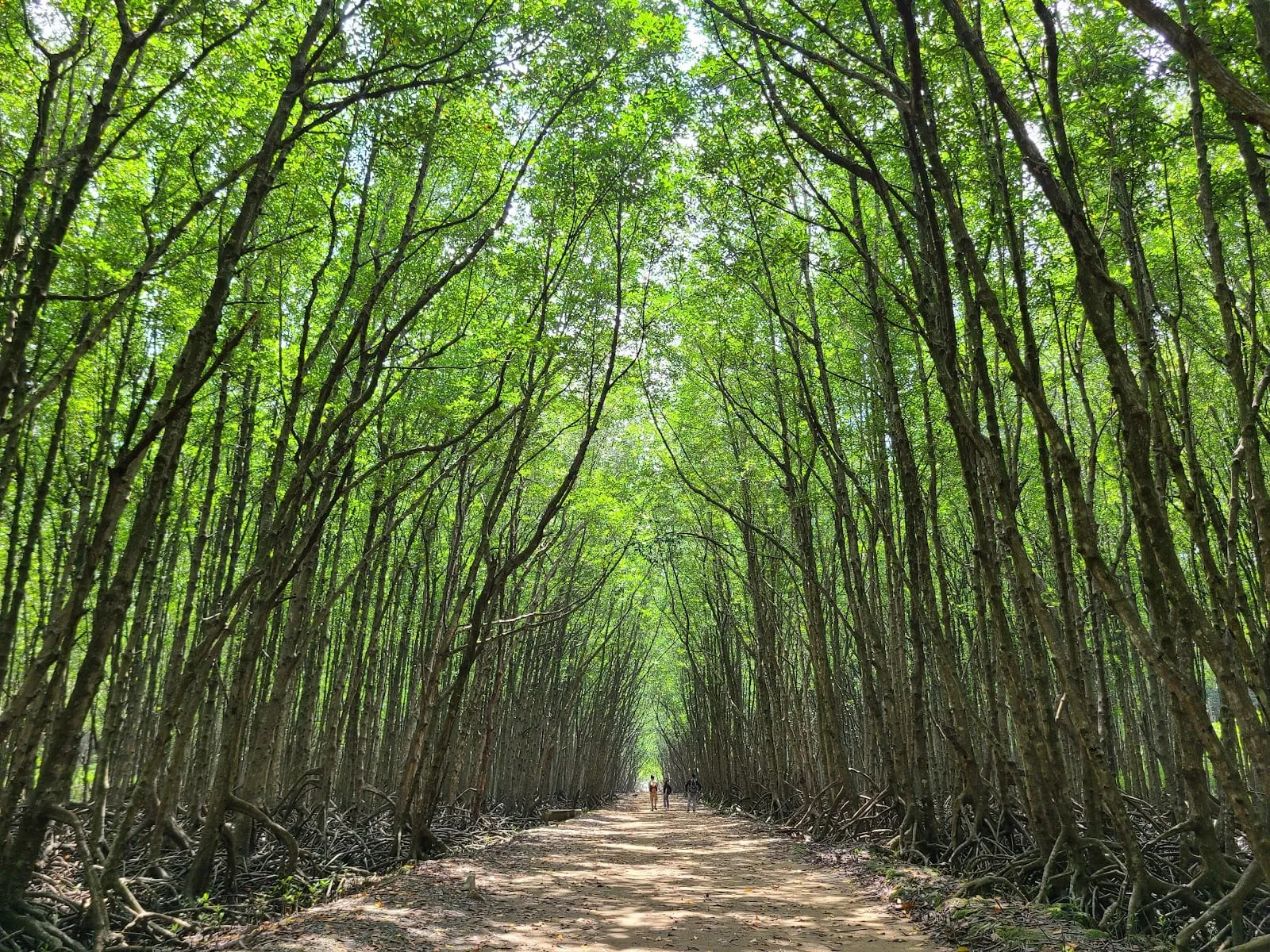
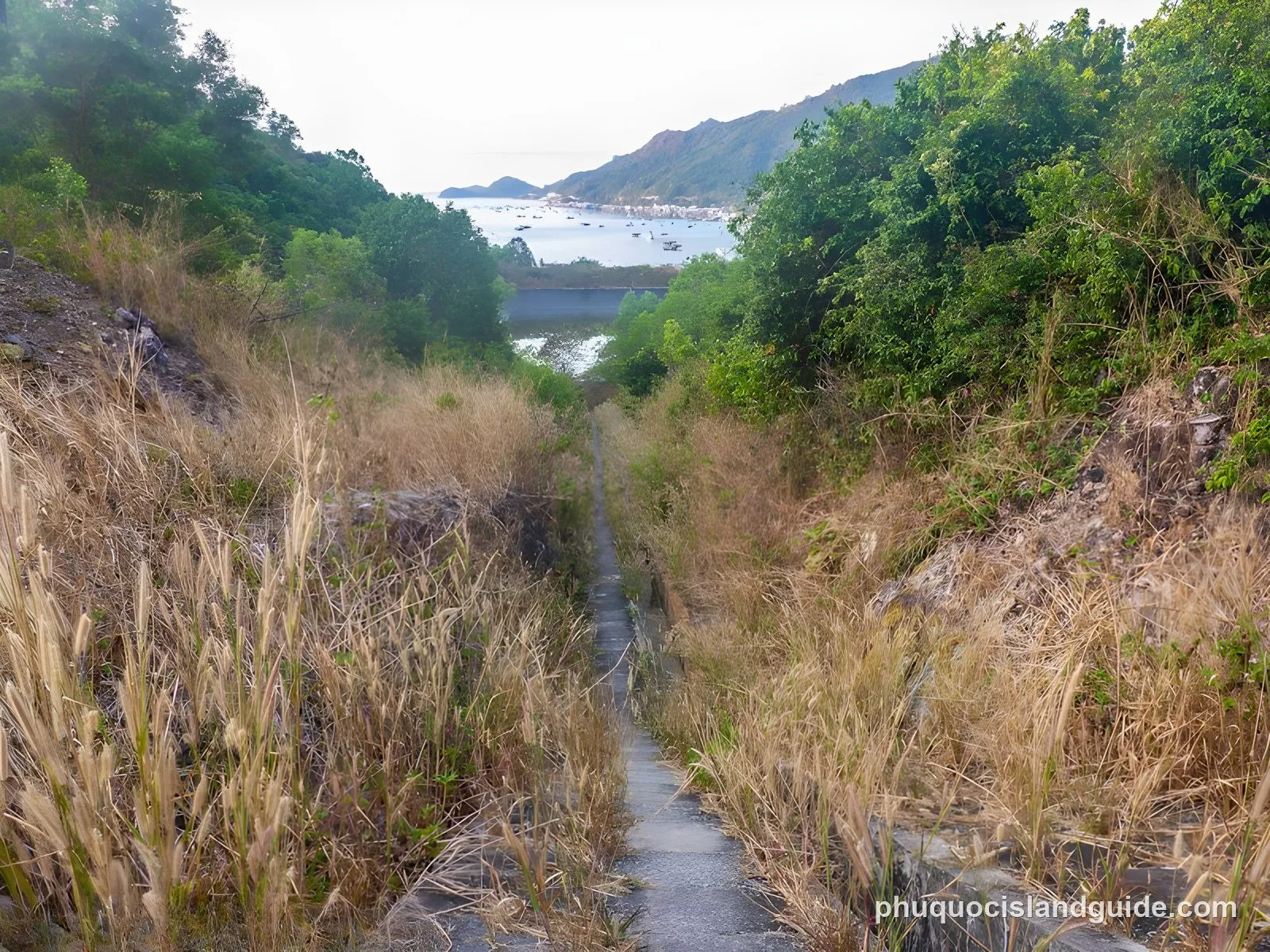
There are no real trails to be found on any of the Nam Du Islands, but the trail that takes you to Bai Nhum Beach on Hon Long Island is pretty decent. In order to reach Bai Nhum Beach you need to hike along a small trail, pass the towns fresh water supply source, and down through a densely forested area teeming with wildlife, particularly birds and squirrels. The trail eventually leads to a rocky beach and the best time to hike this trail is before sunrise.
TEMPLES & PAGODAS
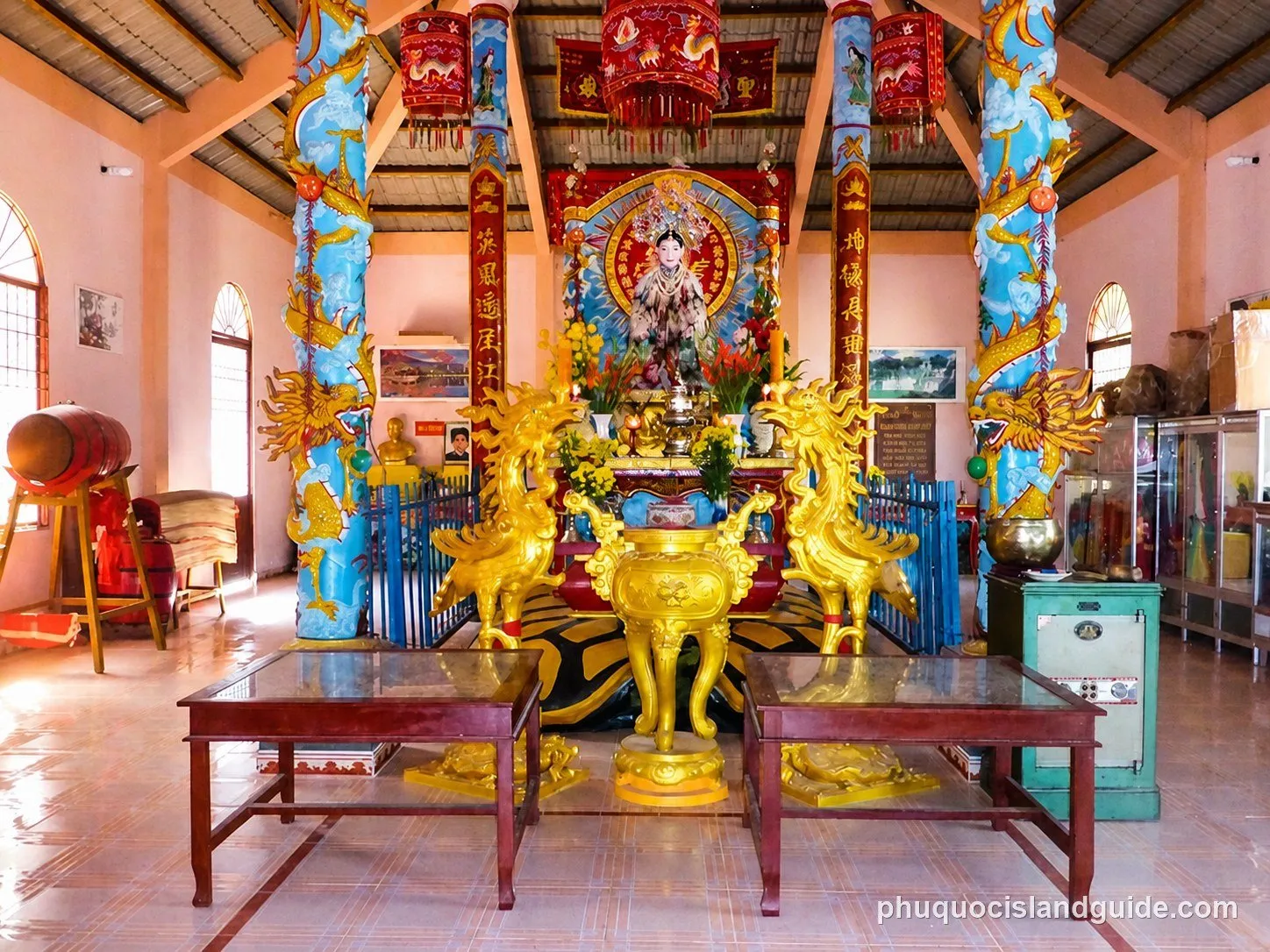
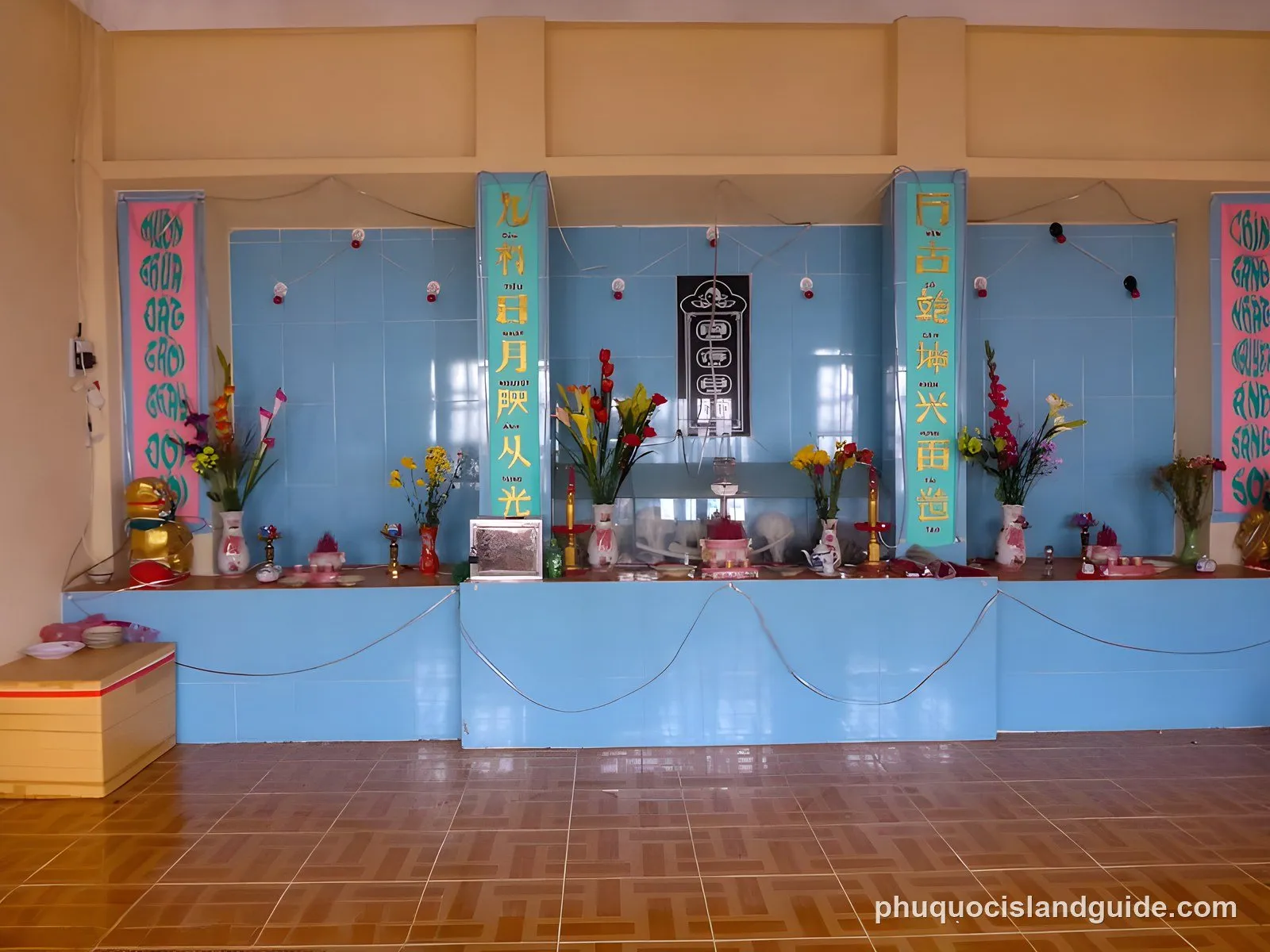
There are two colorful and interesting temples found on Hon Lon Island, one near Bai Tret and the other near Bai Ngu. The temple near Bai Tret, called Miếu Bà Chúa Xứ, has a beautiful statue of Ba and it is the center of the Ba Chua Xu religion on Nam Du. The other temple near Bai Ngu, called Ngu Thanh Mieu, worships whales and you can see their bones on display.
Bà Chúa Xứ Temple
Ngu Thanh Mieu Temple
FOOD & DRINK
Hon Lon is no longer a two-restaurant island. Google Maps listed around 50 places to eat in October 2026, nearly all of them small family quán within a few hundred metres of the pier. The two old names are still there: Quán ăn Năm Nương (4.7 from 20 reviews) and Quán Hoa Hoàng (3.6 from 78), both on the waterfront. Both cater to package tour groups first, so at peak meal times an independent traveller can wait a while for a table.
- Hải sản Minh Sang – seafood on the pier itself, 3.8 from 111 reviews.
- Hải sản Bảy Thợ Lặn – seafood about 3 km south of the pier, 4.4 from 74 reviews, the best-rated seafood place on Hon Lon.
- Quán Chị Bảy – on Hòn Mấu (Hon Mau), the stop most island tours use for lunch, 3.8 from 86 reviews.
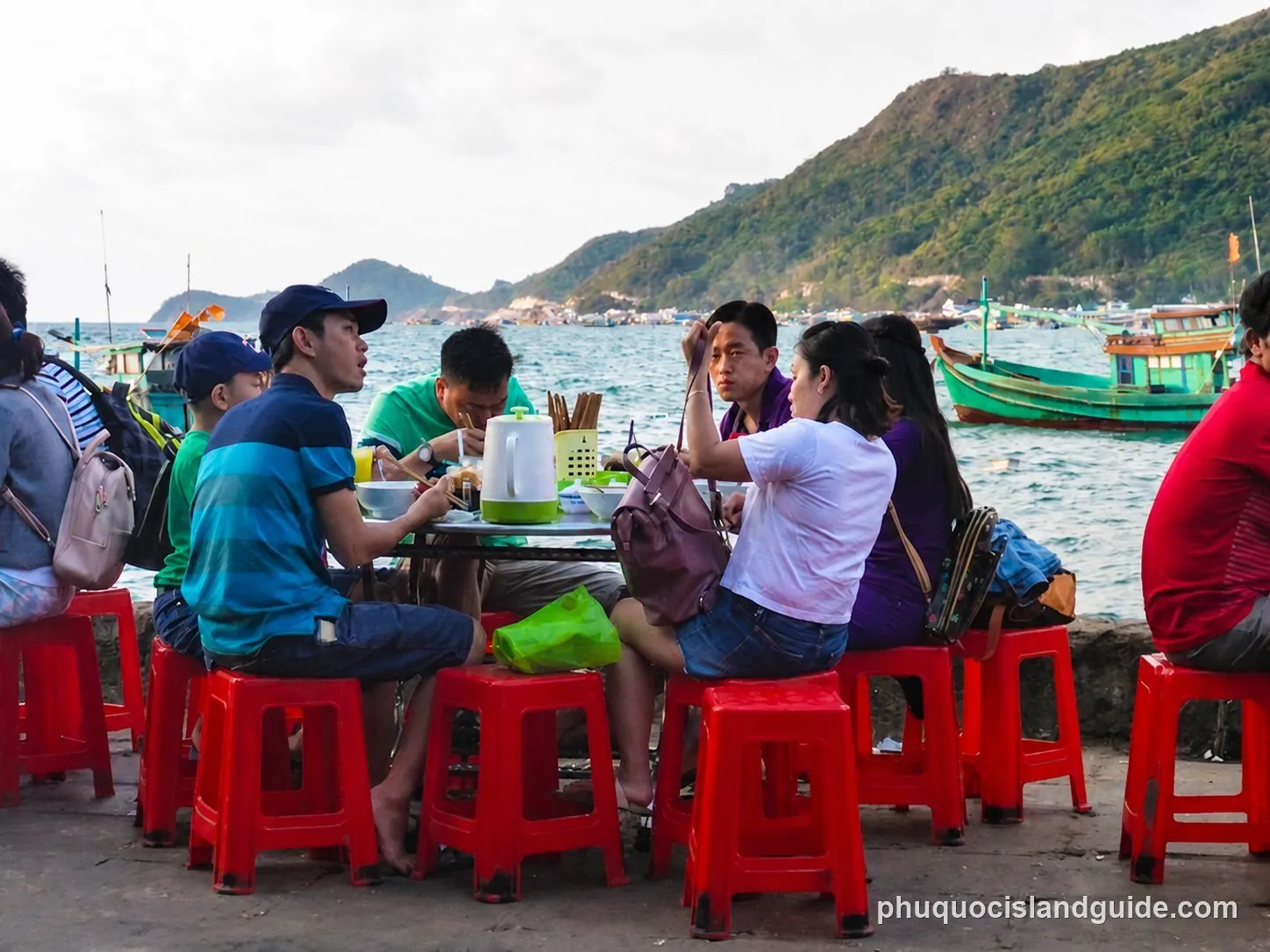
For breakfast the pier stalls serve noodle soups (bún mọc, bánh canh); in the evening it is grilled seafood. Street vendors sell bánh mì, fried chicken and grilled pork skewers, and there are sugar cane juice (nước mía) carts and cafés all over Cu Tron Town.
Nam Du Specialty
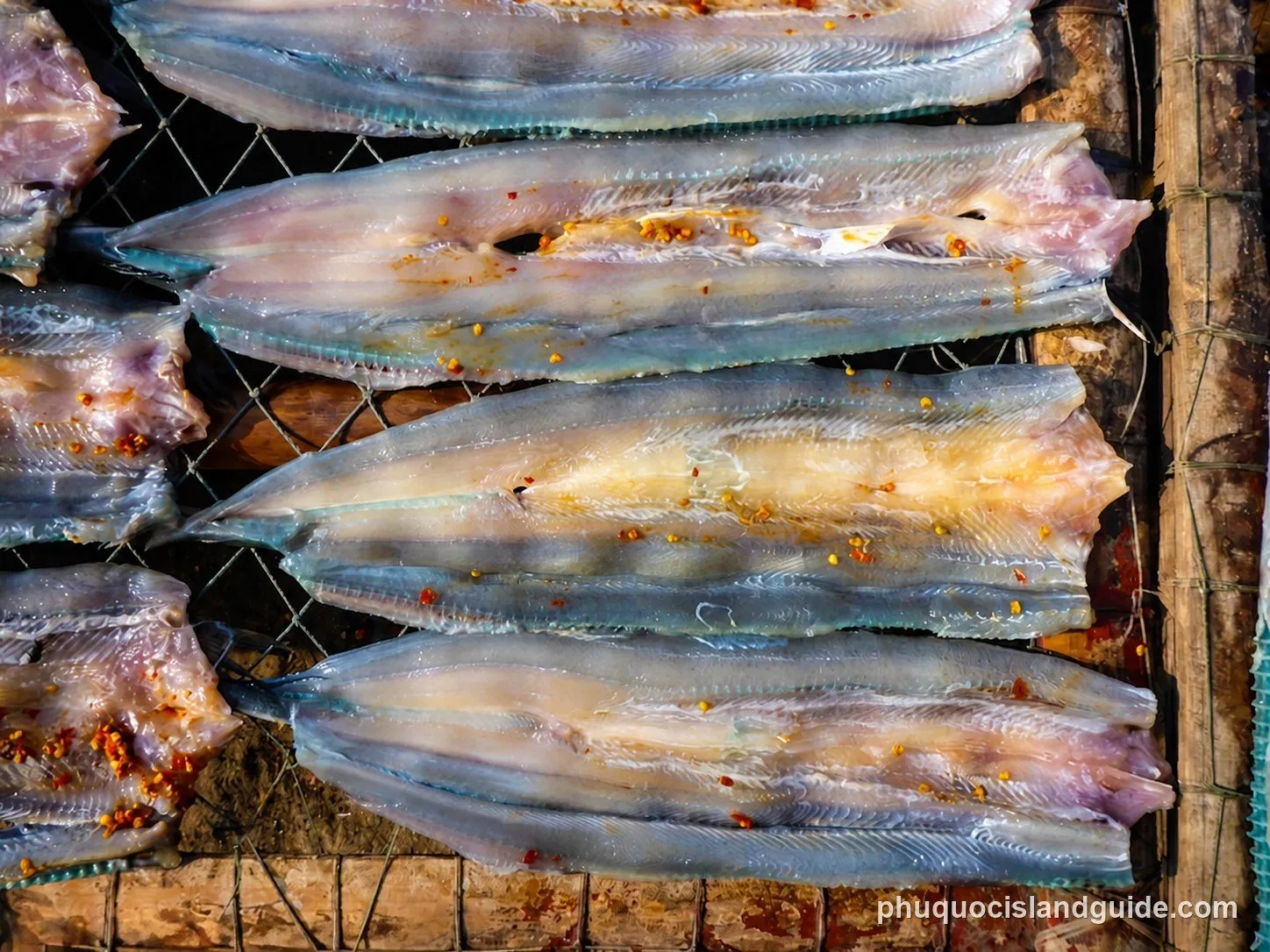
Nam Du Islands specialty dish is needle fish, or Xuong xanh, as this green colored fish is quite abundant in and around the Gulf of Thailand. It is of served grilled or a dried version is fried.
HOW TO GET TO THE NAM DU ISLANDS
In order to get to Nam Du you must take a combination of a vehicle (bus, car, motorbike) and ferry or plane (fly to Rach Gia), vehicle(bus, taxi) and ferry.
Bus from Saigon to Rach Gia Port
From Saigon, go to Mien Tay Coach Station in Binh Tan and catch a Futa bus, aka Phuong Trang bus, to Rach Gia City, An Giang Province. The journey takes about 6 hours; check the current fare with Phuong Trang when you book. There are other bus companies that go to Rach Gia but we highly recommend Futa/Phuong Trang bus line. Once you arrive at Rach Soi Bus Station in Rach Gia, there will be a free shuttle bus available to take you to the Rach Gia Port. From the Rach Gia Port, you can purchase your ferry to Nam Du tickets.
Nam Du By Plane
You can take a flight from Saigon or Phu Quoc to Rach Gia Airport (Sân bay Rạch Giá) and then take a bus or taxi from the airport to Rach Gia Port in order to catch a ferry to Nam Du.
Ferry To Nam Du
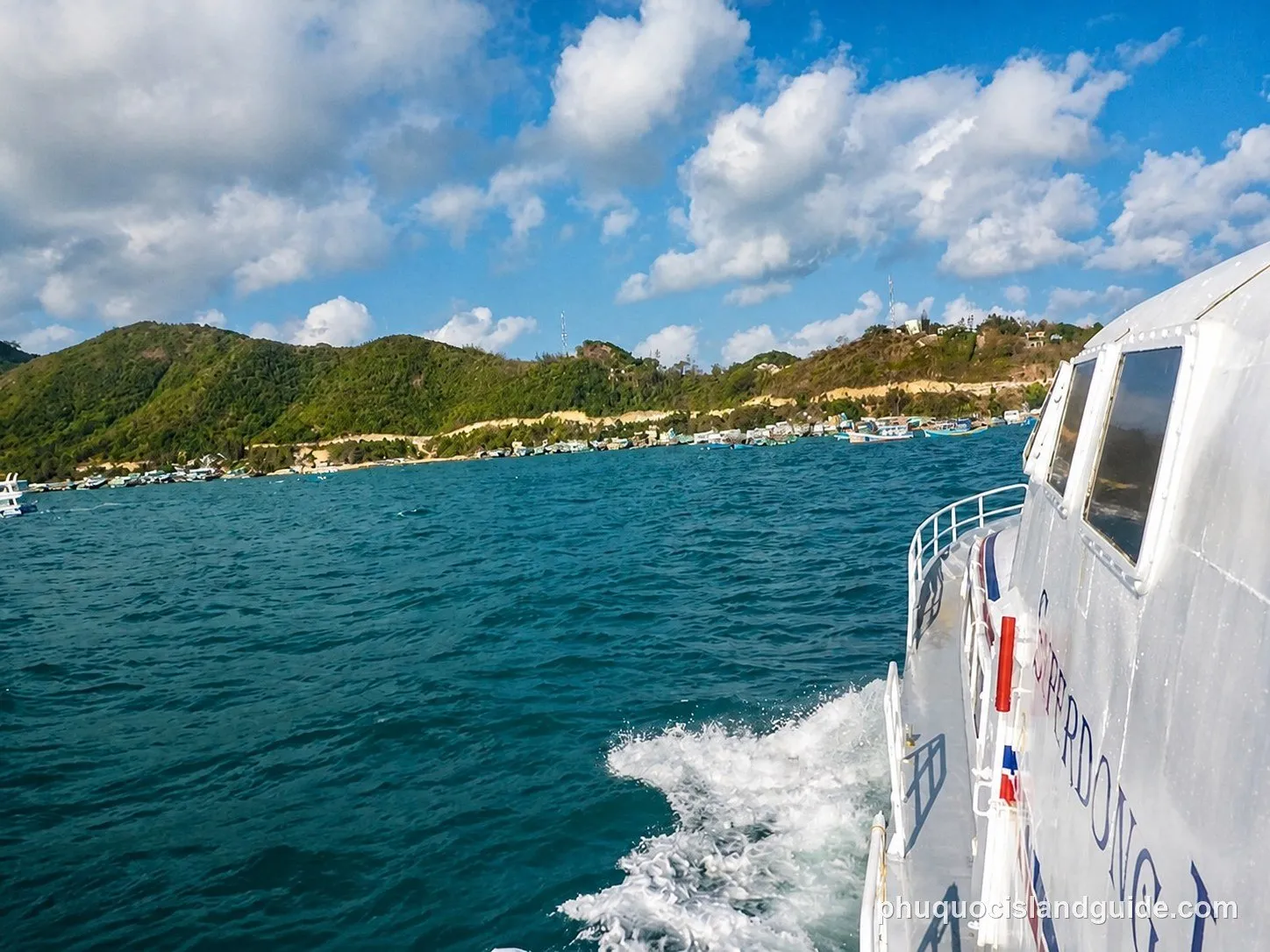
Fast boats to Nam Du leave from Rach Gia port and dock at Hon Lon. Superdong’s own timetable for the route:
| Direction | Departs | Arrives |
|---|---|---|
| Rach Gia → Nam Du | 07:30, 08:30 | 10:00, 11:00 |
| Nam Du → Rach Gia | 11:00, 11:50 | 13:30, 14:25 |
Superdong runs the route with its Superdong II–XI boats (261–275 seats). Other operators sail it too; in July 2025 there were 8 fast-boat sailings a day between Rach Gia and the Kien Hai islands. We haven’t printed fares because we couldn’t confirm them from the operators; check the price when you book.
Schedule checked 8 October 2026 against Superdong’s timetable.
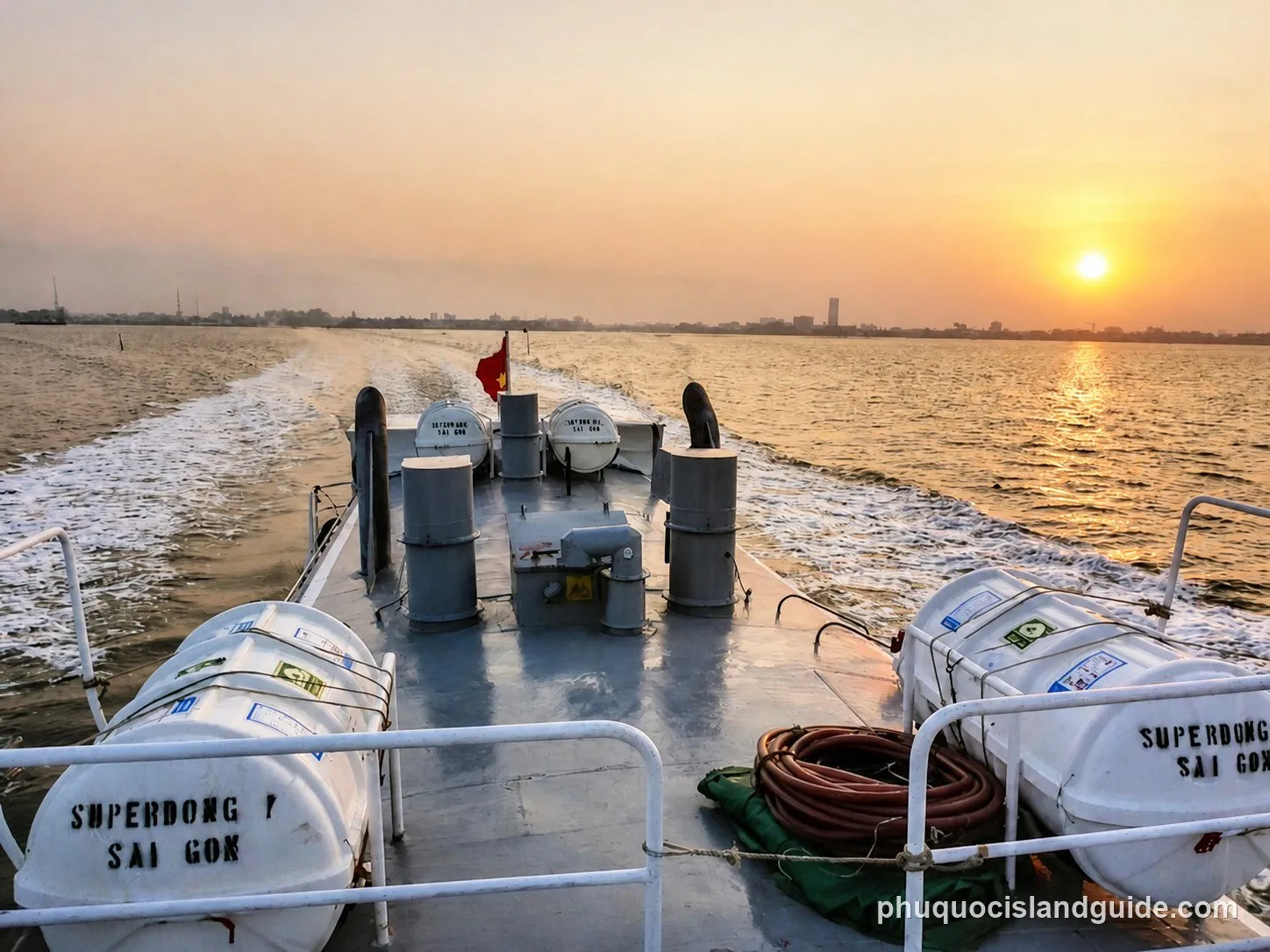
If you arrived early to the Rach Gia Port you can walk to and visit the Nguyen Trung Truc Temple, which is only 300 meters from the port. Just follow the road and you will see it. Admission is free.
Phu Quoc to Nam Du Islands
Superdong lists no route between Phu Quoc and Nam Du. From Phu Quoc, either take Superdong’s Phu Quoc ⇄ Rach Gia boat and change at Rach Gia, or charter a private boat.
Orientation
Once you arrive at Nam Du’s Hon Lon pier located on Hon Lon Island, you will end up on Duong Ngang Dao Street, the only street, in Bai Tret (the name of the coastal village). Touts will immediately approach you at the pier to see if you need a place or not. You will also pass by a few vendors selling fresh seafood. After that there will be a few sugar cane juice stops and cafes, then a a couple of restaurants, followed by a market, and then some motels & guest houses. To get your bearings upon arrival to Nam Du, please watch the video below. This video shows you what to expect and provides a walk through of Bai Tret and Cu Tron Town:
Getting Around Nam Du
By Boat: To explore the surrounding islands you can commission a private boat or join a group. Find a boat at the main pier on Hon Lon Island.
Motorbike: The main road on Hon Lon Island is paved and you can rent a motorbike from your motel/guesthouse for around 100,000–150,000 VND a day (2026). The prices vary considerably and you have to return the motorbike by 7pm on that very same day. All motorbike rental prices include fuel.
Motorbike Taxi: You can also hire a motorbike taxi driver (“Xe Om”) to visit some of the popular sites on Hon Lon. Prices vary.
ACCOMMODATION
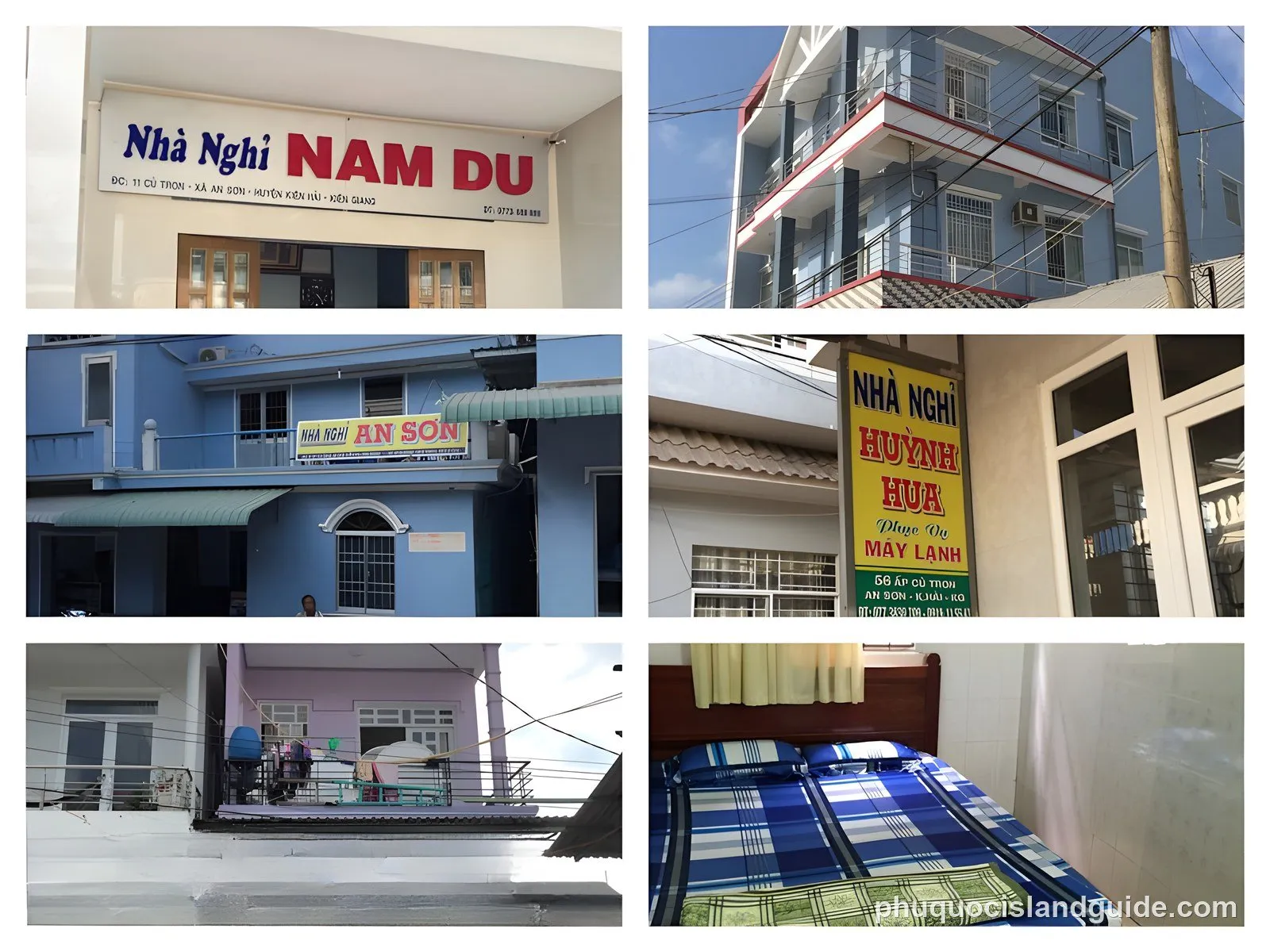
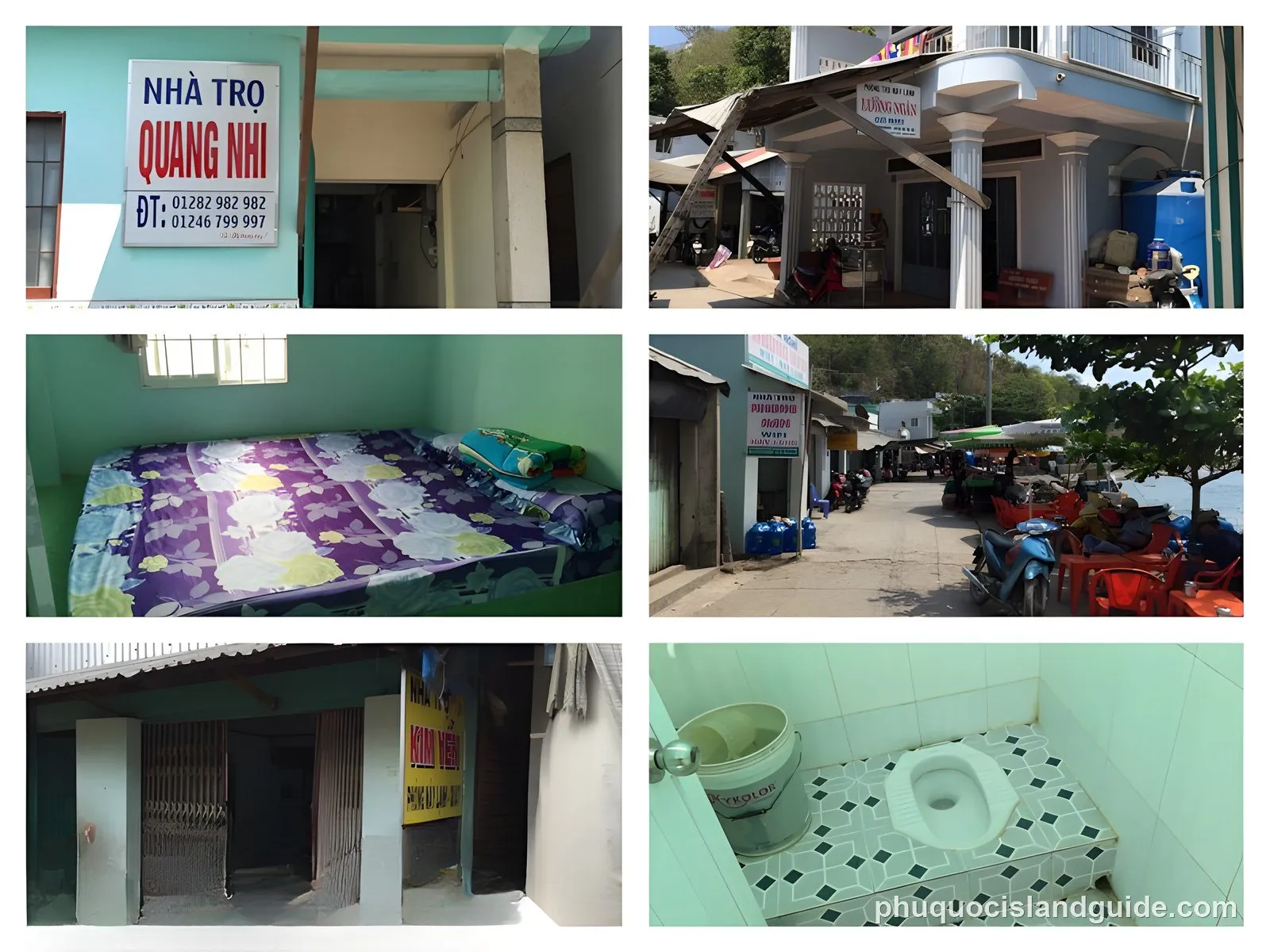
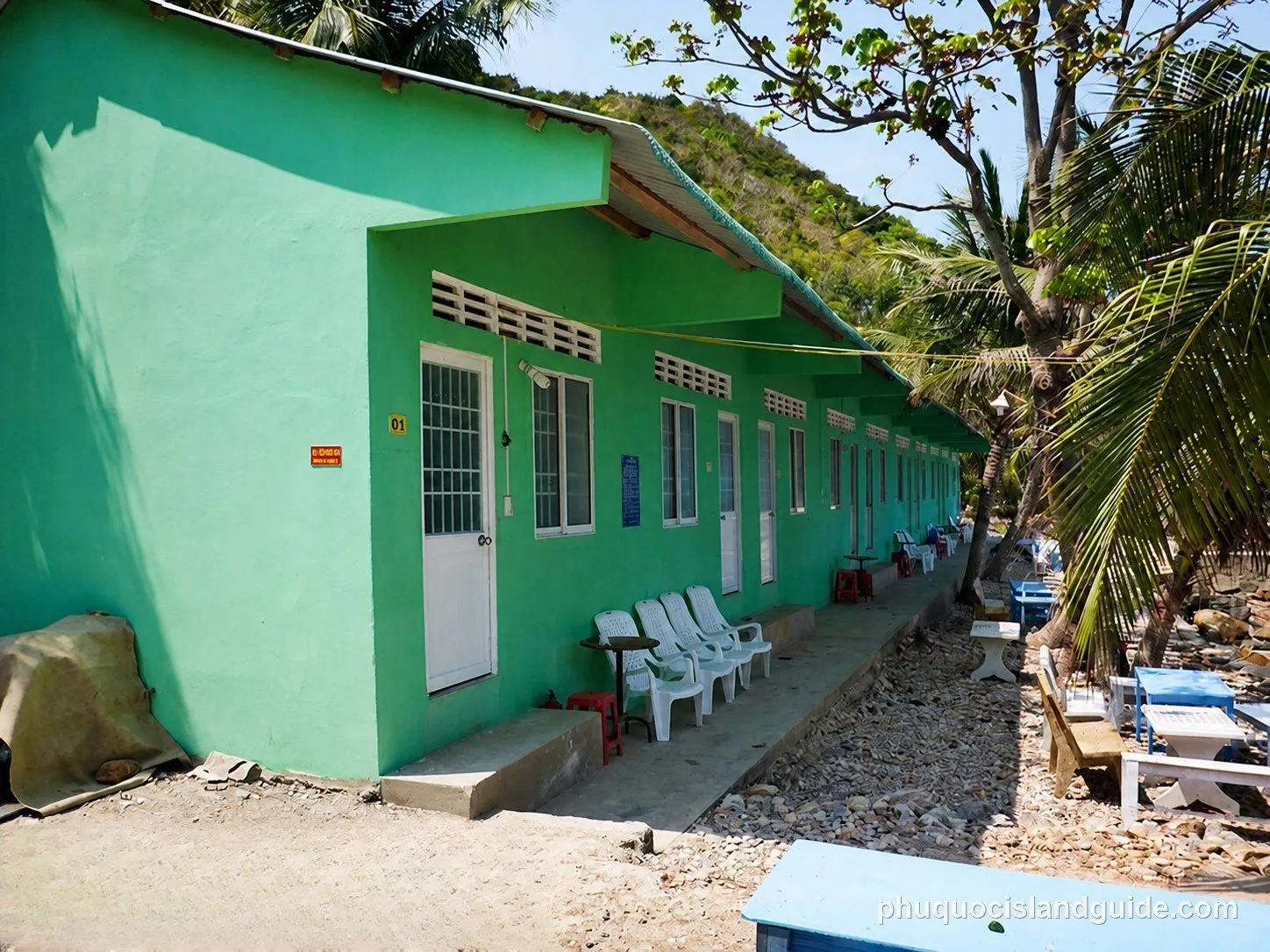
Almost every bed in Nam Du is on Hon Lon (Hòn Lớn), the main island. Expect simple guesthouses (nhà nghỉ) and homestays at around 200,000–500,000 VND per night (2026). Prices rise at weekends and on Vietnamese public holidays, when tour groups fill the island, so book ahead if you are coming on a Friday or Saturday.
Fan rooms are cheaper than air-conditioned ones. There are also a few rooms on Ngang Island and Mau Island.
The lists below come from Google Maps in October 2026: still open, ranked by rating and number of reviews. Distances are straight-line from the ferry pier in Cu Tron (Củ Tron) town.
In Cu Tron Town, walking distance from the pier:
- Nhà nghỉ Long Thành – Tel: 0944 044 151. About 500 m from the pier. 4.5 from 131 reviews.
- Nhà nghỉ Hoàng Gia – Tel: 0939 626 459. At Bãi Chệt, next to the pier. 4.4 from 72 reviews.
- Nhà nghỉ Chinh Hòa – Tel: 0365 216 460. In An Cư (Ấp An Cư), about 800 m out. 4.4 from 254 reviews – the most-reviewed guesthouse on the island.
- Nhà nghỉ Sáu Có – Tel: 0907 172 656. By the pier, and it sells island tours. 4.4 from 39 reviews.
- Nhà nghỉ Thúy Kiệp (Thuy Kiep) – Tel: 0914 499 863. One of the original motels by the market. We used to rate it highly. Its Google score is now 3.6 from 67 reviews, so read the recent reviews first.
South of town, towards Bai Co and Bai Soi (1–2.5 km): quieter and closer to the beaches, but you will want a motorbike or a motorbike taxi.
- Yen Tuoi Hostel – Tel: 0919 770 229. 4.8 from 117 reviews, the best-rated budget option.
- Nhà nghỉ Sky & Sea – Tel: 0946 110 527. 4.6 from 230 reviews.
- Nhà nghỉ Huy Hoàng – Tel: 0917 329 273. 4.7 from 86 reviews.
- Nhà nghỉ Nam Du View – Tel: 0963 145 342. 4.4 from 184 reviews.
- Homestay Chiến Diễm – Tel: 0768 999 988. 4.5 from 100 reviews.
Further out:
- Phong Vũ (Phuong Vu) – Tel: 0919 138 369. About 3 km south, near Bãi Sỏi (Bai Soi), with sea-view rooms. It was our favourite on Hon Lon. Google reviews now average 3.9 from 86, so check recent ones before booking.
- Nhà nghỉ Ngọc Lam – Tel: 0918 764 476. At Bãi Nhum, north of town, with its own small restaurant. 4.6 from 104 reviews.
The island’s few places that call themselves resorts score worse than the small guesthouses. Rockmila (3.3 from 395 reviews), Langchia (3.2 from 153) and Nam Du Palace (4.0 from 235) charge more without being better. Read their recent reviews before paying resort prices.
Camping on Nam Du Island
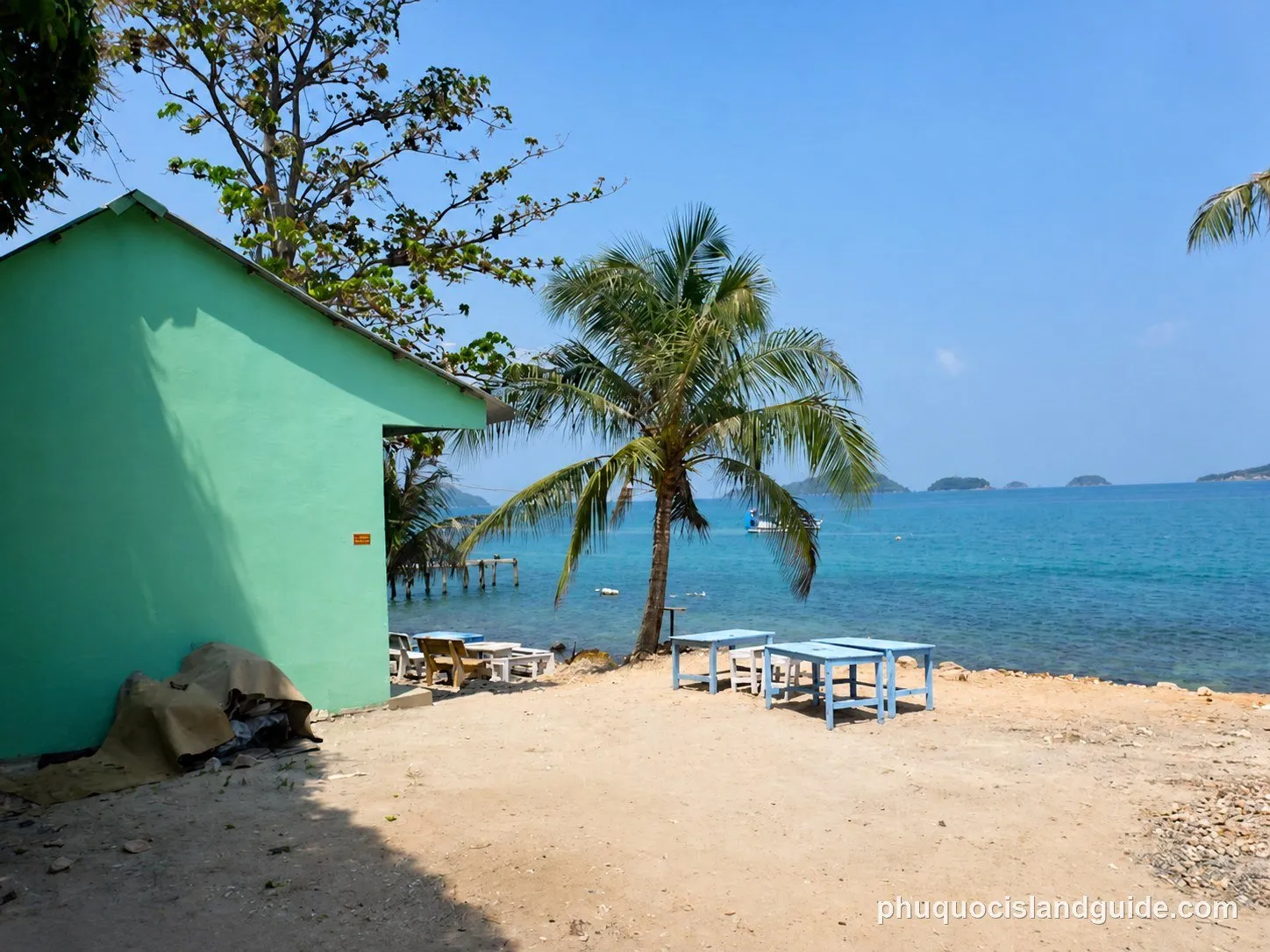
There are plenty of camping opportunities at Nam Du and you do not even need to have your own tent as they are available for rent. The most popular camping spot is at Hon Dau Island, due to the long stretch of beach. There is a small fee to pitch your own tent, and renting a tent costs extra per night.
On Hon Lon itself, Thảo Thường Camp at Bãi Cỏ Nhỏ (Tel: 0985 388 885) rents tents and simple huts on the beach, about 2.5 km south of the pier. 4.3 from 184 Google reviews (October 2026).